






Meta Amazon Muse Shopping Deal Puts Advertising In Focus
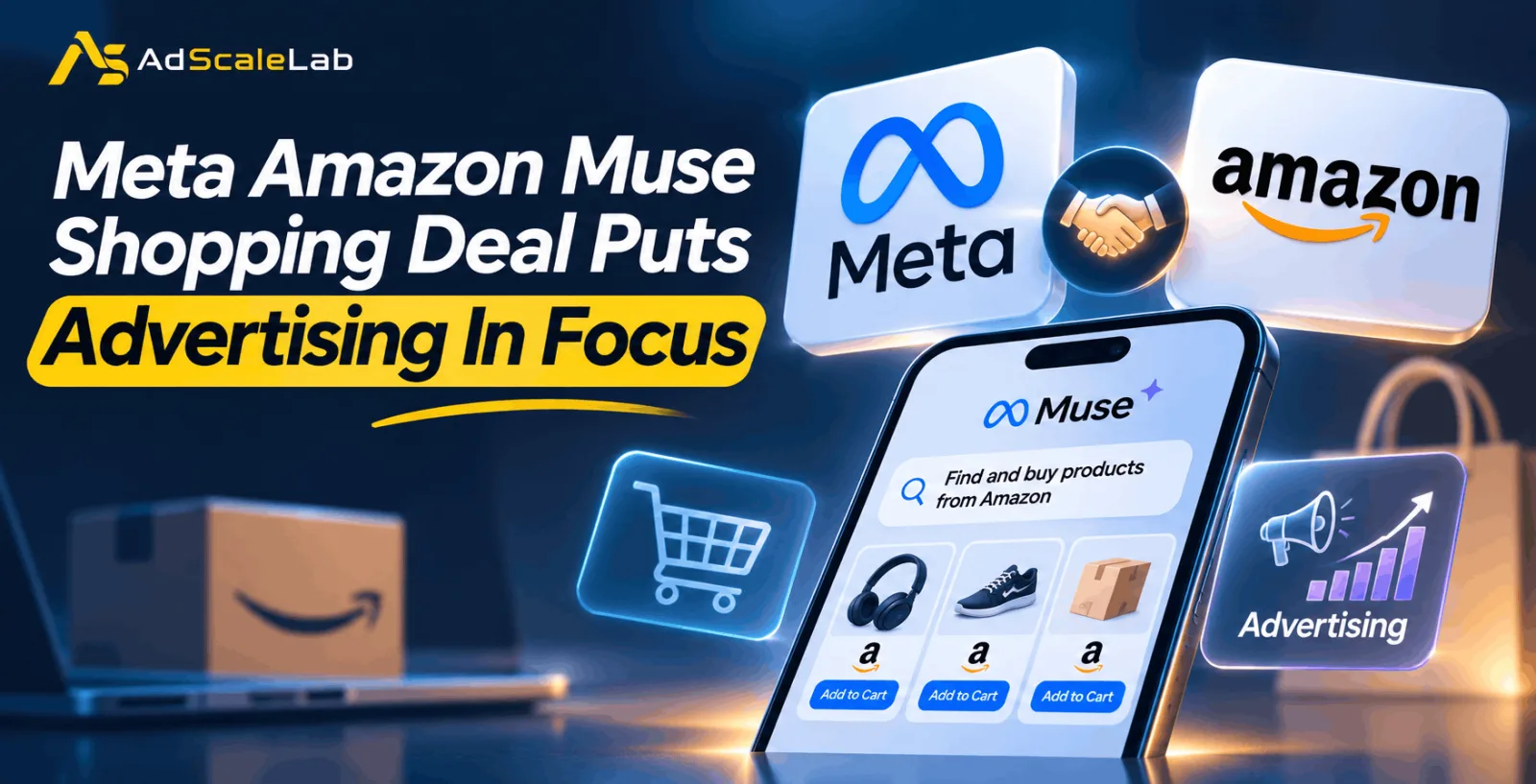
The Meta Amazon Muse shopping deal is attracting attention across the advertising and technology industries after reports revealed that the two companies are discussing a possible agreement involving AI-powered shopping. The talks could allow Meta's Muse assistant to access Amazon's online marketplace again, but advertising revenue and product search are reportedly among the biggest issues that need to be resolved.
According to the report, Meta and Amazon have held several rounds of talks about a possible arrangement. However, neither company has announced a final agreement, and the discussions are still ongoing.
This is more than a simple technology partnership. Amazon operates one of the world's largest online marketplaces, while Meta is trying to make its AI assistant useful for everyday activities such as shopping. If the companies reach an agreement, it could change how customers discover products and how advertisers reach people who are ready to make a purchase.
What Is Happening With The Meta Amazon Muse Shopping Deal?
The reported Meta Amazon Muse shopping deal centres on whether Meta's Muse AI shopping assistant will be allowed to access Amazon's online store under a formal arrangement. The situation began after Amazon restricted Muse's access to its marketplace in September 2026. The restriction stopped users from completing purchases through the assistant on Amazon. Amazon's position was connected to its user agreements and the way third-party automated tools were accessing its services. Get Meta Ads agency account here

Now, the two companies are reportedly exploring whether a formal agreement could resolve the issue. Such an arrangement may allow Muse to connect with Amazon's product catalogue under conditions accepted by both businesses.
The discussions are important because both companies have different business interests. Meta wants people to use Muse as a personal AI assistant that can help them search for products and complete tasks. Amazon wants to protect its marketplace, customer relationships and advertising business. The companies are discussing how products would appear in Muse and how advertising could work if the integration moves forward. Neither company has publicly confirmed that a deal has been signed.
What Is Meta's Muse AI Shopping Assistant?
Muse is Meta's personal AI agent, designed to help users complete tasks rather than simply answer questions. It can assist with browsing, finding information and carrying out certain activities through connected services. Shopping is one of the areas where this technology could become useful. Instead of visiting several websites and comparing products manually, a customer could ask Muse to find suitable options, check prices and help with the buying process.
Meta has described Muse as a personal assistant that can support shopping activities such as finding deals, comparing products, tracking prices and helping with returns. Important actions, including purchases, require user involvement and approval. Think about someone who wants to buy a new laptop. Normally, that person might visit Amazon, search for different models, compare specifications and read product reviews before choosing one. With an AI shopping assistant, much of that research could happen through a conversation.
This makes shopping easier for customers, but it also creates a new challenge for retailers. If customers begin using AI assistants to discover products, they may spend less time browsing traditional shopping websites. Meta introduced Muse through its official channels in September 2026. You can read the company's announcement here: Introducing Muse, Meta's personal AI agent.
Why Is Advertising A Major Issue In The Meta Amazon Muse Shopping Deal?
Advertising is one of the biggest reasons this reported negotiation matters to the digital advertising industry. Amazon earns a significant amount of money from advertising. Brands and sellers pay to promote products on its marketplace so they can reach customers who are already searching for something to buy. Sponsored placements and product recommendations are an important part of this shopping experience.
However, the situation could look different when an AI assistant handles product discovery.
Imagine a customer asking Muse to find a smartphone under a particular budget. The assistant could compare available products and show a small selection based on the customer's requirements. The customer might choose one of those recommendations without spending much time on Amazon's regular search results.
This creates a possible problem for Amazon. If customers discover products through Muse instead of browsing Amazon directly, they may see fewer of the sponsored placements that normally appear on the marketplace. Amazon is concerned about the effect that external AI shopping assistants could have on advertising visibility. The company reportedly wants to understand how advertisements and product recommendations would work if Muse receives access to its marketplace.
The financial stakes are considerable. Amazon's advertising business generated approximately $68.6 billion in revenue in 2025, according to the company's reported annual figures. This makes advertising an important part of its business, not something it can ignore when considering a new shopping partnership.
For this reason, the Meta Amazon Muse shopping deal is not only about connecting two platforms. It is also about deciding how advertising revenue and product visibility should work when an AI assistant becomes part of the shopping journey.
How Could AI Shopping Change Product Search And Recommendations?
Traditional online shopping usually starts with a search. A customer enters a product name or category, reviews the available results and decides which products deserve attention. AI shopping assistants could make this process different. A customer might explain what they need in normal language, including their budget, preferred features and intended use. The assistant can then help narrow down the choices instead of showing a long list of products.
For example, someone looking for wireless headphones might ask for a model with good battery life, noise cancellation and a specific price range. Muse could help compare products that match those requirements.
This raises several questions for Amazon. Would Muse display products in the same order as Amazon's own search system? Would sponsored products receive special placement? Could Amazon set rules for which products appear in the assistant's recommendations?
These questions matter because product visibility has real commercial value. Sellers invest in advertising to make sure their products are seen by potential customers. If the shopping journey moves into an external AI assistant, advertisers will want to understand how their products can remain visible.
At present, no final arrangement has been announced. The reported discussions indicate that product search and advertising are important subjects, but the exact rules of any future integration remain unknown.
Amazon Is Also Developing Its Own AI Shopping Experience
Amazon is not simply waiting for other companies to develop AI shopping tools. It has been investing in its own AI-powered shopping experience, including Alexa for Shopping. This is another reason the reported discussions deserve attention. Amazon already has its own marketplace, product recommendation systems and shopping assistant. Allowing an external AI assistant to connect with its store could affect how these services work together.
In its third-quarter 2026 results announcement, Amazon highlighted the growing use of Alexa for Shopping. The company reported that more than 400 million customers had used the assistant during the previous 12 months, with customer interactions increasing by 570% year over year. These figures show that Amazon is also trying to make conversational AI a bigger part of online shopping.
The company therefore has to balance two interests. It may benefit from allowing customers to discover its products through external AI assistants, but it also needs to protect its own shopping experience and advertising business. This does not mean Amazon will refuse every outside partnership. The reported talks with Meta suggest that both companies are exploring a possible arrangement. However, the terms would need to make commercial sense for Amazon.
Are Other Retailers Exploring AI Shopping Partnerships?
Amazon is not the only retailer considering how AI assistants could become part of online shopping. Other businesses have started exploring ways to make their products available through AI-powered services. Meta's commerce efforts have included integrations and partnerships involving retailers such as Walmart, Best Buy and Sephora.
Walmart is an interesting example. On November 24, 2026, the retailer announced that customers could shop its Black Friday product selection through Muse using its Agent Gateway. This type of arrangement allows an AI assistant to connect with a retailer's shopping infrastructure through a controlled system. It also gives the retailer more control over how product information and shopping activity are handled.
The approach could become useful for businesses that want to explore AI shopping without giving an external assistant unrestricted access to their websites. However, every partnership can have different conditions. Retailers may set their own rules for product information, checkout, customer permissions and commercial arrangements.
For Amazon, the reported negotiations with Meta could be an opportunity to explore a similar connection while protecting its own business interests.
What Could The Meta Amazon Muse Shopping Deal Mean For Advertisers?
If the companies eventually reach an agreement, the effects could extend beyond Meta and Amazon. One possible change involves product visibility. Advertisers currently focus on appearing in search results, sponsored product placements and other paid advertising positions. If AI assistants become more involved in product discovery, brands may need to understand how their products are selected and recommended.
Conversion tracking could also become more complicated. Advertisers normally measure impressions, clicks, conversions and purchases to understand campaign performance. When an AI assistant handles several steps in the buying process, it may become harder to identify which interaction influenced the final purchase. Retailers and advertising platforms will need reliable ways to measure product discovery, referrals and sales that happen through AI shopping tools. Without accurate reporting, brands may struggle to compare the value of traditional advertising with AI-driven shopping activity.
Another important question is whether sponsored placements will eventually appear inside AI shopping conversations. Advertisers will want clear information about how such placements are selected, labelled and measured. However, no new advertising format has been confirmed as part of the reported Amazon-Meta discussions.
For businesses that depend on paid traffic, this is a good reason to follow AI commerce developments while continuing to monitor their existing advertising channels. AdScaleLab also covers different paid discovery options in its guide to top native advertising networks, which can help advertisers understand the wider range of channels available for reaching online audiences.
What Happens Next With The Meta Amazon Muse Shopping Deal?
For now, the Meta Amazon Muse shopping deal remains under discussion. The two companies have reportedly held multiple meetings, but there is no confirmed agreement, launch date or final explanation of how an integration would operate. The negotiations will need to address several important questions. Amazon will want to protect its marketplace and advertising interests, while Meta will want to make Muse useful enough that people choose it for everyday shopping tasks.
If an agreement is reached, customers could have another way to discover and purchase Amazon products through an AI assistant. It could also provide an example of how large retailers and AI companies can work together. However, the outcome is not yet clear. Both companies have strong reasons to protect their existing businesses, and any partnership will need to balance customer convenience with commercial interests.
For advertisers, the most important thing is to watch how these discussions develop. AI shopping may change the way people discover products, but it does not mean traditional advertising channels will disappear overnight. The next announcements from Meta and Amazon could provide a clearer picture of how AI-powered shopping, product recommendations and retail advertising will work together. Until then, the reported talks are an important development to follow, rather than a completed partnership.
Agency ad accounts, without the wait.
Buy and top up Google, Meta, native, and more from one dashboard.
Get started


No comments yet. Be the first to comment.
Comments are open to registered AdScaleLab clients.