





Meta Ads Manager Update Allows 5 Posts In One Ad
Running ads on Facebook and Instagram often means spending a good amount of time testing different posts. An advertiser might have five good posts on their page, but promoting each one separately means creating and managing multiple ads. Meta may now be making this process a little easier.
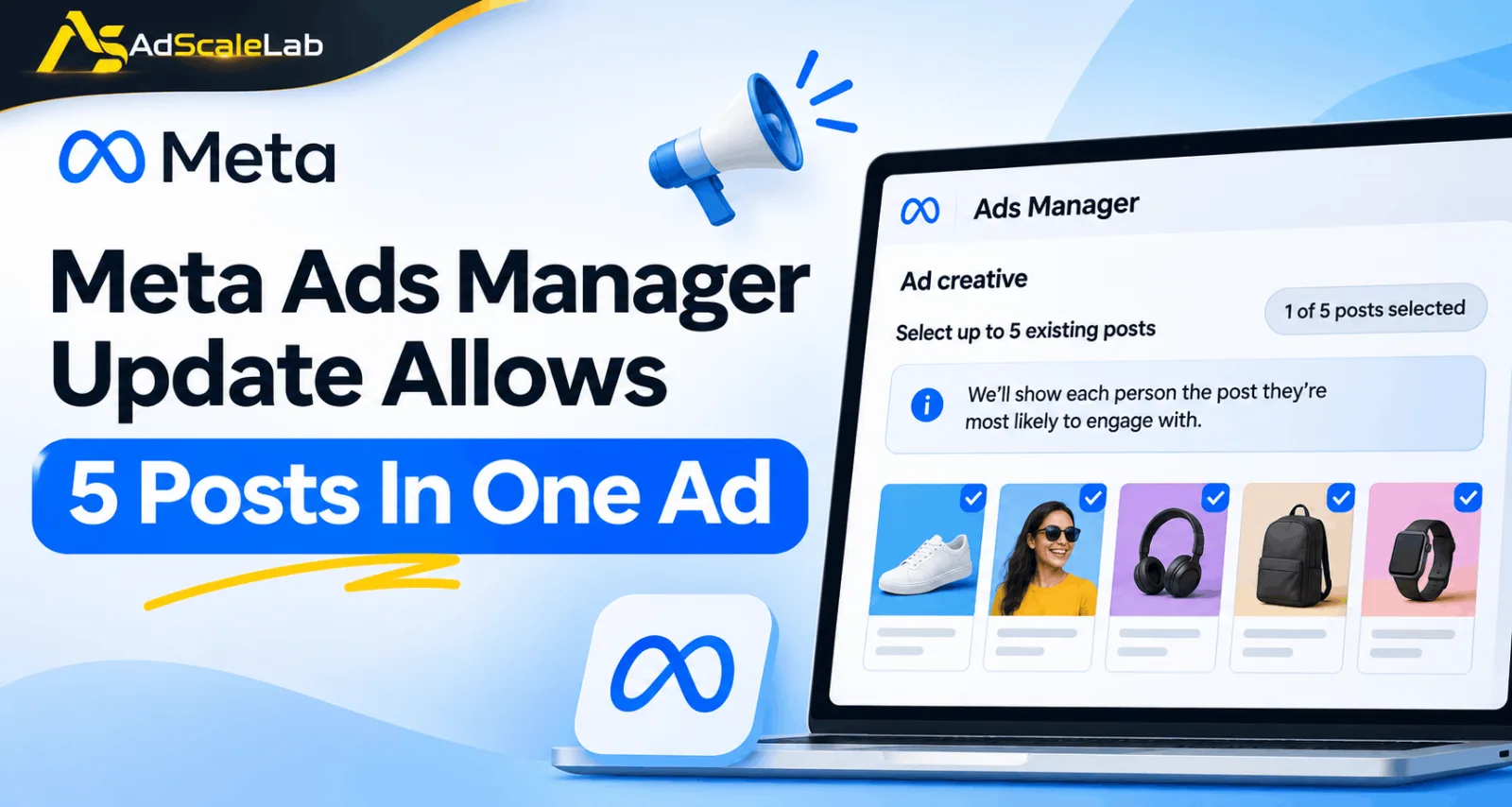
A new Meta Ads Manager update reported on November 17 allows advertisers to select up to five existing posts within a single ad. Instead of creating a separate advertisement for every post, advertisers can bring several published posts together and let Meta decide which one to show to different people. The change was spotted by digital marketer Bram Van der Hallen, who shared a screenshot of the new option on LinkedIn. The screenshot shows a message from Meta explaining that advertisers can now select up to five posts and that the platform will show each person the post they are most likely to engage with.
This is an interesting change for businesses and agencies that regularly promote existing Facebook and Instagram content. It could save some time during campaign setup, but it also raises a question that advertisers will want answered: if Meta chooses which post people see, how much control will advertisers have over understanding the performance of each individual post?
What Has Changed In Meta Ads Manager Update?
Until now, advertisers using the existing-post option in Meta Ads Manager could select one published post for an ad. If they wanted to promote five different posts, they generally had to create five separate ads. The new option changes that setup. According to the screenshot shared by Van der Hallen, advertisers can now select up to five existing posts under the Ad Creative section. The interface includes a counter showing how many posts have been selected. It also provides options to select posts or enter a post ID. Once the posts are added, Meta can choose which one to display to an individual based on its prediction of engagement. Gets Meta ads agency account here

For example, imagine a clothing brand that has recently published five different posts on Instagram. One shows a new collection, another features a customer wearing the product, while the remaining posts highlight different styles and offers.
Previously, the advertiser would have needed separate ads to promote each of these posts using the existing-post setup. With the reported update, all five could potentially be selected within one ad. That does not mean all five posts will appear together on the screen. Meta's notice describes a selection process in which the platform chooses one post for each person. This is an important difference between the new option and a normal carousel ad.
How Will The New Five-Post Feature Work?
The process appears to be quite straightforward. Advertisers start by creating an ad in Meta Ads Manager and choosing to use an existing post instead of creating a completely new advertisement. Inside the Ad Creative section, they can look for the Posts option. The updated interface reportedly allows them to select up to five posts using the selection button or by entering the relevant post IDs.
After selecting the posts, Meta's system decides which one is more likely to attract engagement from each person. So, someone interested in product demonstrations might see one post, while another person could be shown a different post from the same selection. The main idea is to give Meta more options when deciding which content to deliver. Advertisers still choose the posts they want to promote, but the final selection for individual viewers is handled by the platform.
However, the screenshot shared by Van der Hallen shows the selection counter and one selected post. It does not demonstrate a completed advertisement containing all five posts or show how the feature performs after a campaign starts. This is why advertisers should check their own Ads Manager accounts rather than assume the option is already available to everyone.
Why Is This Change Important For Advertisers?
For advertisers, the biggest benefit could be less work when setting up campaigns. Anyone who manages several Facebook or Instagram advertising accounts knows that even small tasks can take time when repeated across different campaigns. Creating separate ads for multiple existing posts means checking each advertisement, managing its settings and keeping an eye on its performance.
The new option could make that process simpler. Instead of preparing several separate ads just to promote different published posts, advertisers may be able to select them together and allow Meta to handle the delivery decision. It could also be useful for businesses that already publish content regularly. Not every advertisement needs to be designed from scratch. Sometimes a simple product video, customer review or promotional post already has the right message for a paid campaign.
Being able to use several existing posts together gives advertisers another way to make use of the content they have already created. Still, fewer ads do not automatically mean better campaign results. The actual benefit will depend on the type of business, its audience and the quality of the posts being promoted.
Meta Is Giving Its Advertising System More Creative Choices
This update also fits into a wider direction that Meta has been following with its advertising products. Over the past few years, Meta has introduced more automated options through its Advantage+ advertising tools. These features are designed to help advertisers manage different parts of their campaigns with less manual work. Creative optimisation is one area where this automation is becoming more visible. Advertisers can provide different creative assets, and Meta's systems can help decide how those assets are delivered.
The new existing-post option is not the same as Advantage+ creative, but it follows a similar idea. Instead of making advertisers decide on one piece of content for every ad, Meta is allowing more choices within the same advertising setup. There is a clear reason behind this approach. Different people react to different messages, images and videos. A product demonstration may work well for one person, while a customer review might attract more attention from someone else.
Giving the platform several posts to choose from could help it match content with different viewers. However, Meta's notice specifically mentions predicted engagement. It does not confirm that the selection will always be based on purchases, leads or other business outcomes. That distinction matters, especially for advertisers who care more about conversions than likes and comments.
Will Advertisers Still Have Control Over Their Campaigns?
This is probably the biggest question surrounding the update. Advertisers will still have control over which posts they include in the selection. They can decide which content is suitable for their campaign and which posts should not be promoted. However, once several posts are selected, Meta takes responsibility for choosing which one each person sees.
For some businesses, this may be perfectly fine. A brand running an awareness campaign may be happy to let Meta decide which post gets more attention, provided the overall campaign performs well. But performance marketers may look at this differently.
For example, a lead generation advertiser might have one post that receives plenty of engagement and another that generates more enquiries. If Meta chooses content based on predicted engagement, the most popular post may not necessarily be the one that brings in the best leads.
This does not mean the feature will perform poorly. It simply means advertisers should not judge its success through engagement numbers alone. Campaign results should still be measured against the actual goal. If the objective is sales, look at purchases and cost per acquisition. If the campaign is focused on leads, pay attention to lead quality and the cost of acquiring those leads.
What About Reporting And Performance Tracking?
There is another detail that advertisers will want to understand before using this feature regularly. When five posts are promoted through five separate ads, it is generally easier to compare their individual results. Advertisers can open Ads Manager and review the performance of each ad. But when several posts are placed within one ad, the reporting could become less straightforward.
The November 17 report does not confirm whether Meta will provide separate performance data for every selected post. It also does not explain whether advertisers will be able to see exactly how often each post was shown or which one generated the most conversions. This information is important because advertisers need to understand what is actually working.
Suppose a campaign generates a good number of leads. That is positive, but the advertiser may also want to know which message attracted those people. Without a clear breakdown, it could become harder to make decisions about future creative testing. Meta already offers creative-level reporting for certain other advertising formats, but that does not automatically mean the same reporting will be available for this new existing-post option.
Until the company provides more information, advertisers should treat individual post reporting as an unanswered question.
What Should Advertisers Do Before Trying It?
There is no need to completely change an existing campaign strategy just because this option has appeared in Ads Manager. If the feature is available in your account, a sensible approach would be to test it with a few posts that promote the same product, service or offer.
For example, an online store could select five posts showing different aspects of the same product. This gives Meta a variety of content to work with while keeping the main campaign message consistent. It would also be worth comparing the results with a separate single-post advertisement. This can help show whether the new setup is actually useful for the business.
Advertisers should pay attention to spending, clicks, conversions and cost per result. They should also make sure that the posts being selected are still relevant and that any offers or product information are up to date. Most importantly, do not assume that a post with the highest number of likes will automatically bring the best business results. Engagement is useful, but it is only one part of campaign performance.
What We Know About The Update So Far
The information currently available comes from a screenshot of Meta Ads Manager shared by Bram Van der Hallen on LinkedIn on November 17, 2026. The screenshot shows the option to select up to five existing posts within one ad.
However, Meta has not published a separate official announcement explaining this particular change. There is also no confirmed information about when the feature will reach all advertisers, which countries are included or whether it supports every campaign objective and placement. The reporting options for individual posts are also still unclear.
For now, the update is worth watching, particularly for agencies and businesses that regularly promote their existing social media content. If the feature becomes widely available, it could make campaign setup easier. But advertisers will need more information about delivery and reporting before deciding how much to rely on it.
Final Thoughts
The new five-post option could be a useful addition to Meta Ads Manager, especially for advertisers who manage several campaigns and regularly promote published content. Instead of creating a separate ad for every post, advertisers may now be able to select up to five posts together and let Meta decide which one is more likely to interest each viewer.
That sounds like a small change, but it could make a difference to how some businesses organise their advertising work. At the same time, advertisers should not overlook the reporting side of the update. Knowing which post attracts attention is useful, but knowing which one generates actual customers is even more important.
For now, it is best to treat this as a reported Meta Ads Manager development rather than a confirmed worldwide rollout. Advertisers can check their accounts for the new option while waiting for Meta to provide more details.
Agency ad accounts, without the wait.
Buy and top up Google, Meta, native, and more from one dashboard.
Get started


No comments yet. Be the first to comment.
Comments are open to registered AdScaleLab clients.
Sign in to comment