






Why Taboola Rejects Landing Pages: What We See Approving Accounts
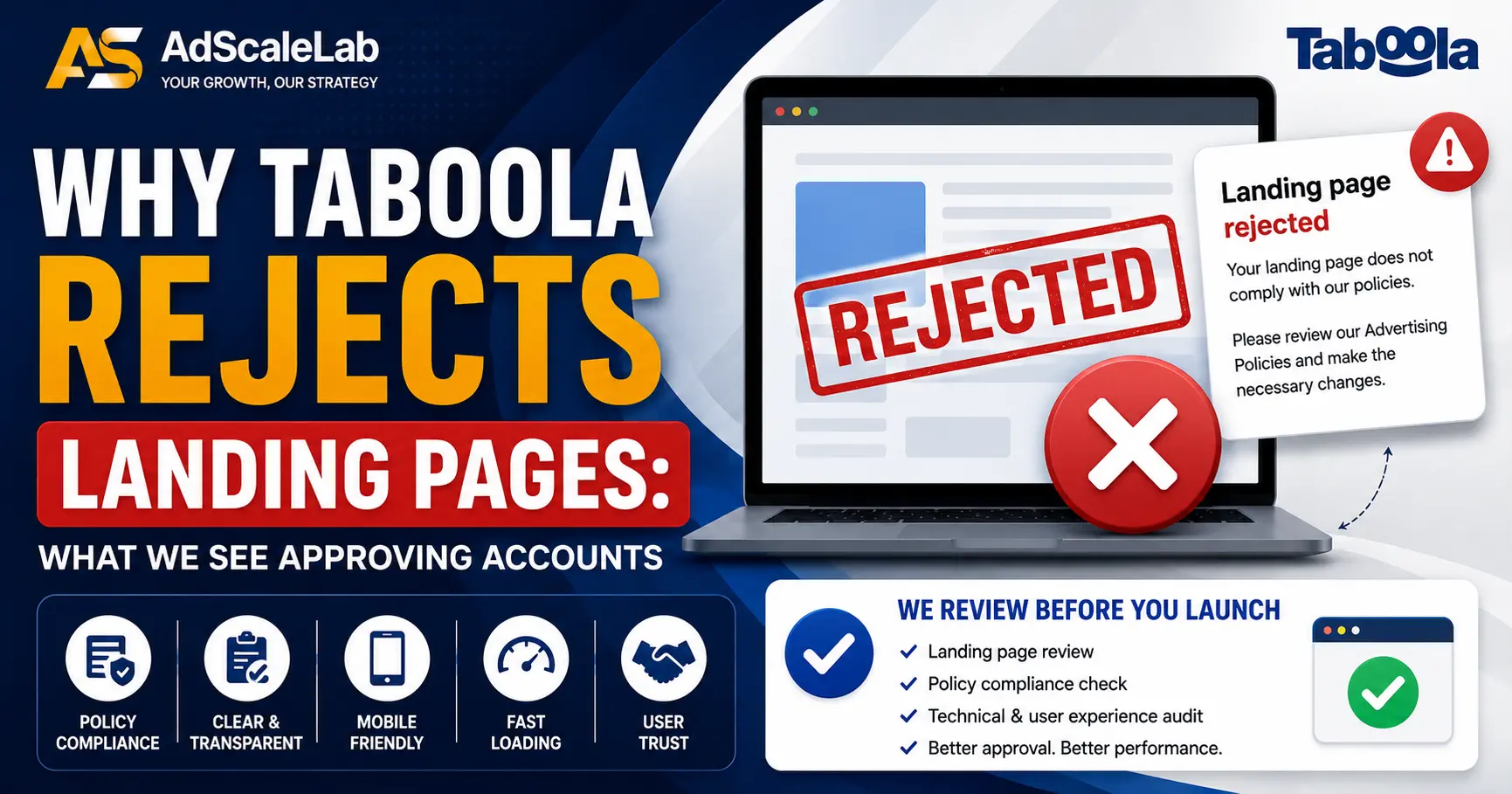
Most guides about getting approved on Taboola are written from the outside, guessing at what reviewers want. This one is written from the account side. We submit landing pages for approval regularly, we see what passes and what bounces, and the patterns are consistent enough to be useful to you.
If you have never run native advertising before, the single most important thing to understand is this: approval is not about how good your page looks. It is about compliance, transparency and user experience. A plain page that is honest and complete beats a beautiful page that overpromises, every time. Once that clicks, most rejections become avoidable. Get Taboola Agency Account here
Here is what we actually see.
Why landing pages get rejected
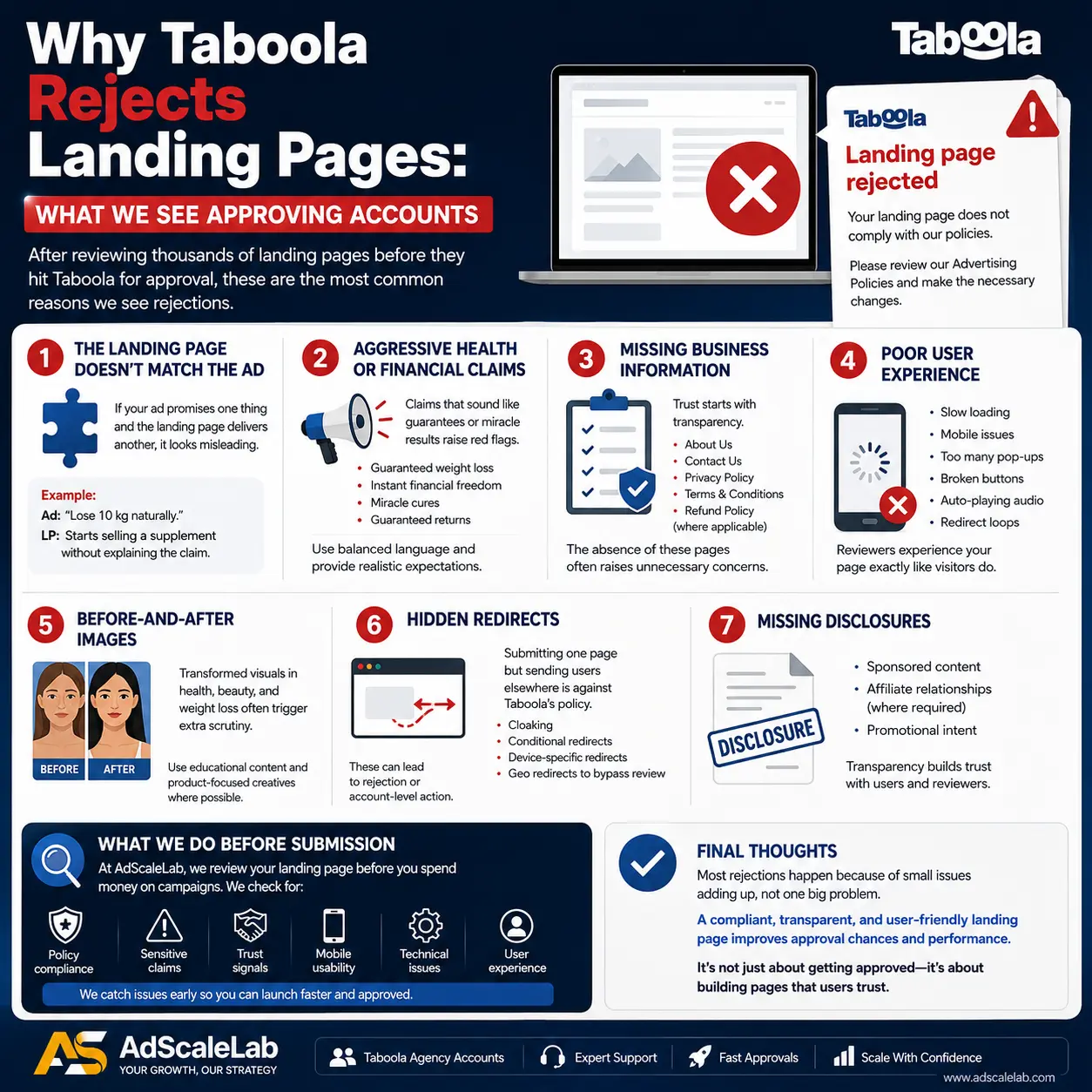
The large majority of rejected pages fall into a small number of recurring problems. If you check your page against these before submitting, you remove most of the risk.
Misleading claims. This is the biggest one. "Guaranteed results", "lose 10kg in 7 days", "doctors hate this trick", and any unsupported health or financial promise. Reviewers are trained to catch these, and they are the fastest route to a rejection. If a claim cannot be substantiated, it should not be on the page.
Bridge or thin pages. Pages with very little original content, pages whose only real job is to bounce the visitor somewhere else, and affiliate pages that add almost nothing of their own. If the page exists only to redirect, it will struggle.
Missing trust signals. No Privacy Policy, no Terms and Conditions, no contact information, no clear business identity. These are quick to add and their absence is an easy, common rejection. A page with no visible business behind it looks like a risk, because it is one.
Poor user experience. Broken layouts, pages that fall apart on mobile, slow loading, and pop-ups that block the content the moment someone lands. Reviewers open your page like a user would, and if the experience is bad, that is what they see.
Aggressive lead generation. Forcing an email capture before the visitor can see any content, forced surveys, and fake system warnings. Collecting leads is fine. Holding the content hostage until someone hands over their details is not.
Restricted content. Certain health, gambling, financial, crypto and adult-adjacent promotions get closer scrutiny, and how much depends on the specific offer and the market you are targeting. More on verticals below.
The things that surprise first-timers
Almost everyone new to native says the same thing: "my page looks professional, so it should be approved." Visual polish is not the test. These are the specific things that catch people off guard, because they often sit on pages that otherwise look great:
AI-generated testimonials presented as real people. Before and after images with no context. Fake countdown timers. Fake "someone just bought this" notifications. Auto-playing video with sound. Clickbait headlines that do not match the actual page. And missing disclosure where content is sponsored or promotional and should be labelled as such.
Notice the theme. Every one of these is a small deception. Individually they might feel like normal marketing. To a reviewer they are exactly the signals that predict a bad user experience, and they will sink an otherwise good page.
We pre-screen before we submit, and so should any good agency
One of the real advantages of going through an agency account rather than a cold self serve signup is that your page gets a check before it ever reaches a reviewer. A rejected submission costs you time. Catching the problem first avoids the round trip.
This is the checklist we actually run a page through before submitting:
- The landing page loads correctly
- The SSL certificate is valid
- It is responsive on mobile
- Privacy Policy is present
- Terms and Conditions are present
- There is a contact page
- Branding is consistent
- Claims are accurate and supportable
- Buttons and forms actually work
- No misleading creatives
- No prohibited content
- The destination URL matches the advertised domain
None of this is exotic. It is the boring, checkable stuff that first-timers skip because they are focused on the offer and the design. Fixing these before submission is the single biggest thing you can do to speed up approval.
How long approval actually takes
There is no universal number, and anyone who gives you a guaranteed time is guessing. In practice, many straightforward submissions are reviewed within roughly one to three business days. More complex or higher-risk cases take longer. The real timeline moves with review volume, your advertiser history, and the nature of what you are running.
What makes it fast: a clean landing page, an established business website behind it, a clear offer, transparent content, complete account information, and responding quickly when someone asks you a question.
What slows it down: by far the most common delay is landing page revisions, being asked to fix something and going back and forth. After that: missing business details, unsupported claims, changing the website after you have submitted it, multiple redirects, brand new domains with no history, and compliance questions on sensitive verticals.
The delays you control without realising it
This is the part first-timers most often miss. A lot of what feels like "waiting on Taboola" is actually within your control:
Submit the final landing page, not a work in progress you are still editing. Make sure your policies and contact information are there before you submit, not after. Test the site on an actual phone. Do not change the URL while it is under review, which resets the clock and raises questions. And when the reviewer comes back with a request, answer it quickly, because your submission is effectively paused until you do.
Complete and accurate information at the start is the whole game. Most slow approvals are slow because something was incomplete, not because the reviewer was slow.
Which verticals pass, and which get flagged
Some categories tend to move smoothly as long as the content is compliant and transparent:
Ecommerce, home and garden, fashion, consumer electronics, travel, education, SaaS and software, business services, automotive, and general news and editorial content. None of these are automatic, but they rarely draw extra scrutiny on their own.
Other categories get a closer look, usually for regulatory or consumer-protection reasons:
Health and wellness, supplements, weight management, personal finance, investing, cryptocurrency, gambling where it is permitted, dating, CBD-related products where applicable, and medical devices. These are not banned, but expect more attention on your claims, your disclosures, any eligibility requirements, and compliance with local law.
The grey area, where the page decides everything
This is the most useful thing to understand, because it is where you have the most influence. Some categories are approved or rejected based almost entirely on how the landing page is presented, not the category itself:
Affiliate offers, lead generation, financial education, investment education, nutraceuticals, beauty products, sweepstakes, and quiz funnels. Two people can run the "same" offer in one of these categories and get opposite results, purely based on how the page is built.
What tips it toward approval is consistent: clear disclosures, realistic and substantiated claims, transparent business information, a good user experience, and creatives that honestly reflect what is actually on the landing page. What sinks it is the opposite, exaggerated claims and design patterns built to mislead. In the grey area, transparency is not just the ethical choice, it is the one that gets approved.
The one lesson under all of this
If you take a single thing away, take this: Taboola is not reviewing your taste, it is reviewing your honesty and your user experience. Almost every rejection in this article traces back to a claim that could not be supported, a trust signal that was missing, or a design choice meant to pressure or mislead the visitor. Fix those, and approval stops being a mystery.
That is also why the account you run on matters. A Taboola agency account gives you a pre-submission check, so these problems get caught before a reviewer ever sees them, plus URL review before you pay and a real person to escalate to. Standard pre-approval turnaround is 30 minutes, and you only pay once it is clear.
If you want the full walkthrough of buying and running the account, see our complete Taboola agency account guide. If you are choosing between the big native platforms, our Taboola vs Outbrain comparison covers that decision.
FAQ
Why did Taboola reject my landing page?
Most rejections come down to unsupported claims, missing trust signals like a Privacy Policy or contact page, a thin or bridge page, a poor mobile experience, or misleading design elements such as fake timers or fake purchase notifications. It is rarely about how the page looks and almost always about compliance and user experience.
How long does Taboola account approval take?
There is no fixed time, but many clean, straightforward submissions are reviewed within roughly one to three business days. Higher-risk or incomplete submissions take longer. The most common cause of delay is having to revise the landing page.
What can I do to get approved faster?
Submit a finished page, not a draft. Make sure your Privacy Policy, Terms and contact details are present before submitting. Test on mobile. Do not change the URL during review. Respond quickly to any questions. Most delays are caused by incomplete information at the start.
Which verticals are hardest to approve on Taboola?
Health, supplements, weight management, personal finance, investing, crypto, gambling, dating, CBD and medical devices all get closer scrutiny, mainly around claims and disclosures. They are not banned, but they need to be clean.
My offer is in a grey area. Can it still be approved?
Often yes. Categories like affiliate offers, lead generation, financial education and quiz funnels are frequently decided by how the page is built rather than the category. Clear disclosures, honest claims and a transparent page tend to pass. Exaggeration and misleading design tend to fail.
Does an agency account help with approval?
It helps by catching problems before submission. A good agency pre-screens your page against the common rejection reasons, reviews your URL before you pay, and gives you someone to escalate to. It does not let you skip the rules, and it should not claim to.
Agency ad accounts, without the wait.
Buy and top up Google, Meta, native, and more from one dashboard.
Get started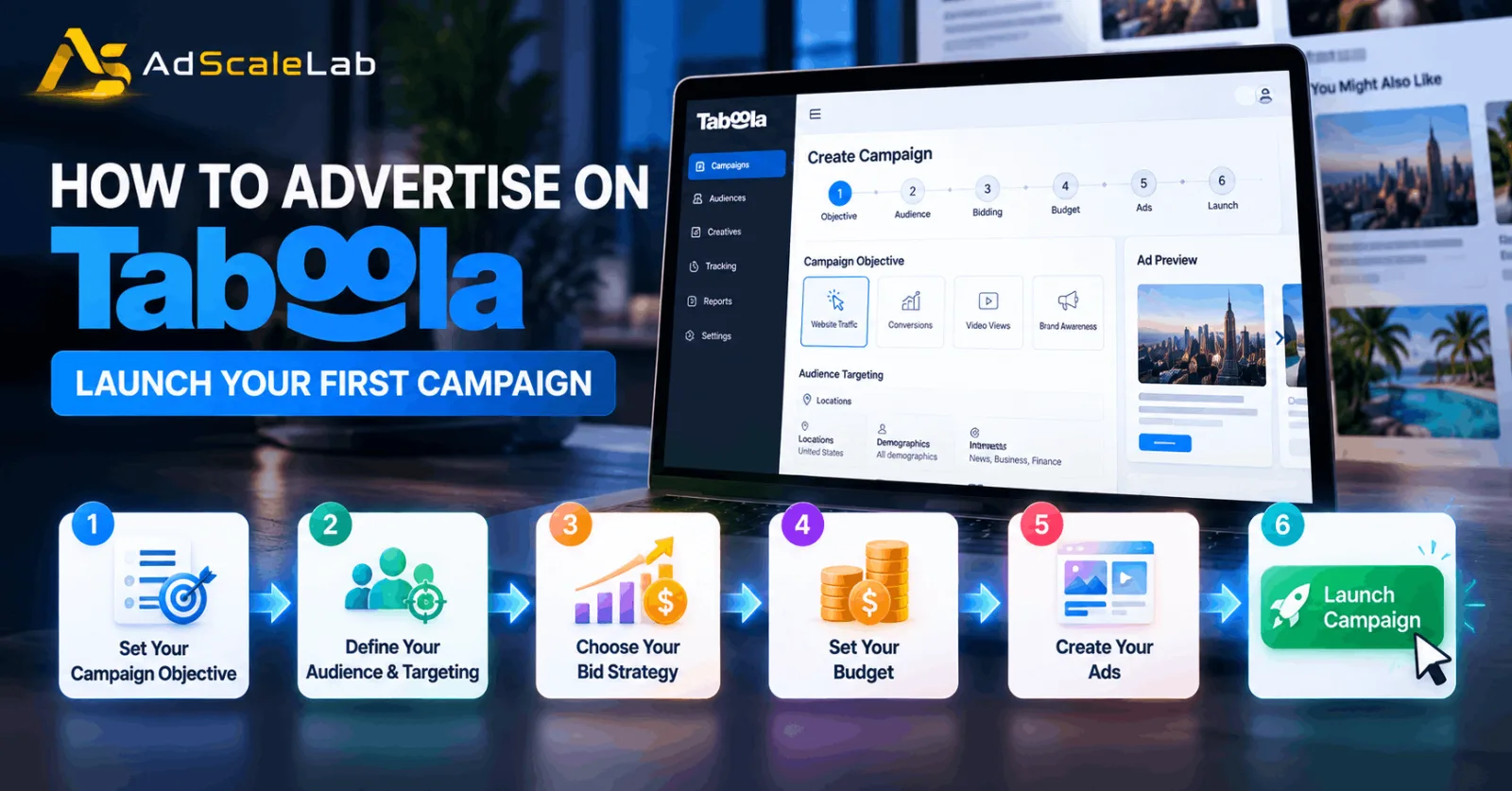

No comments yet. Be the first to comment.
Comments are open to registered AdScaleLab clients.
Sign in to comment