



Pinterest 18 Percent Revenue Growth Rate Year Over Year - 2026
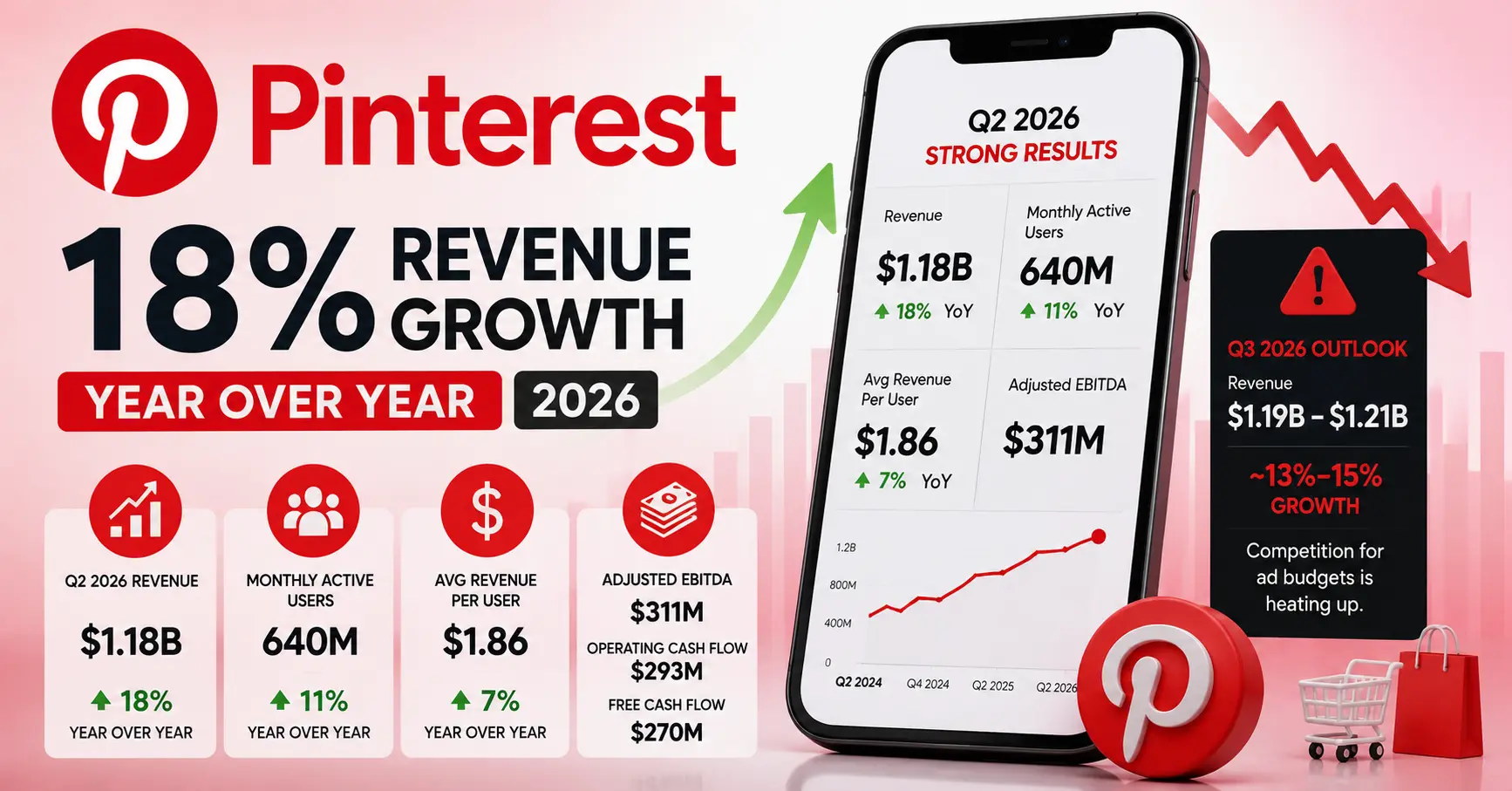
On August 4, 2026, Pinterest reported a strong second quarter but warned that revenue growth will slow in the third quarter as competition for ad budgets gets tougher. The stock dropped about 6 to 9% after hours on the cautious outlook. Here is a plain read of what happened, why it happened, and what it means if you run traffic on Pinterest, especially through Pinterest agency accounts.
The quarter was actually good
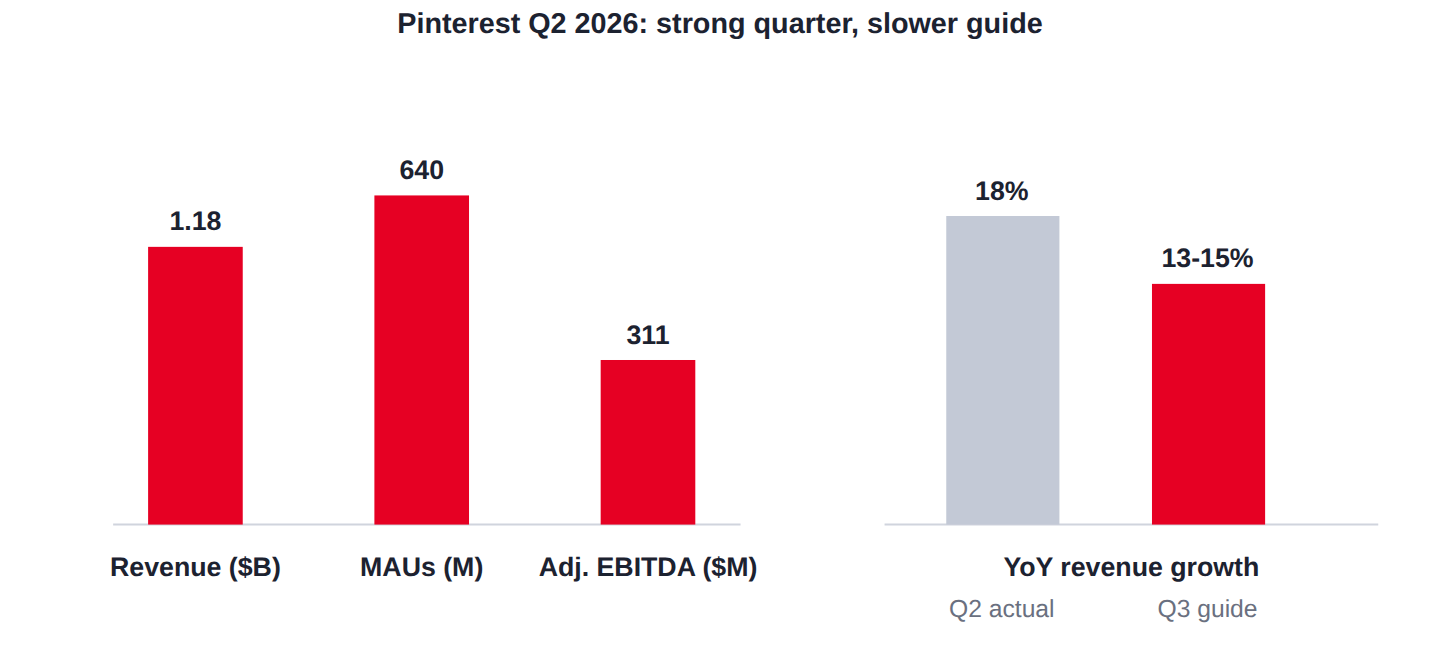
Pinterest (NYSE: PINS) posted second quarter revenue of $1.18 billion, up 18% from a year earlier, and a little ahead of what Wall Street expected. Monthly active users hit a record 640 million, up 11%, and average revenue per user rose 7% to $1.86. Adjusted EBITDA came in around $311 million, with strong operating cash flow of $293 million and free cash flow of $270 million.
So the business itself is growing users, growing revenue per user, and throwing off real cash. On most days that is a good report.
So why did the stock fall?
The problem was the outlook, not the quarter. Pinterest guided third quarter revenue to a range of about $1.19 billion to $1.21 billion. That works out to roughly 13 to 15% growth, a step down from the 18% it just delivered. The guide was only in line with what analysts already expected, and when a growth stock guides merely in line, investors tend to sell.
The reason management gave for the slowdown is the important part: digital advertising competition is heating up. Pinterest is fighting for the same ad budgets as much larger players, and that fight is getting harder.
The competition story
Pinterest named the pressure directly. Meta keeps improving its Advantage+ automation, which makes it easy for advertisers to pour budget into Instagram and Facebook with very little manual work. Reddit has launched a broadly similar automated product. Ads are becoming a bigger focus for OpenAI. And last month Google revamped Google Images with AI-powered personalized feeds and visual discovery features that look a lot like Pinterest itself.
That last one matters because visual discovery and shopping is exactly Pinterest's home turf. When the biggest search company in the world starts building Pinterest-style features, it validates the idea but also raises the competition.
Pinterest is not standing still. Its answer is Performance+, an AI-powered suite that helps advertisers optimize and scale campaigns with less manual effort, the same automation race everyone else is running. CEO Bill Ready has repeatedly pointed to AI as a key driver of growth. The question the market is asking is whether Pinterest's automation can keep advertisers on the platform when Meta's tools are so strong.
What this means for advertisers
Here is the part most coverage misses. Slower growth for Pinterest the company is not the same as worse results for you the advertiser. In fact, it can be the opposite.
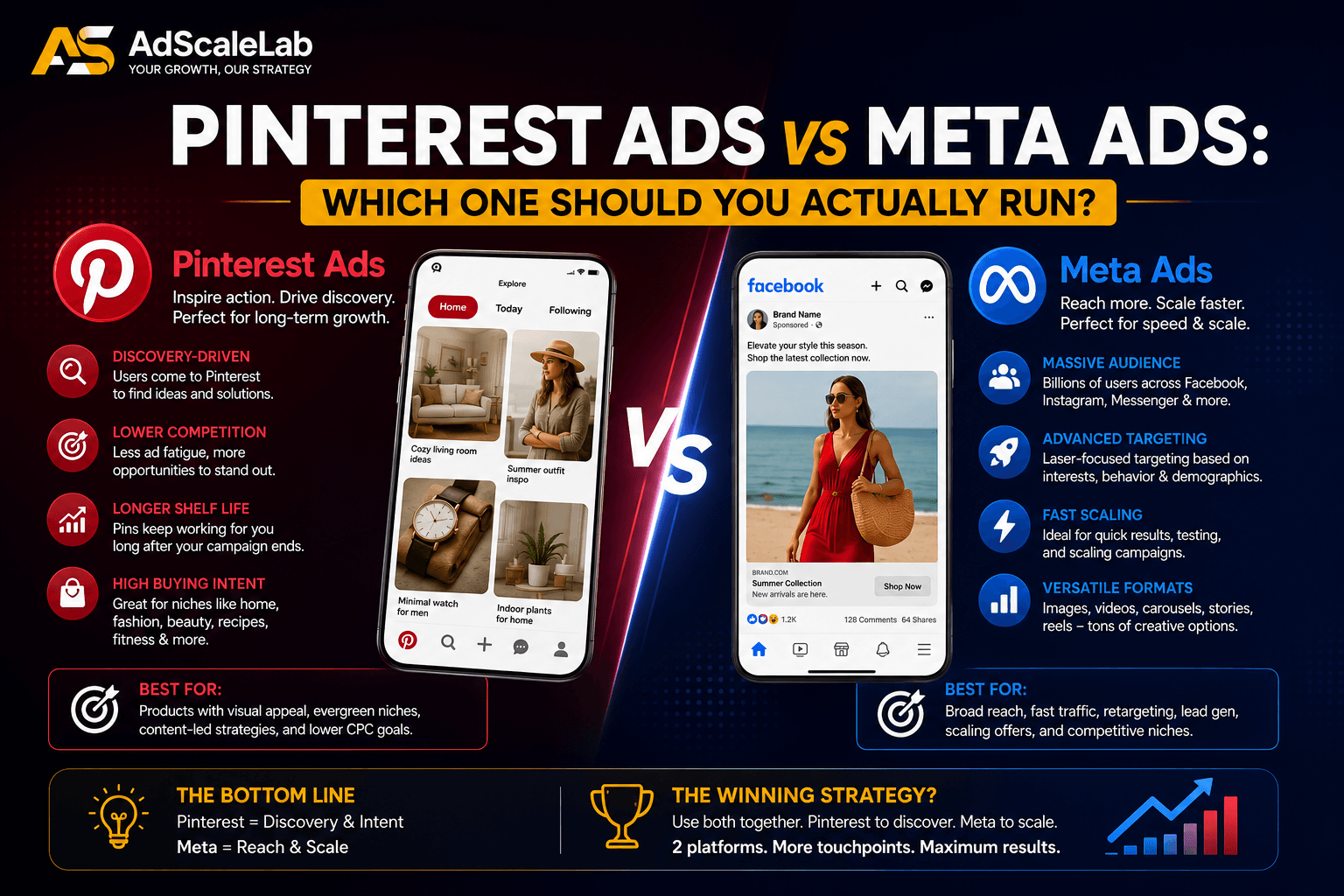
Pinterest has always been a lower-competition channel than Meta. The intent is unusually high because people come to Pinterest to plan and to buy, not to argue. CPMs are usually softer, and for the right verticals, especially ecommerce and lifestyle, it converts well above what most buyers expect. When the platform itself is under pressure to keep advertisers happy, that often means better tools, more support for spend, and inventory that is still not being fought over by every media buyer on earth.
So the takeaway is not to avoid Pinterest. It is to treat it as the quiet performer it is: a place where a good funnel can find profitable traffic that Meta buyers are ignoring. The buyers who win on Pinterest are usually the ones who show up while everyone else is distracted by the headline about slower growth.
Why Pinterest agency accounts fit this moment
If you want to scale on Pinterest, account structure matters more than people think. A basic self serve account is fine for a small test. Once you push real budget, you run into the same friction every large ad platform creates: sudden reviews, tighter approval rules, spend limits, and a support wall that is hard to get past when something breaks.
Pinterest agency accounts are built for that stage. They give you a more stable base to scale on, more room on limits, and a real person to escalate to when the platform does something you cannot explain on your own. In a moment where Pinterest is competing hard for advertiser spend, having that direct line and that stability is worth a lot. It is the difference between a paused account killing your week and a quick escalation getting you back live.
Pair a Pinterest agency account with landing page pre-approval before you spend, and you remove a big chunk of wasted budget. Pinterest, like every ad platform, reviews your destination page. Getting rejected after you have already funded an account is the most common way buyers lose money. Check the page first, then scale through a proper agency account, and you skip the expensive surprises.
The bottom line
Pinterest's Q2 2026 was a strong quarter wrapped in a cautious outlook. Revenue grew 18%, users hit a record 640 million, and cash flow was healthy, but guidance for slower third quarter growth and rising ad competition sent the stock down. For advertisers, the story is more encouraging than the share price suggests. Pinterest is still a high-intent, lower-competition channel, and a platform under pressure to keep advertisers usually treats them well. The smart way to ride it is with careful landing pages and the stability and scale that Pinterest agency accounts are designed to give you.
This article is for general information only and is not financial advice. Figures are from Pinterest's Q2 2026 results (reported August 4, 2026) and related reporting.
Source: reuters.com
Agency ad accounts, without the wait.
Buy and top up Google, Meta, native, and more from one dashboard.
Get started
No comments yet. Be the first to comment.
Comments are open to registered AdScaleLab clients.
Sign in to comment