






Pinterest Ads vs Meta Ads: Which One to Select?
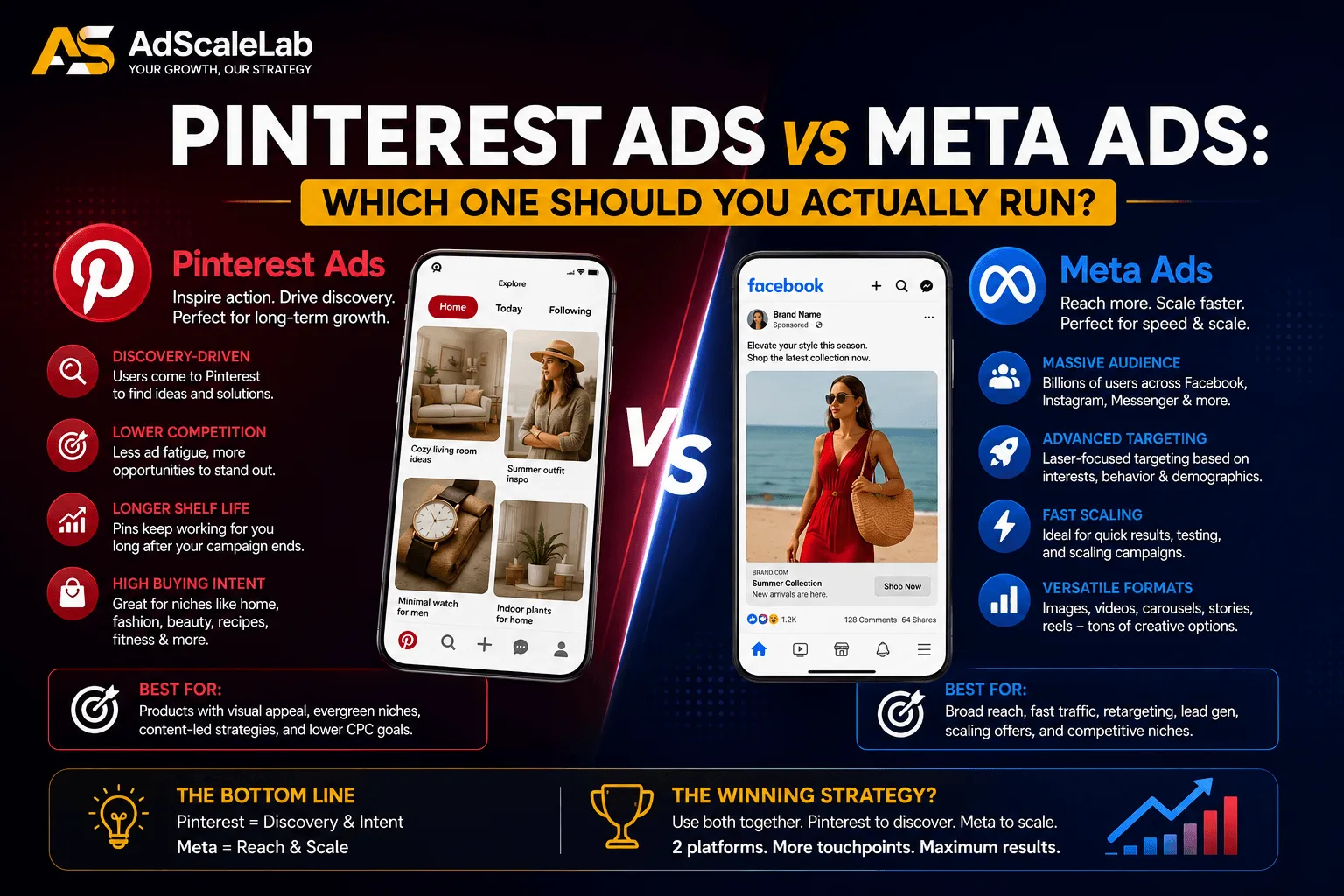
This question usually gets answered badly. Somebody compares average CPCs, decides one platform is cheaper, and moves their budget. Six weeks later they move it back.
The reason that fails is that CPC is an output, not an input. What actually decides whether pinterest ads vs meta ads works for you is something much simpler: what was the person doing in the second before your ad appeared. Everything else follows from that.
The One Difference Pinterest Ads vs Meta Ads That Explains all The Others
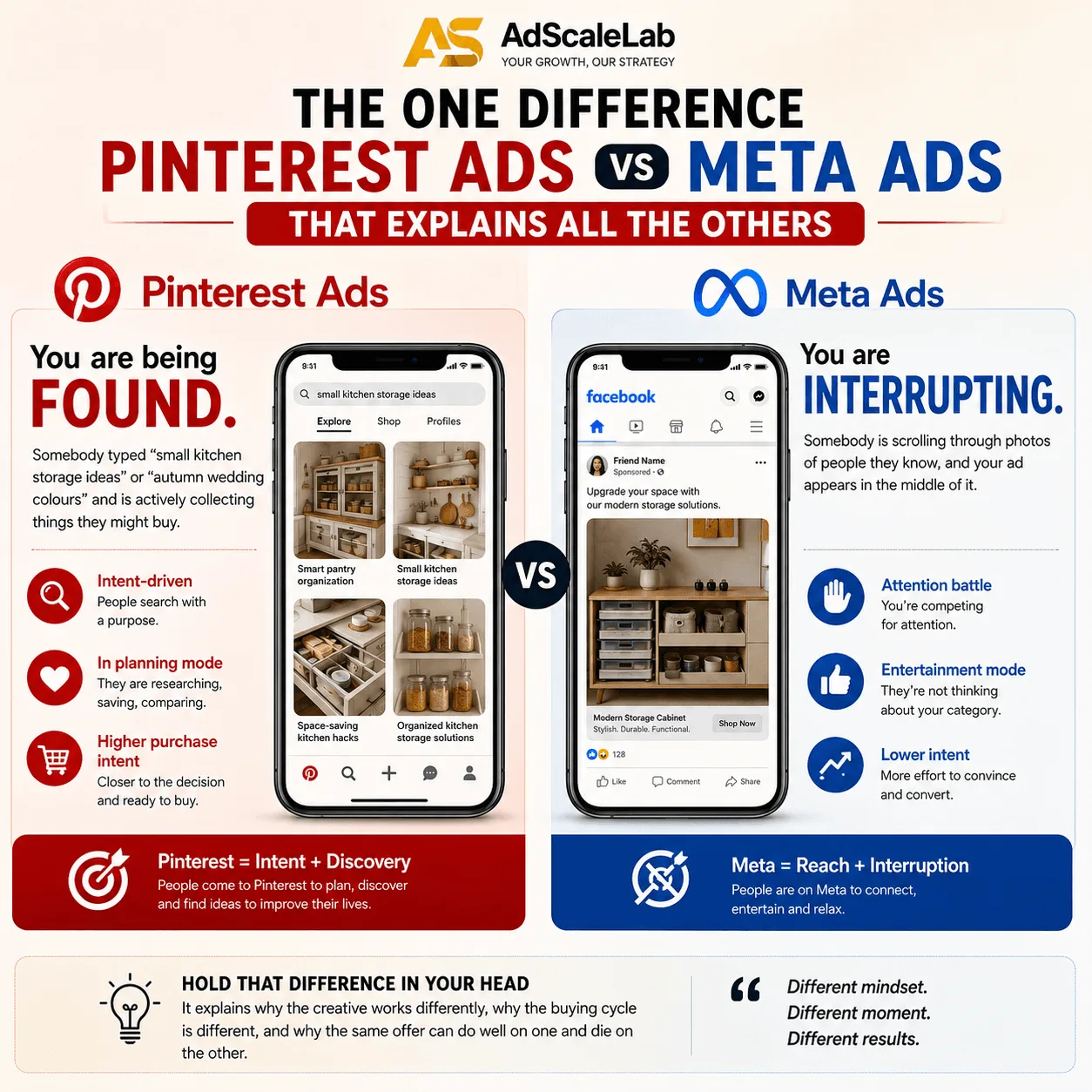
On Meta, you are interrupting. Somebody is scrolling through photos of people they know, and your ad appears in the middle of it. They did not come looking for you and they were not thinking about your category. Your job is to stop them.
On Pinterest, you are being found. Somebody typed "small kitchen storage ideas" or "autumn wedding colours" and is actively collecting things they might buy. They are in planning mode, not entertainment mode.
Hold that difference in your head and the rest of this article is mostly obvious. It explains why the creative works differently, why the buying cycle is different, and why the same offer can do well on one and die on the other.
Where Meta wins
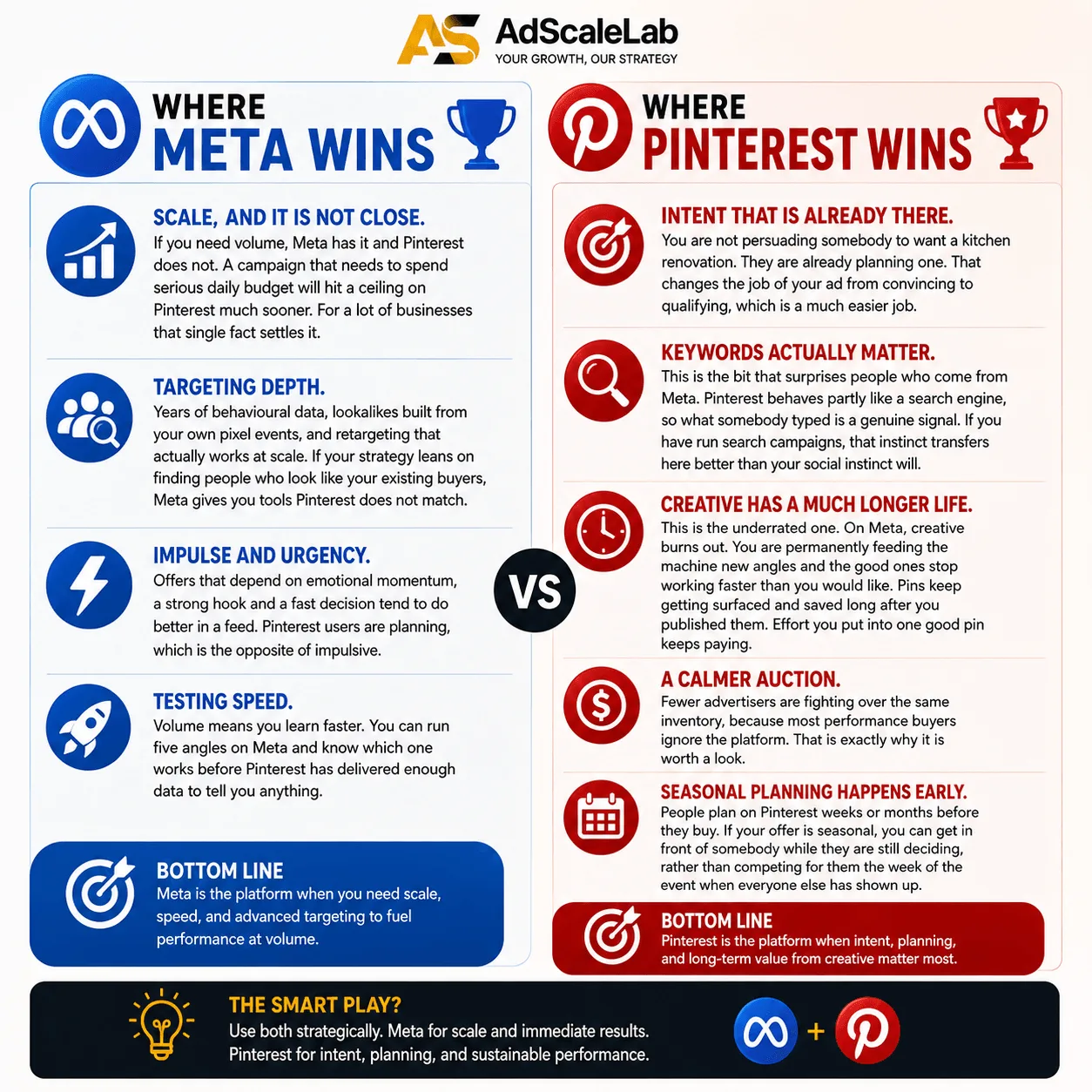
Scale, and it is not close. If you need volume, Meta has it and Pinterest does not. A campaign that needs to spend serious daily budget will hit a ceiling on Pinterest much sooner. For a lot of businesses that single fact settles it.
Targeting depth. Years of behavioural data, lookalikes built from your own pixel events, and retargeting that actually works at scale. If your strategy leans on finding people who look like your existing buyers, Meta gives you tools Pinterest does not match.
Impulse and urgency. Offers that depend on emotional momentum, a strong hook and a fast decision tend to do better in a feed. Pinterest users are planning, which is the opposite of impulsive.
Testing speed. Volume means you learn faster. You can run five angles on Meta and know which one works before Pinterest has delivered enough data to tell you anything.
Where Pinterest wins
Intent that is already there. You are not persuading somebody to want a kitchen renovation. They are already planning one. That changes the job of your ad from convincing to qualifying, which is a much easier job.
Keywords actually matter. This is the bit that surprises people who come from Meta. Pinterest behaves partly like a search engine, so what somebody typed is a genuine signal. If you have run search campaigns, that instinct transfers here better than your social instinct will.
Creative has a much longer life. This is the underrated one. On Meta, creative burns out. You are permanently feeding the machine new angles and the good ones stop working faster than you would like. Pins keep getting surfaced and saved long after you published them. Effort you put into one good pin keeps paying.
A calmer auction. Fewer advertisers are fighting over the same inventory, because most performance buyers ignore the platform. That is exactly why it is worth a look.
Seasonal planning happens early. People plan on Pinterest weeks or months before they buy. If your offer is seasonal, you can get in front of somebody while they are still deciding, rather than competing for them the week of the event when everyone else has shown up.
What each one costs you in work
Nobody talks about this and it matters more than CPMs.
Meta demands a creative pipeline. Not three ads. A process, producing new angles continuously, because your winners will stop winning. If you cannot sustain that, Meta will feel expensive no matter what your CPMs look like, because your performance will decay and you will have nothing to replace it with.
Pinterest demands the right format from the start. Vertical, roughly 2:3. Square or landscape assets recycled from another channel look wrong and get scrolled past. The good news is you need fewer of them, and they last. The bad news is you cannot simply repost your Meta library and expect it to work, which is exactly what most people try first.
Account stability
Worth being straight about, because it affects real budgets.
Meta enforces aggressively and account issues are a normal part of buying there. Anyone who has spent seriously on Meta has lost an account or had one restricted at an awkward moment. You plan around it.
Pinterest is generally quieter, but that is not the same as permissive. Review still happens, the landing page is still what gets you rejected, and a fresh self serve account with no history gets less benefit of the doubt on either platform. That is one of the reasons people run agency accounts on both: you start with standing rather than earning it while your budget is live.
So which should you run?
Run Meta if you need volume, your offer works on impulse, you have or can build a real creative pipeline, or your strategy depends on retargeting and lookalikes at scale.
Run Pinterest if you sell something visual that people plan for. Home, interiors, fashion, beauty, food, weddings, travel, DIY, gifting. Especially if your funnel is content led, or your product is seasonal.
Run both if you have the budget for it, and most established ecommerce brands should. They do different jobs. Meta gives you reach and speed. Pinterest gives you a buyer who was already looking, at a price nobody is bidding up. Using one to judge the other is where people go wrong, because they will never produce the same shaped numbers.
Run neither if your landing page is not ready. This is the honest answer for more people than either platform's sales page will admit. Both reward a page that delivers what the ad promised, and both punish one that does not.
If you are going to test both
A few things that save money.
Do not judge them on the same timeline. Meta tells you quickly. Pinterest takes longer, partly because volume is lower and partly because pins keep earning after launch, so early numbers understate the result. Killing Pinterest after a week is the single most common mistake.
Do not reuse the creative. Build vertical for Pinterest. It is not optional and it is the fastest way to conclude the channel does not work when the real problem was the aspect ratio.
Do the keyword work. Treat Pinterest like a search campaign, not a social one. Think about what somebody types while planning the thing you sell.
Sort tracking before you spend. Both platforms optimise toward whatever you tell them, and both will happily optimise toward an event that is not recording properly. Fire a test conversion and watch it land before you scale anything.
Getting started on either
Whichever you pick, the account matters. A brand new self serve account is treated as an unknown, gets reviewed harder, and leaves you with a support form when something breaks. An agency account starts with standing, gets your URL reviewed before you pay, and gives you someone to escalate to.
You can get a Pinterest Ads agency account or a Meta Ads agency account from us, and there is a longer walkthrough of the Pinterest side in our guide to getting, setting up and running a Pinterest Ads agency account.
Send your URL first either way. We will tell you honestly whether it is going to pass before you pay for anything.
FAQ
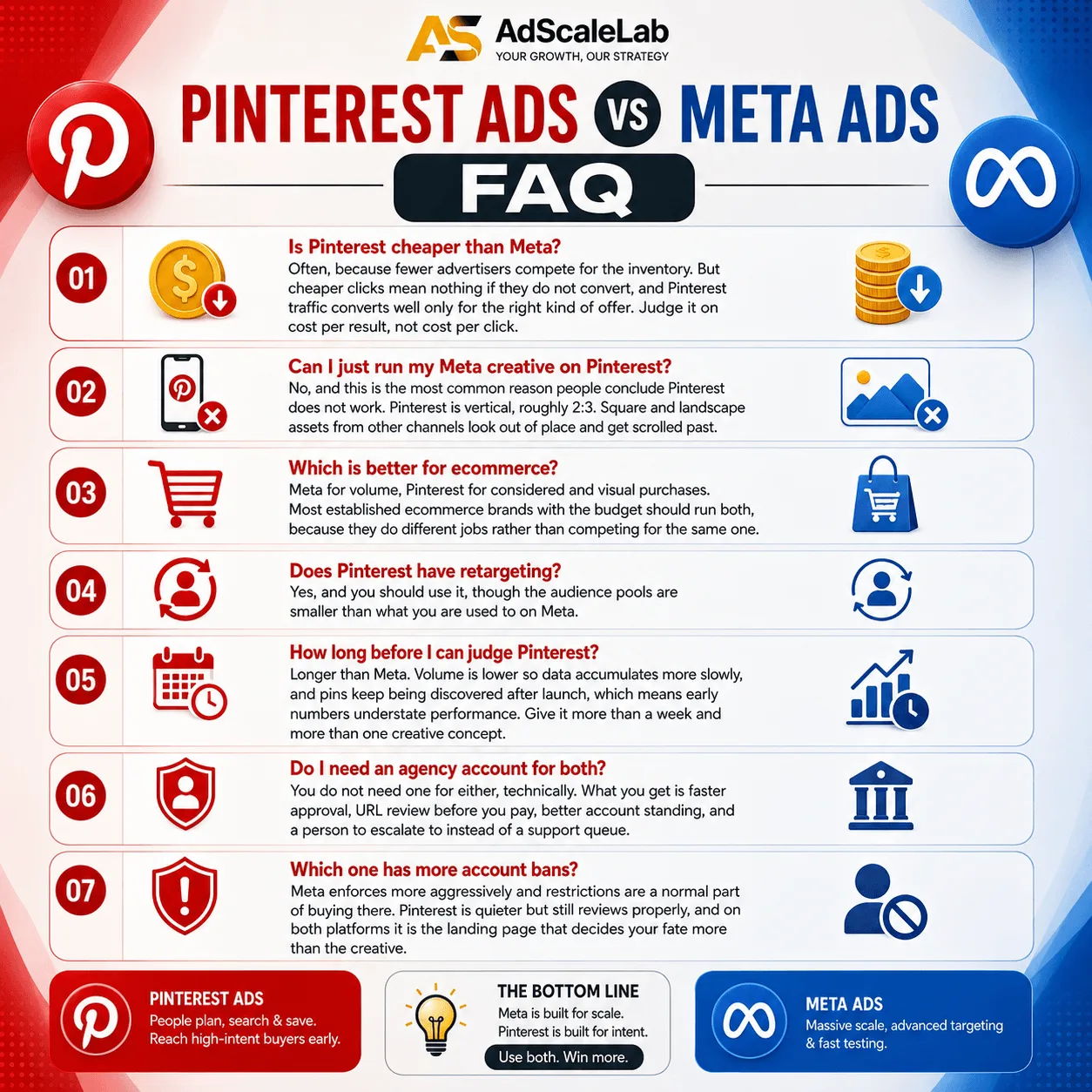
Is Pinterest cheaper than Meta?
Often, because fewer advertisers compete for the inventory. But cheaper clicks mean nothing if they do not convert, and Pinterest traffic converts well only for the right kind of offer. Judge it on cost per result, not cost per click.
Can I just run my Meta creative on Pinterest?
No, and this is the most common reason people conclude Pinterest does not work. Pinterest is vertical, roughly 2:3. Square and landscape assets from other channels look out of place and get scrolled past.
Which is better for ecommerce?
Meta for volume, Pinterest for considered and visual purchases. Most established ecommerce brands with the budget should run both, because they do different jobs rather than competing for the same one.
Does Pinterest have retargeting?
Yes, and you should use it, though the audience pools are smaller than what you are used to on Meta.
How long before I can judge Pinterest?
Longer than Meta. Volume is lower so data accumulates more slowly, and pins keep being discovered after launch, which means early numbers understate performance. Give it more than a week and more than one creative concept.
Do I need an agency account for both?
You do not need one for either, technically. What you get is faster approval, URL review before you pay, better account standing, and a person to escalate to instead of a support queue.
Which one has more account bans?
Meta enforces more aggressively and restrictions are a normal part of buying there. Pinterest is quieter but still reviews properly, and on both platforms it is the landing page that decides your fate more than the creative.
Agency ad accounts, without the wait.
Buy and top up Google, Meta, native, and more from one dashboard.
Get started

No comments yet. Be the first to comment.
Comments are open to registered AdScaleLab clients.
Sign in to comment