





Meta Revises Commercial Terms After Concerns About Website Content Use
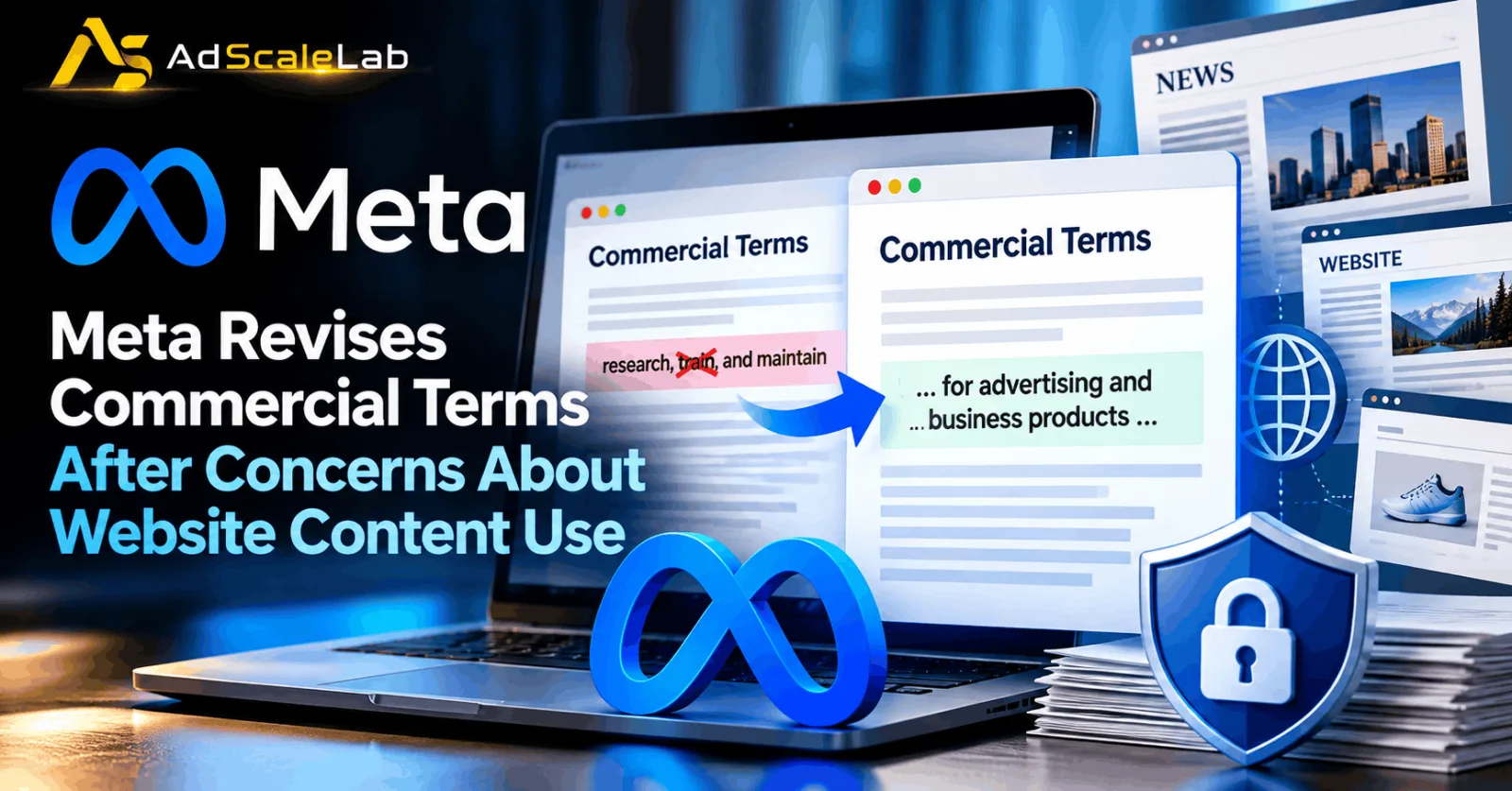
Meta revises commercial terms after its upcoming policy changes raised concerns among publishers, website owners, and legal experts about how content from external websites could be collected and used. The company removed wording that specifically referred to training its products after questions emerged about whether the terms could allow it to scrape websites linked to business accounts and use that material to develop its artificial intelligence (AI) systems.
The change was reported on October 17, 2026, following several days of coverage and criticism from publishing and legal experts. Meta says the revision clarifies the purpose of its commercial terms and does not change how its web crawlers operate. However, concerns remain about the wider permission to collect information from websites associated with businesses that use Meta's services. The updated terms are scheduled to take effect on October 30, 2026. This gives the issue importance for companies that rely on Facebook, Instagram, WhatsApp, and other Meta business tools to reach customers and promote their products.
What Happened When Meta Revises Commercial Terms?
The issue began when Meta introduced changes to its commercial terms of use. These terms explain the conditions businesses must follow when using the company's commercial products and services.
The wording attracted attention because it described how Meta and companies working on its behalf could use automated tools to access, collect, analyze, and retrieve information from websites connected to businesses. The original wording also said Meta could use the collected content to provide, develop, improve, research, train, and maintain its products and services.
That reference to training raised concerns because it could be interpreted as giving Meta permission to use material from external websites to train AI systems. The concern was not limited to information that businesses had directly uploaded to Facebook or Instagram. It also involved content available on websites connected to their products and services.
On October 17, Meta revised the wording by removing the explicit reference to training and narrowing the stated purposes to advertising and business products. The change followed reporting by Nieman Journalism Lab . The revision is an important development, but it does not mean that every concern has been settled. Legal experts have questioned whether the remaining wording is still broad enough to cover website content used to develop Meta's business products, including AI-related tools.
Meta's New Website Content Rules Raise Concerns
The main concern is how far the permission to collect website content could extend. Many businesses maintain a website while also operating a Facebook Page, Instagram profile, or WhatsApp business channel. These accounts help companies advertise products, communicate with customers, and share links to their websites. Under the wording that originally attracted criticism, websites associated with these businesses could fall within the scope of Meta's crawling permissions.
For example, a news publisher might use Facebook and Instagram to share its articles and attract readers. Its website could contain original reporting, photographs, interviews, product reviews, and other material that required time and money to produce.
Publishers were concerned that broad commercial terms could allow automated systems to collect this material without a separate agreement covering every possible use. If website content were used to develop AI products, publishers could also question whether they should receive payment or retain greater control over how their work is used. The concern is not simply about whether a crawler can visit a webpage. It is also about what happens to the information after it has been collected, how that information may be used, and whether the website owner has meaningful control over those uses.
However, it is important to separate a possible interpretation of the terms from a confirmed action. The reporting does not establish that Meta used the revised terms to scrape every business website or that all collected content was used to train its AI models.
Changes In Meta Commercial Terms
Meta removed the word "train" from the relevant wording and restricted the stated purposes to advertising and business products. The company said it had consolidated provisions that previously appeared in different agreements and wanted to make the scope of the terms clearer. This distinction matters. Meta's position is that the updated language clarifies existing practices rather than introducing a new system for collecting website content. The company also said the revision did not change how it uses web crawlers.
Still, some legal experts believe that removing one word does not fully answer the questions raised by the original wording. The revised language continues to allow crawling and the use of collected information to develop and improve advertising and business products.
The word "develop" has attracted particular attention because AI tools can form part of business products. Critics therefore argue that removing an explicit reference to training does not necessarily settle every question about whether collected content could contribute to AI development. This remains a disagreement over the meaning and potential reach of the terms. It should not be presented as proof that Meta has confirmed plans to use all associated website content for AI training.
Why Are Publishers And Website Owners Worried?
Publishers depend on their original content to attract readers, build trust, and earn revenue through advertising, subscriptions, and licensing agreements. If a technology company collects and reuses that content, publishers may want clear limits on what can be collected and how it can be used. The debate becomes more complicated when publishers rely on the same technology company to reach their audiences. A news organization may use Facebook and Instagram to distribute articles, promote its brand, and bring visitors to its website. Its business accounts are therefore valuable parts of its marketing strategy.
The concern is that businesses could face a difficult choice if accepting commercial terms is necessary to continue using important platform services. They may want to keep using Meta's tools while also protecting their original website content.
These concerns are not limited to large media organizations. Smaller publishers, ecommerce companies, independent websites, and other businesses may also have original content they want to protect. The practical impact will depend on the final terms, how Meta applies them, and how applicable laws address the collection and use of website material.
Does The Revision Mean Meta Can Ignore Robots.txt?
No such conclusion should be drawn from the current reporting.
A robots.txt file is a publicly accessible file that website owners use to communicate instructions to automated crawlers. It can identify areas of a website that a crawler is requested not to access. Many publishers use it to manage how search engines and other automated systems interact with their websites. Meta has said website owners can continue using robots.txt to manage crawler access. The company also said the terms revision did not change how its crawlers operate.
However, legal experts have questioned whether the revised commercial wording clearly addresses the relationship between these website instructions and Meta's contractual permissions. A robots.txt file communicates a website owner's preferences, but its legal effect can depend on the circumstances and applicable law. It should not automatically be treated as a complete legal guarantee against every form of access or use.
For website owners, the safest approach is to review the crawler documentation and current commercial terms rather than assuming that one technical setting resolves every issue. They should also understand which automated systems they want to allow or block and check whether their hosting platform or content management system provides additional controls. The broader question is whether the written terms, the company's stated practices, and the technical controls available to website owners provide enough clarity about the use of external content.
What Does This Mean For Advertisers Using Meta Ads
For advertisers, the immediate issue is the scope of Meta's commercial terms rather than a confirmed change to campaign delivery, targeting, or advertising performance.
Businesses using Meta Ads may have websites containing product descriptions, prices, service details, landing pages, and other information that helps customers understand their offers. Meta's advertising products also use website information in certain commercial workflows, such as creating or improving ad content.
The recent debate highlights why advertisers should understand the permissions they grant when using advertising tools. They should review the terms that apply to their accounts, especially when they connect websites, product catalogs, or other external data sources to advertising services. Businesses should also distinguish between ordinary advertising functions and the broader question of whether collected website information may be used to develop other products. These are related issues, but they are not identical.
At this stage, there is no verified evidence in the reports cited here that the wording revision has caused a general change in Meta Ads campaign performance or that advertisers must rebuild their campaigns. The practical step is to review the relevant agreements and monitor further updates instead of making sudden changes based only on speculation.
What Should Businesses Do Before October 30, 2026?
With the updated terms scheduled to take effect on October 30, businesses have a reason to review their arrangements before the deadline. Website owners should first read the current commercial terms and identify which accounts, tools, and services fall under them. They should pay particular attention to permissions relating to automated access, website content, advertising products, and business tools.
Businesses that publish original material should review their robots.txt configuration and other available crawler controls. They should keep a record of their current settings and confirm which crawlers those settings address. These steps can help them manage access, although they do not replace legal advice about the meaning of contractual terms.
Companies that rely heavily on Facebook, Instagram, or WhatsApp should also consider how important those services are to their marketing and customer communication. Reviewing alternative traffic sources, maintaining direct customer relationships, and keeping copies of original content are sensible business practices regardless of this specific dispute.
Finally, businesses should follow updates from Meta and credible technology publications. The revised wording has reduced one source of concern, but questions remain about how the remaining provisions will be interpreted and applied.
What Happens Next In The Meta Commercial Terms Debate?
The next important date is October 30, when the updated commercial terms are scheduled to take effect. Attention is likely to remain on whether Meta provides further clarification and whether publishers or industry organizations seek additional changes. The discussion also reflects a wider challenge for the technology industry. Companies developing AI systems need access to useful information, while publishers and businesses want control over their work and clarity about how it may be reused.
Those interests can overlap, but they do not always align. Clear terms, transparent data practices, and meaningful controls can help businesses understand the choices they are making when they use major digital platforms. For now, Meta says the revision clarifies its existing commercial terms and does not change how it crawls the web. Critics argue that the remaining wording still leaves important questions unanswered. The final effect will depend on the terms that apply, how they are enforced, and any further clarification or legal developments.
The key takeaway: Meta has removed the explicit reference to training from its revised commercial terms after concerns about website content collection. However, the wider debate about website scraping, business permissions, and AI development is not over. Advertisers, publishers, and website owners should review the current terms and follow further updates before drawing conclusions about how their content may be used
Agency ad accounts, without the wait.
Buy and top up Google, Meta, native, and more from one dashboard.
Get started


No comments yet. Be the first to comment.
Comments are open to registered AdScaleLab clients.
Sign in to comment