





Netflix Launches Netflix Pixel To Improve Ad Conversion Measurement
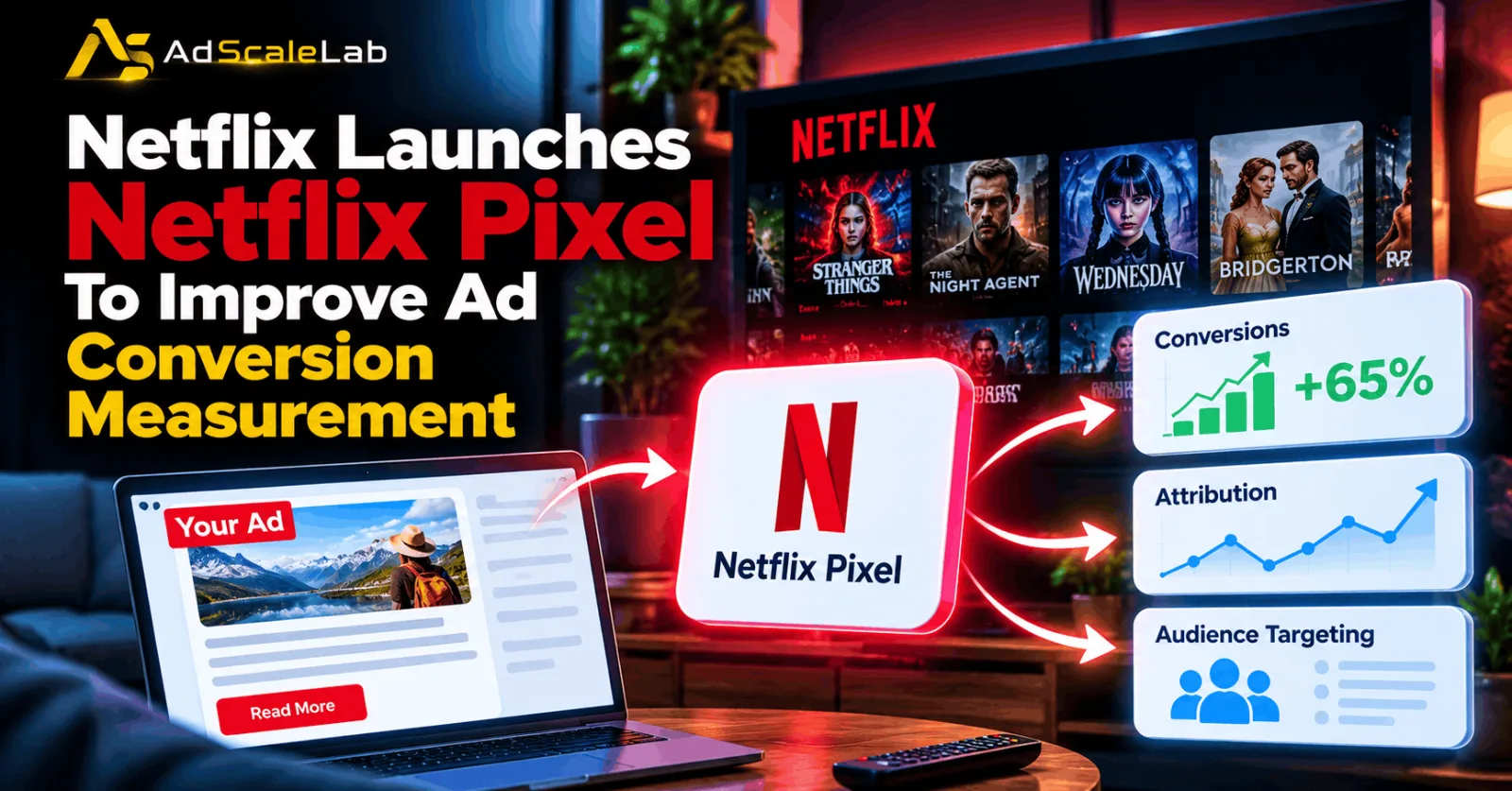
Netflix is expanding its advertising technology with a new tool designed to help brands measure what happens after people see their ads. On October 20, 2026, the company announced the Netflix Pixel, a new measurement capability that works alongside its existing Conversion API (CAPI). The update is part of Netflix's wider effort to help advertisers connect campaigns with business results instead of focusing only on views and impressions. The announcement is important for advertisers using connected TV (CTV), where proving the impact of an ad can be more complicated than measuring a click on a website. A viewer may see an ad while watching Netflix and later visit a retailer's website, sign up for a service, or complete a purchase. Advertisers want better ways to understand whether their campaigns are contributing to those actions.
According to Netflix's official announcement, the new Pixel and Conversion API will allow advertisers to onboard more than 20 lower-funnel conversion events in a standardized way. Netflix says the combined tools will also support its first-party measurement solutions and allow advertisers to build audience segments using conversion data.
The announcement comes as Netflix continues to develop its advertising business and add more ways for brands to buy, target, and measure campaigns. For advertisers, the main question is whether these new tools will make it easier to connect streaming ad exposure with meaningful outcomes.
What Is The Netflix Pixel And How Does It Work?
The Netflix Pixel is a new advertising measurement tool designed to work with Netflix's Conversion API. A conversion is an action that an advertiser wants a customer to complete, such as signing up for a service, submitting a lead form, or making a purchase. Advertisers often need more than basic delivery figures to understand campaign performance. Impressions show how often ads were served, while reach estimates how many people were exposed to a campaign. Neither metric alone explains whether the advertising helped generate a sale or another valuable action.
Netflix's new Pixel is intended to help advertisers connect their conversion data with the company's advertising measurement and targeting tools. The company says advertisers can standardize more than 20 lower-funnel conversion events through its Pixel and CAPI capabilities. This matters because advertisers may use different systems to collect and report conversion information. A more standardized approach can make it easier to organize those events and use them for measurement. However, the announcement does not mean every advertiser will automatically receive complete user-level attribution or a guaranteed improvement in campaign performance.
Netflix introduced its Conversion API in March 2026 as part of the Netflix Ads Suite. The Pixel builds on that earlier work rather than replacing the existing API. Together, the tools are intended to help advertisers understand the results of campaigns running on Netflix.
Netflix Pixel Adds More Ways To Measure Advertising Results
One of the main features announced by Netflix is support for its first-party measurement solutions, including conversion lift, attribution, and A/B testing. Attribution helps advertisers understand which marketing interactions are associated with a conversion. For example, a brand may want to know whether people exposed to a Netflix campaign later completed a sign-up or purchase. Attribution tools can help connect campaign exposure with those outcomes, although the method and available data determine what can be concluded.
Conversion lift addresses a different question: did the advertising generate additional actions that would not otherwise have happened? A campaign might receive credit for conversions from people who would have purchased anyway. Lift measurement aims to estimate the additional impact of advertising rather than counting every observed conversion as an outcome caused by the campaign.
A/B testing can help advertisers compare different approaches and determine which performs better under a suitable testing setup. Depending on the campaign, that could mean comparing creative messages, audiences, or other testable elements. Netflix says advertisers can test its first-party measurement solutions through the combined Pixel and CAPI capabilities. These tools may help brands look beyond basic engagement metrics and make more informed decisions about their campaigns.
Netflix Pixel Can Also Support Audience Targeting
The new Pixel is not only about measuring results after a campaign runs. Netflix says advertisers can also use conversion data to enhance targeting and build audience segments. Audience segmentation involves grouping people based on relevant characteristics or actions. For example, a business might want to reach people who have shown interest in a particular product category or build an audience based on an eligible conversion event. Using conversion information for audience planning can help advertisers connect measurement with future campaign decisions. Instead of looking only at what happened during an earlier campaign, marketers can use suitable data to inform how they approach later campaigns.
However, this does not mean that every conversion event automatically becomes a targeting audience. The actual possibilities depend on the data advertisers can onboard, the features available to their accounts, and applicable privacy and platform requirements.
Netflix's announcement describes the ability to build audience segments from conversion data, but it does not provide a complete public list of all supported events or every targeting combination available to advertisers. Brands should confirm the implementation details with their Netflix advertising representatives before planning campaigns around a specific event.
Netflix Expands Programmatic Advertising With The Trade Desk
The Netflix Pixel announcement was part of a broader update to the company's advertising technology. Netflix also announced that advertisers would be able to activate third-party data and their own first-party audiences through The Trade Desk's advertising platform, Kokai, starting in November 2026. The Trade Desk's official announcement says advertisers will be able to use data from its marketplace, which includes more than four million segments from over 300 providers, as well as onboard their own first-party audiences for targeting on Netflix inventory. The company also said in-platform measurement capabilities were coming soon.
This development is relevant because programmatic advertising allows advertisers to buy and manage campaigns through automated platforms. Integrating Netflix inventory into more familiar buying tools can make it easier for agencies and brands to include streaming TV in their wider media plans. Netflix has already expanded targeting options through Amazon and Yahoo. In its October 20 announcement, the company said The Trade Desk would join those options, giving advertisers another way to activate audiences for Netflix campaigns.
For agencies, the practical benefit will depend on how these integrations work in their accounts. Advertisers will need to confirm which data segments, measurement reports, and targeting features are available, along with any requirements for campaign setup.
Netflix Is Trying To Connect Ad Exposure With Business Outcomes
The wider industry has been moving beyond basic advertising metrics. Advertisers increasingly want to know not only whether people saw an ad, but also whether the campaign contributed to sales, registrations, or other meaningful actions. This challenge is especially important in connected TV. Viewers often watch content on a television screen and complete later actions on a phone or computer. A person may see an ad during a streaming session but not click anything immediately. Measuring the relationship between that exposure and a later conversion can require different methods from those used in standard web advertising.
Netflix has been developing measurement capabilities to address this need. In its March announcement about the Conversion API, the company said early testing with advertising agency Tinuiti across financial services, education technology, and retail clients produced attribution results that outperformed benchmarks by more than 75%. That figure refers to the early tests Netflix described; it should not be interpreted as a guaranteed improvement for every advertiser.
In its October announcement, Netflix also described a study with a leading delivery app brand. The company said its first-party Conversion Lift measurement showed a 2.7% lift in sign-ups and a 2.9% lift in new trials. These were results from that particular study, not a universal performance promise for the new Pixel. These examples show why advertisers are interested in tools that can connect exposure with measurable outcomes. Still, measurement quality depends on the study design, available data, campaign conditions, and the definition of a conversion. A new tool can improve the process, but it does not remove the need for careful analysis.
What The Netflix Pixel Means For Advertisers And Agencies
For advertisers, the Netflix Pixel could make it easier to organize lower-funnel conversion data and use it with Netflix's measurement capabilities. Brands that previously focused mainly on reach and video completion may be able to evaluate campaigns using more business-focused metrics. For example, an advertiser promoting a subscription service may care about completed sign-ups rather than video views alone. A retailer may want to understand whether a streaming campaign contributed to purchases. With suitable conversion data and measurement methods, advertisers can investigate those outcomes more directly.
Agencies could also benefit from having more consistent conversion information when evaluating campaigns for different clients. Standardized event onboarding may help reduce differences in how lower-funnel actions are organized. However, agencies should confirm how event setup, reporting access, and data handling work before changing their measurement workflows.
There are also limits to consider. The announcement does not mean Netflix Pixel will replace every existing analytics platform, third-party measurement provider, or advertiser-side tracking system. Different tools can serve different purposes, and some measurement features may depend on the way an advertiser buys Netflix inventory. Advertisers should also review their data governance and privacy obligations before sending conversion information to any advertising platform. The data that can be collected and used will depend on the implementation, user permissions, applicable laws, and the platform's requirements.
What Comes Next For Netflix Advertising Measurement?
Netflix's October 20 announcement signals a continued investment in the technology behind its advertising business. The new Pixel and Conversion API capabilities are intended to help advertisers measure lower-funnel actions, test measurement approaches, and use conversion data for audience targeting. The company is also expanding its programmatic relationships. The Trade Desk's November rollout is a separate part of this wider update, and its announcement says in-platform measurement is coming soon. Advertisers should distinguish these planned capabilities from features already available in their accounts.
The next important question is how widely the new measurement tools will be adopted and how useful they prove to be across different campaign types. Advertisers will want clear documentation, reliable implementation, and reporting that helps them make better decisions about campaign spending.
For now, the announcement gives brands another reason to examine how they measure connected TV campaigns. As streaming advertising grows, the ability to connect ad exposure with meaningful outcomes will remain an important part of evaluating performance.
Final Thoughts
Netflix launched its new Pixel on October 20, 2026, as part of a wider update to the Netflix Ads Suite. Working alongside the Conversion API, the tool is designed to help advertisers standardize more than 20 lower-funnel conversion events, access first-party measurement solutions, and use conversion data to build audience segments.
The announcement also includes broader programmatic developments, including planned audience activation through The Trade Desk starting in November. Together, these changes show Netflix continuing to build the tools advertisers need to plan, target, and measure streaming campaigns.
The real test will be how advertisers use these capabilities and whether the resulting measurement helps them make better decisions. The Pixel is a new part of Netflix's advertising infrastructure, not a guarantee that every campaign will generate more conversions. Its value will depend on implementation, data quality, and how clearly brands can connect campaign activity with business outcomes.
Agency ad accounts, without the wait.
Buy and top up Google, Meta, native, and more from one dashboard.
Get started


No comments yet. Be the first to comment.
Comments are open to registered AdScaleLab clients.
Sign in to comment