





What Advertisers Should Know Before Choosing A Native Ad Network

Choosing the right native ad network has become an important decision for businesses investing in digital advertising. Native advertising allows companies to promote their products and services through content recommendations and advertisements that fit naturally into a publisher's website or app. Unlike traditional banner advertisements, native ads often look similar to the articles and other content surrounding them. This gives advertisers another way to reach potential customers while they browse websites, read online content, and discover new products or services. However, selecting the right native advertising platform requires more than comparing prices because traffic quality, publisher reach, audience targeting, and conversion tracking can all affect campaign performance.
However, getting started with native advertising is not as simple as selecting a platform and adding money to an account. There are several native advertising networks available, and each one has its own publisher inventory, audience targeting, pricing structure, campaign controls, and measurement features. A platform that works well for one advertiser may not deliver the same results for another business. This is why choosing a native ad network requires proper research before spending money. Advertisers need to understand where their ads will appear, what kind of audience they can reach, how conversions will be measured, and whether the network provides enough control over campaign performance. Get Native ads agency account here

Platforms such as Taboola, Teads and MediaGo offer different advertising solutions for reaching audiences across digital content environments. But the biggest network or the platform with the lowest advertised cost is not automatically the right choice. Advertisers should also understand the top native advertising networks available in 2026 and compare their features against their own campaign requirements before making a decision. Before choosing a platform, there are several important factors that can affect the performance and profitability of native advertising campaigns.
Understand The Type Of Traffic A Native Ad Network Provides
One of the first things advertisers should examine is the traffic available through a native ad network. A platform may offer access to a large number of publisher websites, but that does not automatically mean all the traffic will be useful for a particular business. For example, an advertiser promoting financial software may need visitors who are interested in business, finance, or technology. A company selling home improvement products may get better results from audiences who regularly read lifestyle, home, and property-related content.
The type of publisher websites available through a network can therefore make a major difference. Advertisers should understand whether the platform has inventory that matches their target market and whether it can reach people in the locations where they want to sell.
It is also important to understand the difference between traffic volume and traffic quality. A campaign receiving thousands of clicks may look successful in the dashboard, but those clicks have limited value if visitors leave the website immediately or never complete the intended action. This is also one reason why some campaigns fail even after receiving a reasonable amount of traffic. Advertisers can learn more about this problem in AdScaleLab's guide on why native ads don't work for most people who try them. Before choosing a platform, advertisers should ask about its publisher network, available traffic sources, geographic coverage, and reporting capabilities. They should also find out whether campaign performance can be reviewed at the publisher or placement level.
Check Publisher Quality And Placement Control
Publisher quality is another important factor when choosing a native ad network. Native advertisements can appear across different websites and content categories, so advertisers need to understand where their campaigns are being displayed. A large publisher network can provide more opportunities to reach audiences. However, advertisers should also have a way to identify which websites are bringing useful visitors and which placements are spending the budget without producing meaningful results.
This is where publisher-level reporting and exclusion controls become important. Advertisers should check whether the network allows them to review performance by publisher, website, or placement and make changes when necessary.
For example, Outbrain provides publisher and section exclusion options for advertisers. Its help documentation explains that advertisers can review publisher performance and exclude sources that are not delivering sufficient value. However, it also warns that blocking too many publishers can reduce campaign traffic and negatively affect performance. Get Outbrain ads agency account here

Taboola also provides publisher targeting and campaign management capabilities through its advertising platform and Backstage API documentation. Get Taboola ads agency account here

Advertisers should not automatically block every publisher that has a high CPC or a low number of conversions. Some placements may need more time or data before a reliable decision can be made. It is better to evaluate traffic based on campaign goals, conversion volume, and the quality of visitors rather than making decisions from a small number of clicks. For advertisers already running Taboola campaigns, understanding how tracking parameters help identify valuable websites can make this process easier. AdScaleLab explains this in its guide on how to analyze Taboola tracking parameters to find which sites convert.
Compare Audience Targeting Options
A native ad network should also provide targeting options that help advertisers reach the right audience. Even when a platform has a large publisher network, advertisers still need ways to control who sees their campaigns. Location targeting is particularly important for businesses operating in specific countries, states, or cities. For example, a US-based company that only provides services in California may not want to spend its budget attracting visitors from countries where it cannot operate.
Device and operating system targeting can also matter. Some campaigns may perform better on desktop devices, while others may receive more engagement from mobile users. Advertisers should have enough flexibility to review these differences and adjust their campaign settings. Audience and interest targeting can provide additional control. Outbrain's advertiser documentation describes interest targeting based on audience interests, along with other targeting options. It also explains that adding too many targeting restrictions can reduce the potential reach of a campaign.
This is an important point for advertisers. More targeting options do not always mean better results. If a campaign is restricted to a very small audience, it may struggle to spend its budget or generate enough conversions. The right native ad network should provide targeting options that match the advertiser's goals while still allowing enough room for the campaign to reach potential customers.
Understand The Pricing Structure Before Depositing Money
Advertising costs are one of the first things businesses usually compare when selecting a native ad network. However, looking only at the starting CPC can create the wrong impression. Many native advertising campaigns use cost-per-click pricing, where advertisers pay when someone clicks an advertisement. But the actual amount spent can depend on bidding competition, targeting settings, campaign objectives, and the available inventory.
For example, a network may offer a lower starting CPC, but that does not guarantee that the campaign will receive affordable conversions. Another network may have a higher average click cost but attract visitors who are more likely to complete a purchase or submit a lead form.
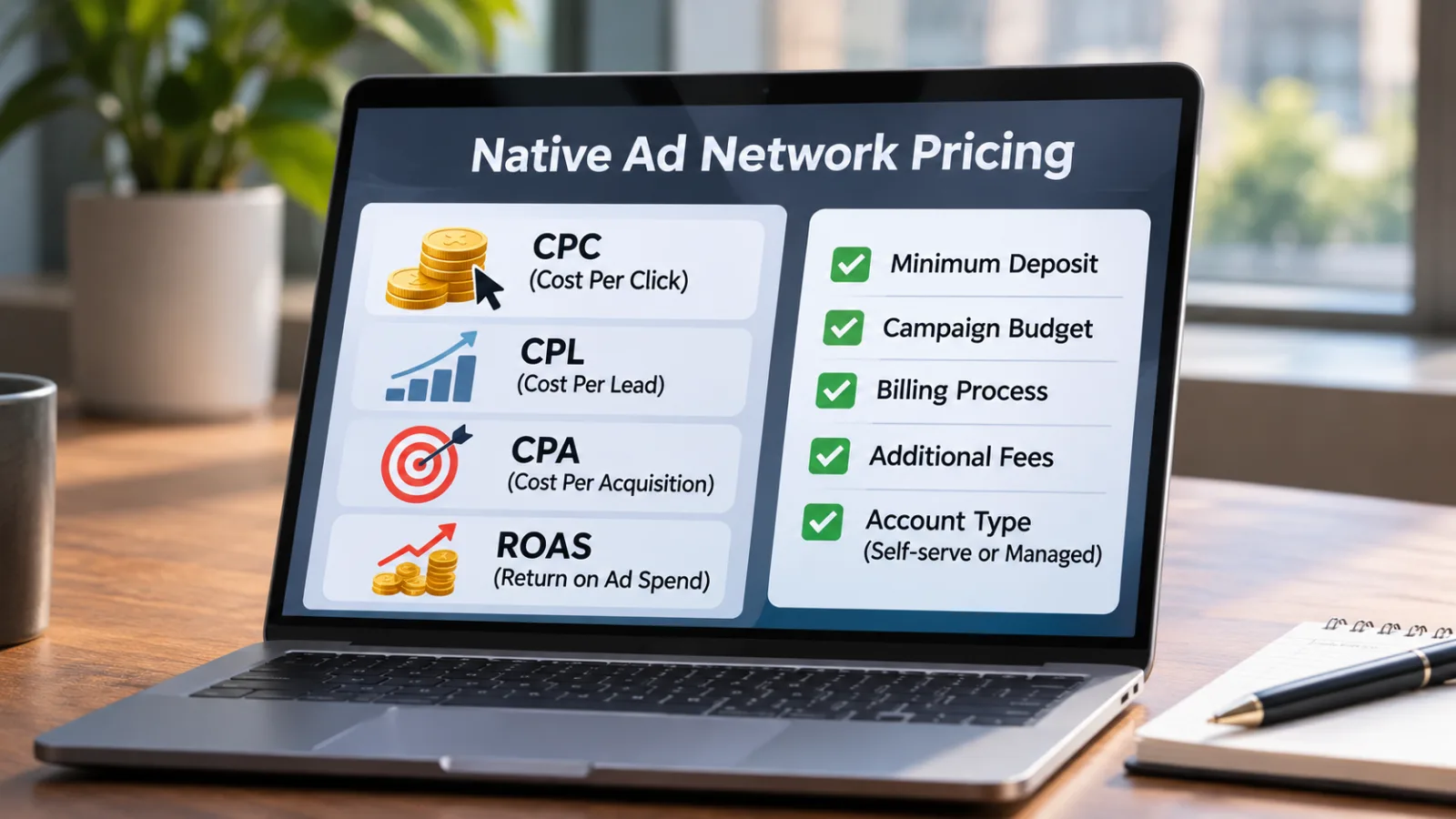
Advertisers should therefore look beyond the cost of individual clicks. They should consider the cost per lead, cost per acquisition, conversion rate, and return on advertising spend. It is also important to understand the network's minimum deposit, minimum campaign budget, billing process, and any additional charges. Some platforms may offer different arrangements for self-service advertisers and managed accounts.
Before making a deposit, advertisers should ask whether the balance has any restrictions, how refunds are handled, and whether there are additional fees for premium targeting or other services. A clear understanding of the pricing structure can help businesses avoid unexpected costs after their campaigns become active. Advertisers planning to increase their spending should also understand how to scale native ad campaigns without increasing CPA. Scaling should be based on actual conversion performance, not simply on the amount of traffic a campaign receives.
Make Sure Conversion Tracking Is Available
Conversion tracking is one of the most important features to examine before choosing a native ad network. Without proper tracking, advertisers may know how many clicks their campaigns receive but still have difficulty understanding how much business those clicks generate. A conversion can be different for every advertiser. For an ecommerce company, it may be a completed purchase. For a service business, it could be a submitted lead form or a phone call. A software company may want to track registrations, trial sign-ups, or paid subscriptions.
The network should provide a suitable way to measure these actions and connect them with campaign performance.
Taboola's official developer documentation explains two main conversion tracking methods: its client-side pixel and server-to-server tracking. It also provides guidance on setting up event-based, URL-based, and other conversion rules.
MediaGo also provides server-to-server conversion postback documentation. Its system uses a tracking ID that advertisers can send back when a conversion takes place, helping connect the conversion with the original advertising click.
These examples show why advertisers should check tracking support before launching a campaign. They should confirm whether the platform works with their existing analytics tools, tracking software, and website setup. It is also worth checking whether the network supports the conversion events that matter to the business. A platform that only measures clicks may not provide enough information for an advertiser who needs to optimize campaigns around purchases or qualified leads. Proper tracking also makes it easier to understand which traffic sources are producing results. Advertisers can use this information to compare publishers, creatives, and campaign settings instead of making decisions based only on click numbers.
Check Reporting And Optimization Features
A good native ad network should provide enough reporting information for advertisers to understand how their campaigns are performing. Basic numbers such as impressions, clicks, and spending are useful, but they do not tell the complete story. Advertisers may also need information about conversions, cost per acquisition, conversion rates, publisher performance, geographic results, device performance, and creative performance. For example, two advertisements may receive a similar number of clicks, but one may generate more leads than the other. Without conversion and campaign-level reporting, it becomes difficult to identify which creative is actually providing better results.
Advertisers should also check whether the platform offers useful optimization tools. These may include automatic bidding, conversion-based bidding, campaign recommendations, publisher exclusions, and creative testing features.
However, automatic optimization should not be treated as a guarantee of profitable results. These systems depend on the quality and amount of data available to them. If conversion tracking is incomplete or a campaign has very little conversion activity, the platform may not have enough information to optimize effectively. The best approach is to combine the network's reporting tools with the advertiser's own analytics. This makes it easier to understand campaign performance instead of depending on a single dashboard.
Review Brand Safety And Advertising Policies
Brand safety is another area that advertisers should not ignore. A company may have a good product and an effective advertisement, but the campaign can still create problems if its content appears next to unsuitable or misleading material. Different businesses have different brand requirements. A financial services company may want stricter controls over the websites and content categories where its ads appear. A family-focused brand may want to avoid certain sensitive topics.
Before selecting a native ad network, advertisers should review its advertising policies, publisher approval process, and available brand safety controls. Teads, for example, publishes a brand safety policy that describes its publisher vetting process, safety filters, and the use of third-party verification technology. The company also explains that advertisers can request additional brand suitability protections depending on their requirements.
Advertisers should also understand the rules for their own creatives and landing pages. Certain products and industries may face additional restrictions, and approval requirements can differ between networks.
Another important point is transparency. Native advertisements should not mislead users into believing that paid promotional content is an independent editorial article. The US Federal Trade Commission explains that disclosures should be clear and prominent when necessary to make the commercial nature of native advertising understandable to consumers. Reviewing these requirements before launching a campaign can reduce the risk of rejected advertisements, account problems, and unsuitable placements.
Evaluate Customer Support And Account Management
The level of support provided by a native ad network can also affect the advertising experience, especially for businesses that are new to the platform. Advertisers may need assistance with account activation, payment questions, campaign approval, tracking setup, billing, or technical problems. If support is difficult to reach, even a useful advertising platform can become frustrating to manage.
Before choosing a network, advertisers should understand what type of support is available. They can check whether the platform offers email support, live assistance, a dedicated account manager, technical documentation, or a managed campaign service. It is also useful to understand the difference between self-service and managed accounts. A self-service account may give advertisers more direct control over campaign settings, while a managed account may include additional assistance from the platform's team.
Neither option is automatically better for every business. Advertisers who already understand campaign management may prefer a self-service environment. Businesses with limited experience may value additional guidance. The important thing is to know what support is included before committing advertising funds.
Test The Network Before Increasing Your Budget
After reviewing the available features, advertisers should still avoid committing their entire budget to a new native ad network immediately. A small test campaign can help businesses understand how the platform performs with their own audience, creatives, and landing pages. This is more useful than depending only on general reviews or performance claims from other advertisers.
During the initial test, advertisers should pay attention to the quality of incoming traffic, the number of engaged visitors, conversion activity, and the cost of achieving their campaign objective. It is also important to test different headlines, images, and landing page approaches. A creative that performs well on one network may not produce the same results on another because the publisher environment and audience behaviour can be different. Advertisers should allow enough time and collect sufficient data before making major decisions. Changing bids, targeting, creatives, and publisher settings too frequently can make it difficult to understand which change affected performance.
Once the campaign starts producing useful data, advertisers can identify the placements and audiences that offer better results. They can then increase spending gradually instead of scaling based on clicks alone. For more guidance on this process, advertisers can read AdScaleLab's article on scaling native ad campaigns without increasing CPA.
Final Thoughts
Choosing a native ad network is an important decision for any business planning to invest in content discovery and native advertising. A platform with a large publisher network or attractive CPC rates may look appealing, but these factors alone do not determine whether a campaign will be successful. Advertisers should examine publisher quality, audience targeting, pricing, conversion tracking, reporting, brand safety, and customer support before selecting a platform. They should also understand how much control they will have over their placements and campaign settings.
Most importantly, businesses should test a network with a manageable budget before increasing their investment. The results from their own campaigns will provide more useful information than simply choosing a platform because it is popular. There is no single native ad network that is best for every advertiser. The right choice depends on the business model, target audience, campaign objective, available budget, and the ability to measure results accurately. By reviewing these factors in advance, advertisers can make a more informed decision and avoid spending money on traffic that does not support their business goals.
Agency ad accounts, without the wait.
Buy and top up Google, Meta, native, and more from one dashboard.
Get started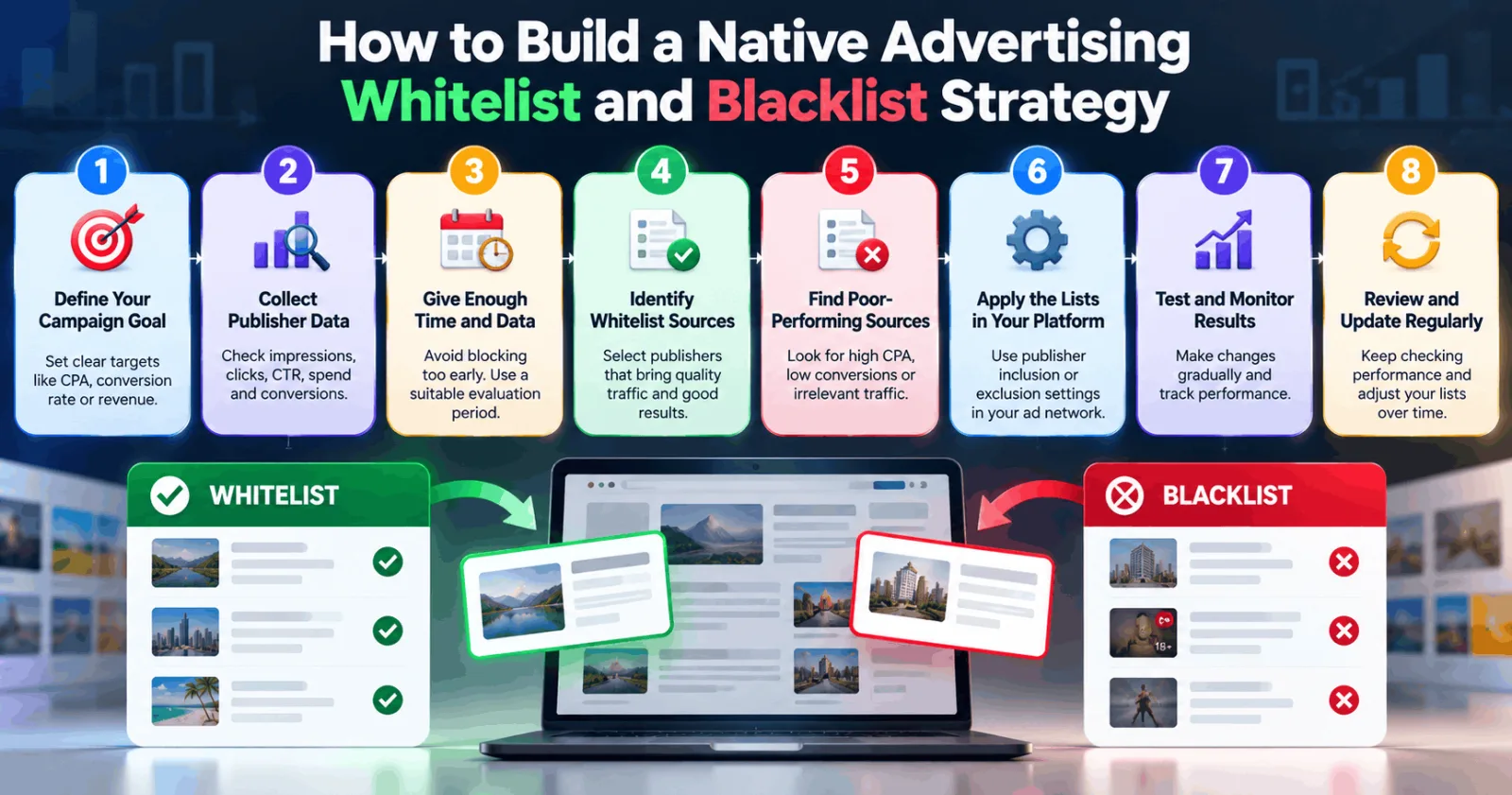

No comments yet. Be the first to comment.
Comments are open to registered AdScaleLab clients.
Sign in to comment