





OpenAI Visual Ads In ChatGPT Image Generation Test
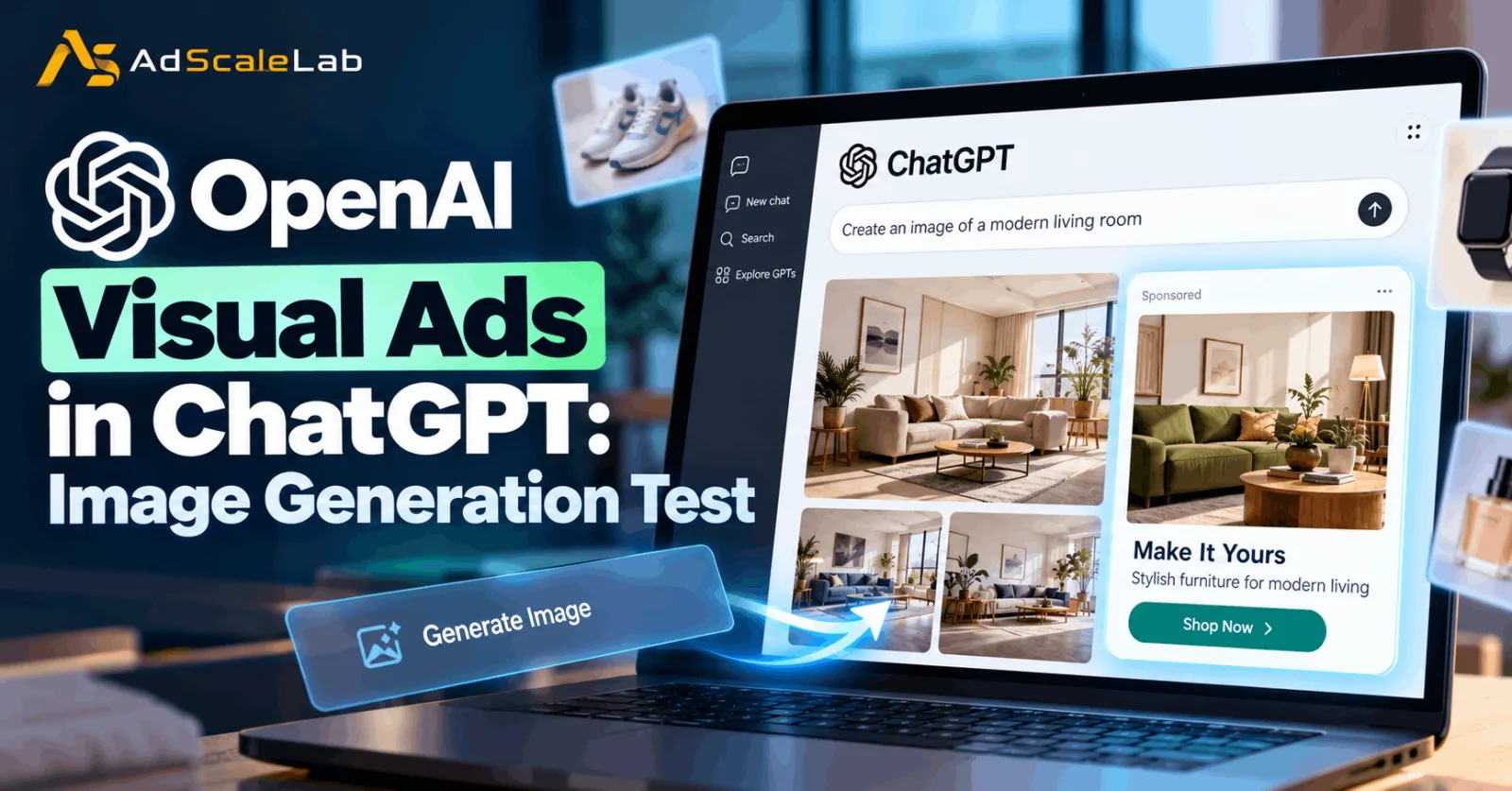
OpenAI Visual Ads in ChatGPT are taking another step into digital advertising with a new visual ad format inside ChatGPT. OpenAI says it will begin testing OpenAI Visual Ads in ChatGPT during image generation, giving advertisers a new way to show products and services through images while people are using ChatGPT.
The announcement was made by OpenAI on October 5, 2026, but the story is continuing to develop this week, with more advertising and technology publications covering the change on October 6 and October 7. The first test is planned for later this month in the United States with a small group of advertisers.
This is an important change because ChatGPT advertising has mostly been built around more traditional ad formats so far. OpenAI Visual Ads in ChatGPT introduces a more visual advertising experience that is closely connected to the way people use AI to create, explore and interact with images.
OpenAI Is Bringing Visual Ads Into ChatGPT Image Generation
According to OpenAI, the new format is designed to help people discover products and services through images. Instead of simply showing an advertiser's name, headline or product information, the visual format can use imagery to show product inspiration, product use or the type of experience a product can provide.
The first test will take place while users are generating images in ChatGPT. OpenAI says the ads will be clearly labeled and kept separate from the image being created. The company also says advertising will not influence the answers generated by ChatGPT.
For example, a person could be using ChatGPT to create an image connected to a lifestyle idea, product concept or activity. A visual advertisement could appear as part of the surrounding advertising experience, giving a brand an opportunity to show what its product looks like rather than relying only on text.
The exact design, placement and pricing of the new format have not been fully disclosed. OpenAI has also not announced all of the advertisers that will participate in the initial test. That means marketers should look at this as an early test rather than a fully available global advertising product.
The First Test Will Be Limited To The United States
OpenAI says testing will start later in October 2026 in the United States with an initial group of advertisers. The company has not announced a global launch date for the visual format.
The test will initially target users on the Free and Go plans, according to OpenAI's announcement. Paid plans such as Plus and Pro are not part of the new visual-ad test described in the announcement. This limited rollout makes sense because OpenAI still needs to understand how people react to advertising inside an AI-generated visual experience.
Advertising inside a traditional search engine is familiar to most users. Advertising around an AI-generated image is different. The company has to make sure the ad is noticeable enough for advertisers while still feeling separate from the content the user asked ChatGPT to create. That balance could become one of the biggest challenges for the new format.
OpenAI Visual Ads In ChatGPT Are Making ChatGPT A Bigger Advertising Platform
The reason this announcement matters so much is the size of ChatGPT's audience.
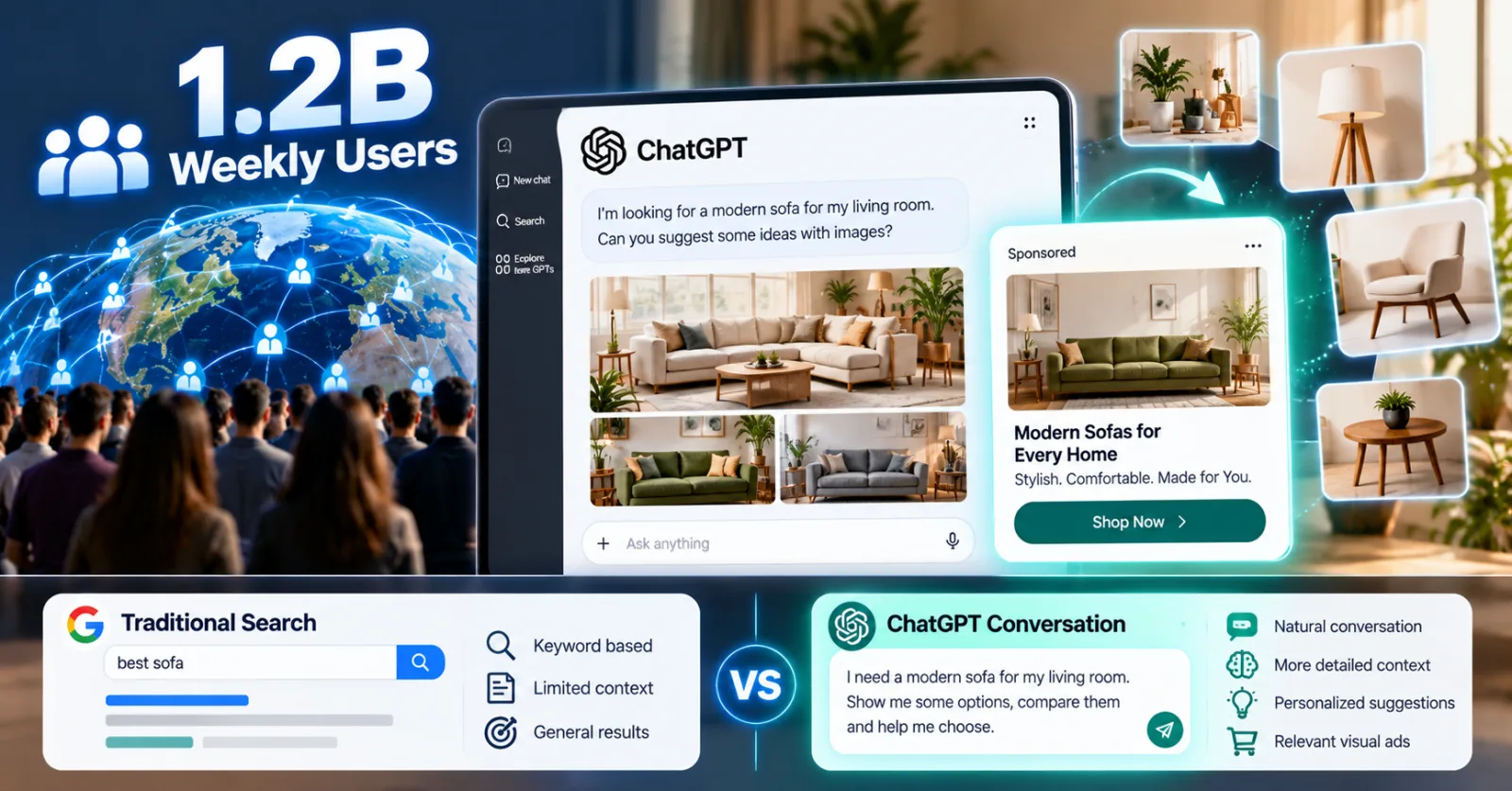
OpenAI says ChatGPT now reaches approximately 1.2 billion people each week. That is a company-reported figure, so it should not be treated as an independently verified advertising audience measurement. Still, the number shows why ChatGPT is becoming an important platform for advertisers.
OpenAI has been building its advertising business throughout 2026. The company started testing ads earlier this year and has gradually added more capabilities for advertisers. The new visual format is therefore not an isolated experiment. It is part of a wider move to turn ChatGPT into an advertising environment where companies can reach consumers while they are researching products, comparing choices and making decisions.
This is also where AI advertising starts to look different from traditional search advertising.
A Google search usually begins with a keyword. A ChatGPT conversation can contain much more context. A user might explain what they want, describe a problem, compare different products and then ask for help making a decision. That gives AI advertising platforms a different type of environment for connecting brands with potential customers.
OpenAI Is Also Expanding Advertising Measurement
The visual ads are only one part of OpenAI's October update.
The company is also expanding the measurement tools available to advertisers. OpenAI announced integrations with Hightouch, Tealium and LiveRamp, which can help advertisers send conversion data from their existing systems to ChatGPT Ads.
OpenAI also listed several attribution and measurement companies, including AppsFlyer, Triple Whale, Adjust, DV Rockerbox, Northbeam, Branch, Singular, Kochava, Airbridge and Tenjin. These partnerships matter because advertisers need more than impressions and clicks. They want to know what happens after someone interacts with an advertisement.
Did the person purchase something? Did they install an app? Did they become a lead? Did the advertisement create a customer who would not otherwise have converted? Those questions are becoming increasingly important as advertising moves into AI platforms.
For advertisers already interested in programmatic advertising, this is another example of how measurement is becoming just as important as the advertising placement itself.
OpenAI Is Testing Incrementality Measurement Too
Another interesting part of the announcement is OpenAI's work around incrementality.
Incrementality tries to answer a simple but important question: did the advertising actually cause additional business results, or did the advertiser simply receive credit for conversions that would have happened anyway?
OpenAI says it is working with Haus, Measured and WorkMagic on geo-based experiments. These experiments can compare different geographic areas to help advertisers understand the causal impact of their advertising. This is important because attribution and incrementality are not the same thing. An attribution system may assign credit to an ad after someone converts. An incrementality test tries to understand whether advertising actually changed the outcome. For advertisers spending serious money on a new platform such as ChatGPT, that difference can become very important.
Some Early Results Look Promising, But They Need Context
OpenAI also shared several early results from its measurement partners.
According to DV Rockerbox, WeightWatchers recorded an attributed cost per acquisition on ChatGPT Ads that was 15.3% lower than its blended paid-search benchmark.
WorkMagic reported statistically significant lift for wellness brand Dose, with 67% of incremental purchases coming from new customers. Triple Whale reported that 93% of Portland Leather's visitors from ChatGPT Ads were new visitors. These numbers are interesting, but advertisers should not treat them as proof that ChatGPT Ads will outperform search, social or other advertising channels in every campaign.
The results come from individual partners and individual brands, and the measurements use different methods. The public information does not provide all the details needed to independently compare these results, such as complete spend, sample sizes and confidence intervals. So the safest way to describe these numbers is as early partner-reported results, not universal performance benchmarks.
Brand Safety Is Becoming A Bigger Part Of ChatGPT Advertising
As advertising moves into conversational AI, brand safety becomes more complicated.
On a normal website, an advertiser can often understand the surrounding page, video or publisher environment. In ChatGPT, the environment is created by the conversation itself. That means an advertiser may want to know whether its ad is appearing next to a conversation that is suitable for its brand.
OpenAI says its placement guardrails are designed to keep ads away from emotionally vulnerable, sensitive or otherwise unsuitable contexts. The company says it uses automated review, human oversight and ongoing monitoring to enforce its advertising policies. OpenAI is also developing brand-suitability evaluation pilots with DoubleVerify and Integral Ad Science (IAS).
IAS separately confirmed that it is working with OpenAI on independent third-party brand-safety and suitability measurement in a closed pilot with selected advertisers. This could be important for larger brands because independent verification can make it easier for marketers to evaluate a new advertising environment before moving larger budgets into it.
What the New Visual Ads Could Mean For Advertisers
The biggest opportunity is that brands can now tell a story visually inside an AI environment. Traditional advertising often requires the advertiser to predict what a person might be interested in based on keywords, demographics, interests or other targeting signals. AI platforms create a different environment because the user can explain what they are trying to do in natural language.
Visual advertising could make that experience even more useful for categories where appearance matters. Retail, fashion, travel, home products, food, beauty, electronics and lifestyle brands could potentially benefit from showing products instead of relying only on a headline and description.
But advertisers should also be careful. A more attractive format does not automatically mean better performance. The real test will be whether visual ads generate useful actions at a reasonable cost. Advertisers will need to watch metrics such as qualified traffic, conversions, customer acquisition cost, revenue and incremental sales instead of judging the format only by how many people see or click an ad.
OpenAI's Move Could Change AI Advertising
The larger story is bigger than one new ad format. OpenAI is trying to build an advertising system around an environment where people ask questions, explore ideas, compare products and make decisions.
That is different from simply placing an advertisement on a webpage. The company is now building several pieces at the same time: visual advertising, conversion-data connections, attribution partnerships, incrementality testing and independent brand-suitability evaluation. That combination could make ChatGPT a more serious advertising platform if the tests produce reliable results.
It also means advertisers will have to learn a new way of thinking about campaigns. AI advertising may require marketers to pay more attention to conversation context, creative usefulness and post-click measurement rather than depending only on traditional keyword-based targeting.
For AdScaleLab readers who are already following changes in AI search visibility, this is another important part of the same wider shift. AI is no longer only changing how people search for information. It is also changing how brands can reach people and measure advertising results.
What Happens Next?
For now, the most important date is later in October 2026, when OpenAI plans to begin testing the visual ad format with an initial group of U.S. advertisers. The test should give advertisers and OpenAI more information about how users respond to image-based advertising inside ChatGPT.
There are still many unanswered questions. OpenAI has not publicly shared a full pricing structure for the new visual format, the complete list of advertisers involved, the final creative specifications or when the format could expand beyond the United States. That is why marketers should watch the initial test closely instead of assuming that the format will immediately become another major advertising channel.
Still, the direction is clear. ChatGPT advertising is moving beyond simple sponsored placements and toward a broader AI-native advertising system.
Conclusion
OpenAI visual ads in ChatGPT are an important new development in AI advertising, even though the format is still in its testing stage. OpenAI plans to place clearly labeled visual advertisements alongside the image-generation experience for an initial group of U.S. advertisers later this month. At the same time, the company is expanding conversion measurement, attribution, incrementality testing and brand-suitability partnerships.
The most important thing for advertisers will be performance, not just the novelty of appearing inside ChatGPT. If brands can reach people at useful moments, show products in a natural visual way and measure whether those interactions create real business results, the format could become an important part of AI-native advertising.
For now, October's U.S. test will be the first major step in showing whether visual advertising can work inside one of the world's largest AI consumer platforms.
Agency ad accounts, without the wait.
Buy and top up Google, Meta, native, and more from one dashboard.
Get started
No comments yet. Be the first to comment.
Comments are open to registered AdScaleLab clients.
Sign in to comment