






Taboola Data Advantage Study 81% Struggle To Reach New Audiences
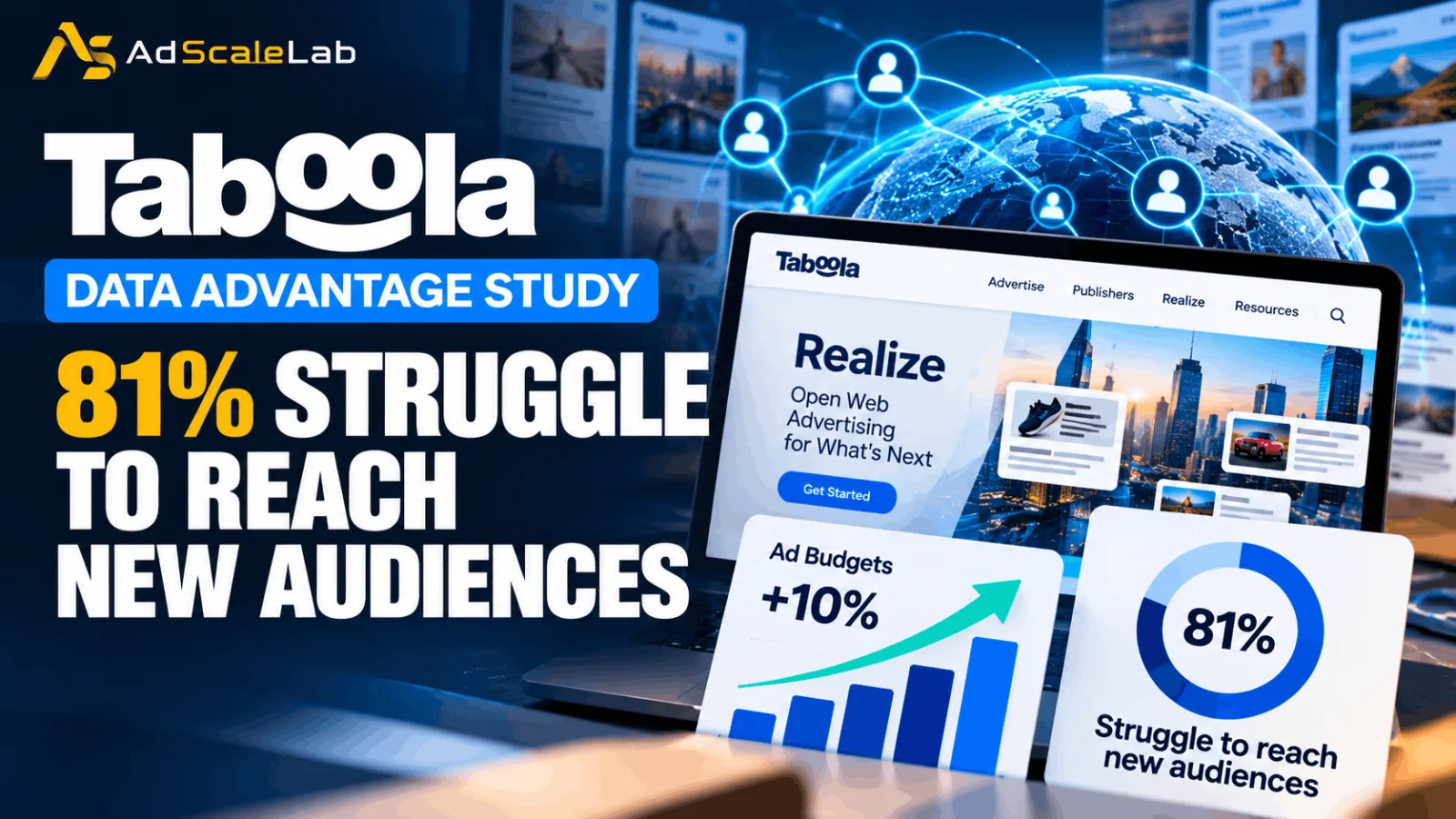
Advertisers are spending more money trying to find new customers, but many are still reaching the same people again and again. That is the main finding from a new Taboola Data Advantage Study released today, October 5, 2026. Taboola says the report looks at how advertisers are dealing with a customer journey that is spread across devices, channels, publishers, search, price comparison services and increasingly AI tools.
Taboola says advertiser budgets are rising nearly 10% in the effort to reach new audiences, while 81% of surveyed advertisers say they are failing to reach new audiences and instead repeatedly target the same audience segments. Thirty percent also say reaching new audiences is a top priority when deciding where to put additional budget.
The report is especially interesting for marketers because the problem is not simply about having a small audience. It is about knowing whether a campaign is actually finding new people or repeatedly showing ads to audiences a brand already knows. In a market where advertisers are under pressure to prove the value of every dollar, that difference can become very important.
Why Identity Has Become Such A Big Advertising Problem
One of the main issues highlighted by the Taboola Data Advantage Study is identity fragmentation. Taboola says 75% of surveyed advertisers have difficulty recognizing the same non-converting customer across multiple touchpoints before a purchase.
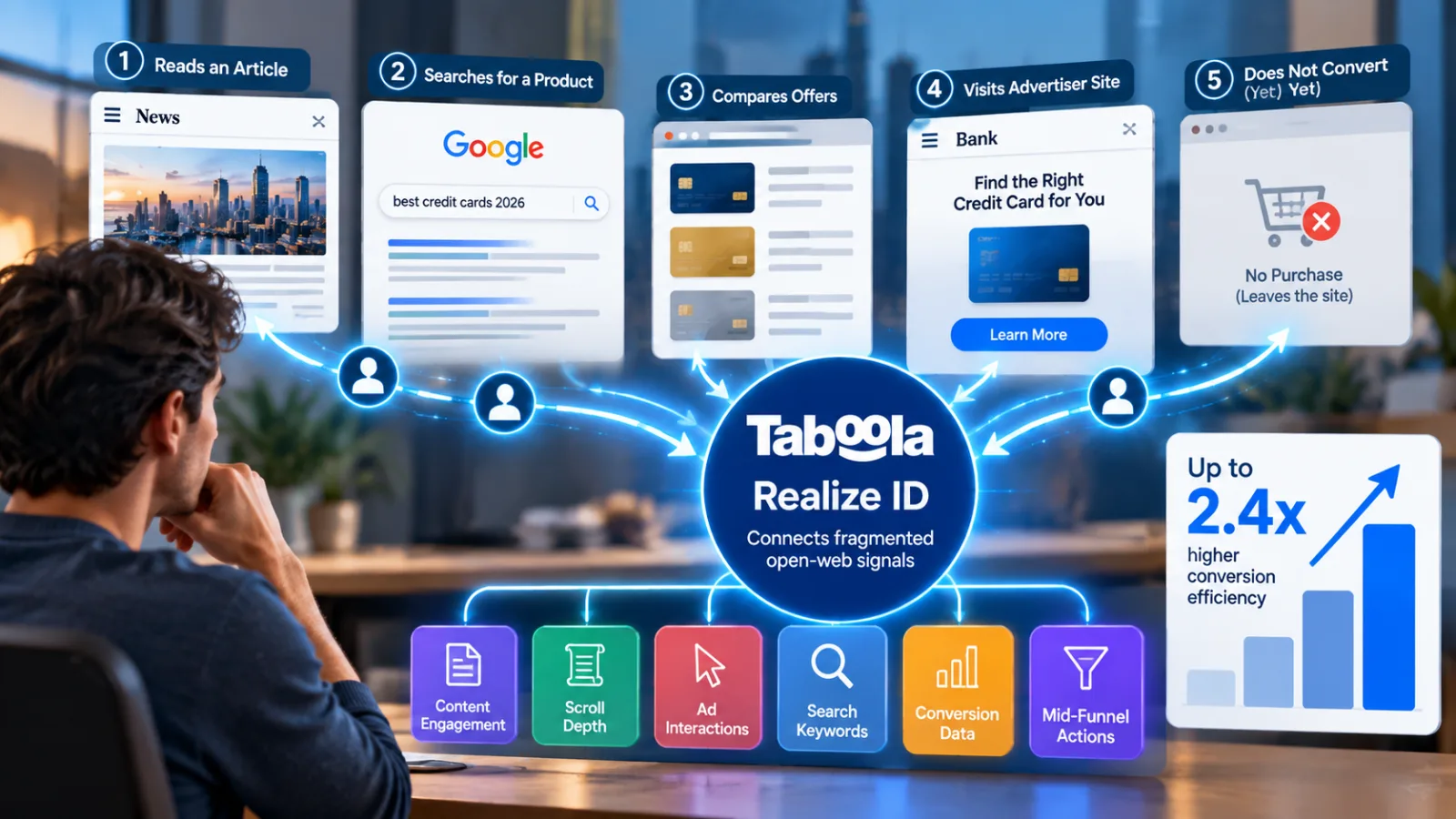
That problem is easier to understand with a simple example. A potential customer might read a finance article on a publisher website, search for a product later, compare different offers and visit an advertiser's landing page without converting. If those interactions are treated as separate events, the advertiser can lose sight of the customer's wider journey. This matters because the pre-conversion period can contain useful information about purchase intent. The advertiser may know what happened at the final click, but not always what influenced the person before that click.
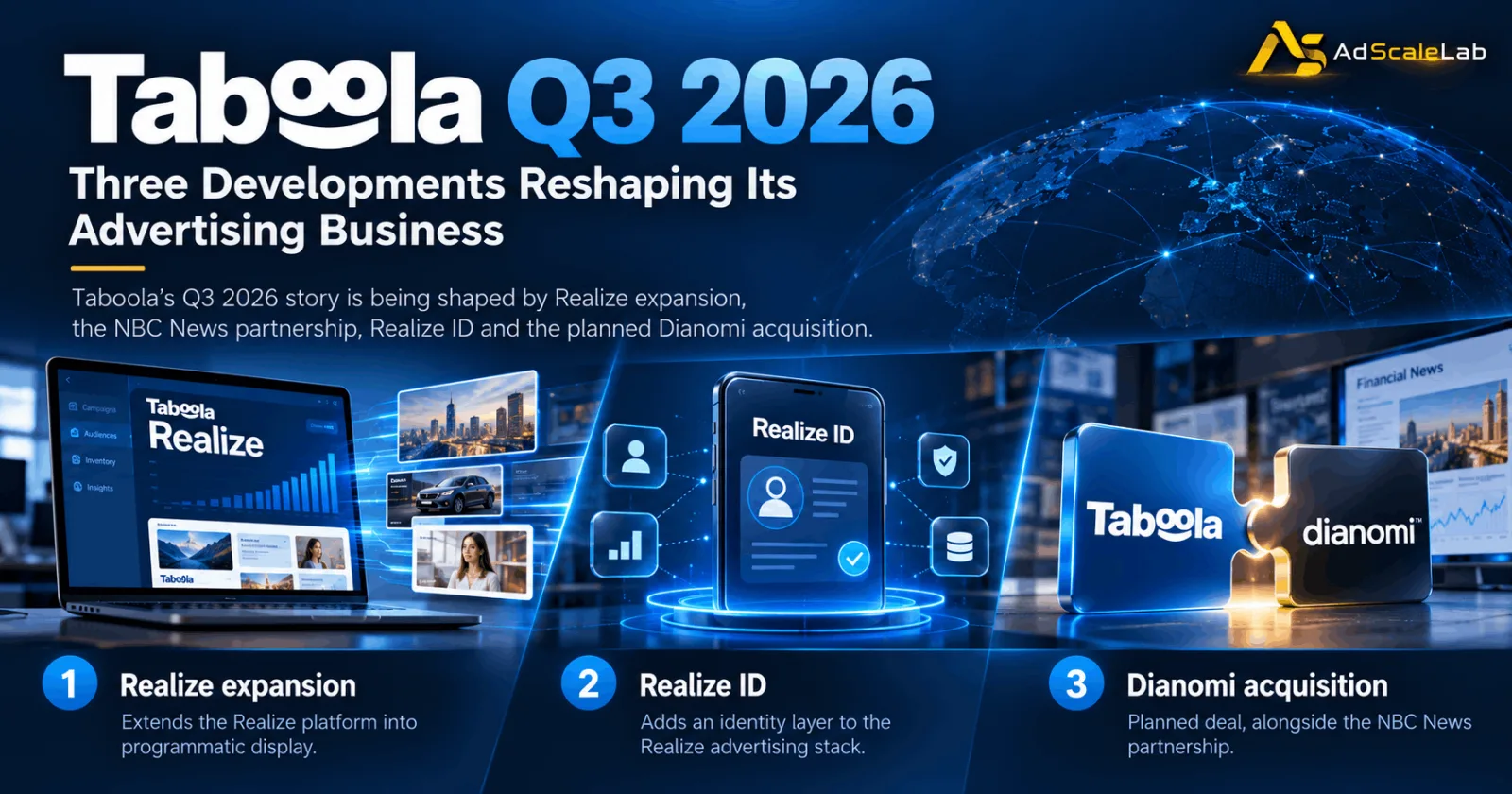
Taboola has been building its Realize platform around this issue. On September 22, the company launched Realize ID, a unified mapping product designed to connect open-web intent signals. Taboola says it uses signals such as content engagement, scroll depth, ad interactions, search keywords, conversion data and mid-funnel actions.
Taboola also says Realize ID has produced up to a 2.4x increase in conversion efficiency for advertisers. That is a Taboola-reported performance claim, however, and should not be treated as an independently verified industry-wide result. Independent PPC Land coverage has also highlighted the importance of understanding the methodology behind such platform-reported performance figures.
Advertisers Are Looking Beyond Walled Gardens
Another important finding is the reported interest in moving more advertising money toward the open web. Taboola says 81% of respondents are open to increasing spend across channels such as publishers and news sites if identity challenges are solved. The report's larger headline finding says 92% would be likely to reallocate ad spend to the open web if identity and measurement challenges were solved.
That distinction is important. Advertisers saying they would move budget is not the same as advertisers actually moving it. Still, the finding shows why measurement and identity are becoming central issues in open-web advertising.
Large advertising platforms have traditionally benefited from keeping targeting, media delivery and measurement inside one environment. Publishers and open-web ad networks operate across a much more fragmented ecosystem. The opportunity is large, but the measurement challenge is also larger.
What This Means For Taboola And Realize
The timing of the study is important because Taboola is expanding Realize beyond its traditional native advertising roots. Taboola says Realize reaches more than 600 million daily active users across publishers and other partners, including NBC News and Yahoo as well as OEMs such as Samsung and Xiaomi.
The company has also been adding products around AI, identity and broader open-web performance advertising. Realize ID is one part of that strategy. The Data Advantage study gives Taboola another way to explain why those capabilities matter to advertisers.
For AdScaleLab readers following Taboola and Realize, the important point is that Taboola is positioning Realize as more than a native advertising buying platform. Its strategy is increasingly connected to performance advertising, open-web identity, programmatic inventory and AI-driven intent signals.
AI Is Making The Customer Journey More Fragmented
Taboola also connects the study to the growing role of AI in consumer research. The company says purchase journeys now stretch across mail, news, search, price aggregators and increasingly large language models. That change creates another measurement question. A person may ask an AI tool for recommendations, visit a publisher, search for a product and then convert through another channel. The final conversion may not show the full path that created the purchase.
For advertisers, this makes it increasingly important to understand intent rather than only the last click. It also explains why identity, first-party signals, contextual information and predictive models are becoming major areas of competition across ad-tech.
What The Study Could Mean For Publishers
The findings could matter to publishers as much as they matter to advertisers. If brands become more confident in measuring performance across publisher environments, publishers could gain access to a larger share of performance-oriented advertising budgets.
Publishers already have valuable contextual signals. They know what content people are reading, how long they engage with pages and what subjects attract attention. The challenge is turning those signals into advertising outcomes that brands can measure and trust.
Better measurement could make publisher inventory more competitive with closed advertising ecosystems. But publishers still need to prove traffic quality, viewability, conversion performance, brand safety and the business value of their audiences.
What Advertisers Should Take From The Taboola Data Advantage Study
The biggest lesson is that increasing an advertising budget does not automatically create incremental reach. If campaigns keep targeting the same people, additional spending can increase frequency without producing enough new customers.
Advertisers should therefore look beyond simple reach and click-through rate. They should ask how much of a campaign's audience is genuinely new, whether those people are showing purchase intent and whether the campaign is producing incremental conversions.
This does not mean advertisers should immediately move money away from Google Ads or Meta Ads. Those platforms continue to provide enormous scale, targeting capabilities and measurement tools. Instead, the study suggests that advertisers should examine whether their existing media mix is reaching enough people outside the audiences they already know.
That could mean testing publisher inventory, native advertising, programmatic display and other open-web channels while measuring actual business outcomes.
For brands already using Realize, the timing is particularly interesting. Taboola is combining its traditional publisher reach with identity, AI and performance-oriented capabilities, creating a broader proposition for advertisers that want to find people outside the audiences they already reach.
The Bigger Question For Open-Web Advertising
The most important part of the Taboola Data Advantage Study may not be the 81% figure by itself. The bigger story is the connection between audience discovery, identity, measurement and advertising budgets.
Advertisers want new customers, but consumer journeys are increasingly spread across websites, devices, search engines, publishers and AI tools. That makes it harder to connect the signals that happen before a conversion. Taboola's answer is to use more open-web signals and connect them through Realize. Other ad-tech companies are working on different approaches to the same problem. The market will ultimately determine which solutions deliver the strongest results.
For now, the October 5 report gives AdScaleLab readers a useful look at what large advertisers say they are struggling with in 2026. It also shows why the open web remains an important battleground for the next stage of digital advertising.
If identity and measurement can improve without removing the scale and diversity of publisher inventory, advertisers may become more willing to put performance budgets into open-web advertising. That could create opportunities for advertisers, publishers and ad-tech companies at the same time.
Agency ad accounts, without the wait.
Buy and top up Google, Meta, native, and more from one dashboard.
Get started
No comments yet. Be the first to comment.
Comments are open to registered AdScaleLab clients.
Sign in to comment