



Taboola Realize ID A New Approach To Open-Web Ads
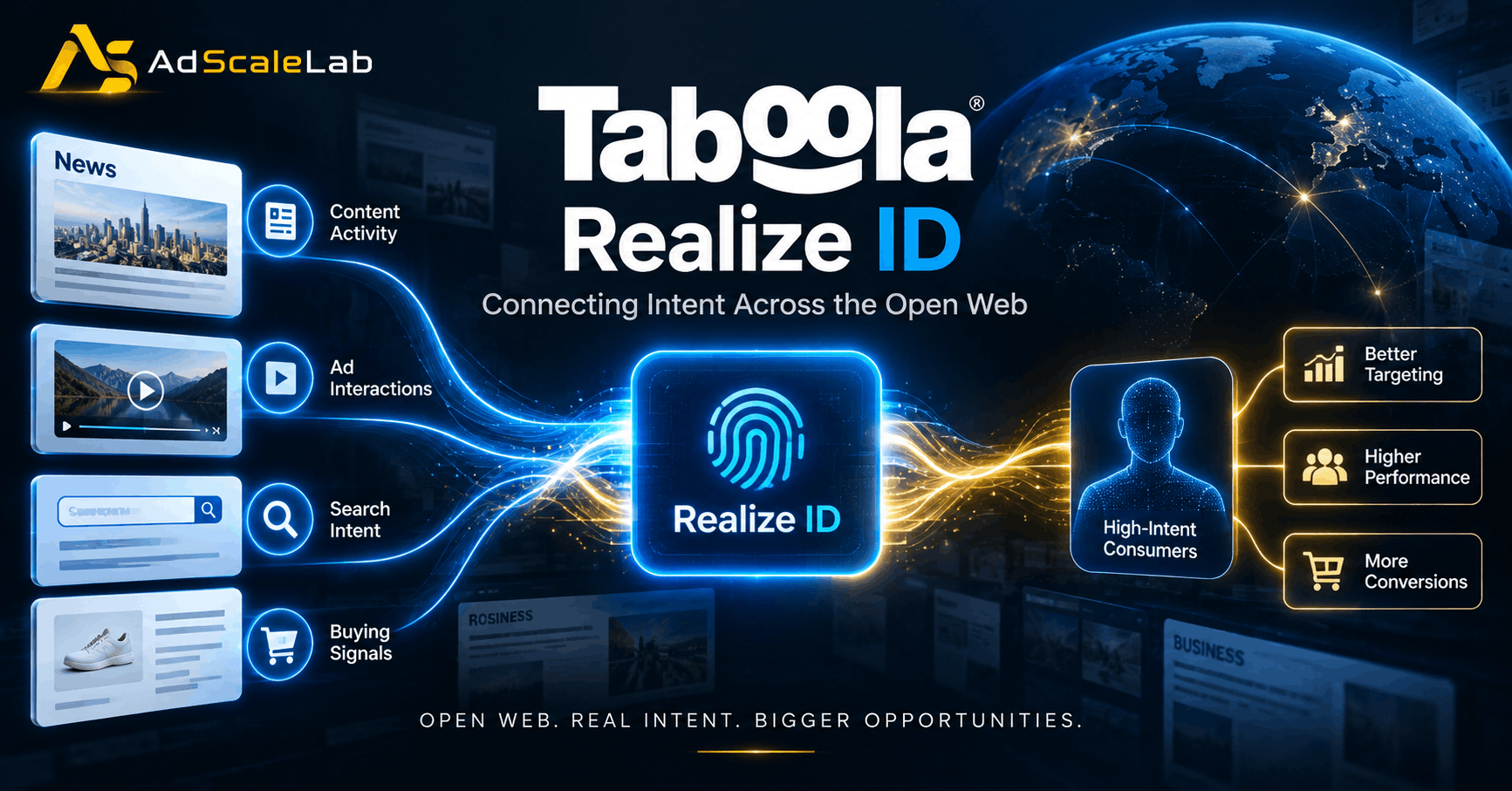
Taboola Realize ID is the latest move from Taboola to help advertisers understand what consumers are doing across the open web before they make a purchase. Taboola announced the new identity solution on September 22, 2026, saying it is designed to connect fragmented consumer signals and help performance marketers act on purchase intent. The company also reported that early results showed up to a 2.4× increase in conversion efficiency.
The announcement is interesting because online shopping journeys are no longer as simple as searching for a product, clicking an ad and buying it. A person may read an article, compare products, search for reviews, use an AI tool, visit a brand website and come back later before finally making a decision. Taboola is trying to build a system that can connect more of those steps, and that is where Realize ID comes in.
What Is Taboola Realize ID?
In simple terms, Taboola Realize ID is an identity and intent solution built for Taboola’s Realize performance advertising platform. The idea is to take different signals from a consumer’s journey and connect them into a more complete picture. Instead of looking at one isolated click or one website visit, Taboola says Realize ID can connect information about media consumption, advertising interactions and buying behavior.
For example, imagine someone is interested in opening a new bank account. They might first read an article about personal finance. Later, they could search for the best bank accounts, interact with a credit-card advertisement and eventually visit a financial company’s landing page. These actions can happen across different websites and at different times.
Taboola’s example of this journey is one reason the new product is interesting. The company wants Realize ID to connect these signals and identify when someone is moving from general interest toward a real buying decision. The basic idea is simple: content activity can lead to research, research can lead to an ad interaction, and that interaction can eventually lead to a website visit or conversion. Realize ID is intended to connect the signals between those stages.
Why Is Consumer Identity Becoming More Important?
The modern customer journey is becoming harder for advertisers to follow. People use different devices, websites and platforms during the same buying journey. A customer might discover a product through an article, research it through search, compare prices somewhere else and even ask an AI system for recommendations.
Taboola says this fragmentation is creating a problem for performance marketers because useful intent signals can be spread across many different touchpoints. The company says Realize ID is designed to bring those signals together rather than treating every interaction as a completely separate event. This is also happening while advertising platforms are placing more attention on first-party data and their own signals.
AdExchanger’s September 23 coverage placed Taboola’s Realize ID launch in a wider identity market that already includes products such as LiveRamp’s RampID, Unified ID 2.0, ID5, Yahoo ConnectID and other identity approaches. So Realize ID is entering an area where advertisers and publishers are already dealing with many different identity systems. The difference is that Taboola is connecting identity with its performance advertising platform and its own open-web data.
How Does Realize ID Use Consumer Signals?
According to Taboola, Realize ID uses several types of first-party signals. One part comes from media consumption behavior, including things such as content engagement, scroll depth and time spent on a website. Another part comes from advertising interaction, which can include ad clicks, video views and specific search keywords. The third part is buying behavior, including conversion information and actions that happen before a final purchase, such as starting a quote.
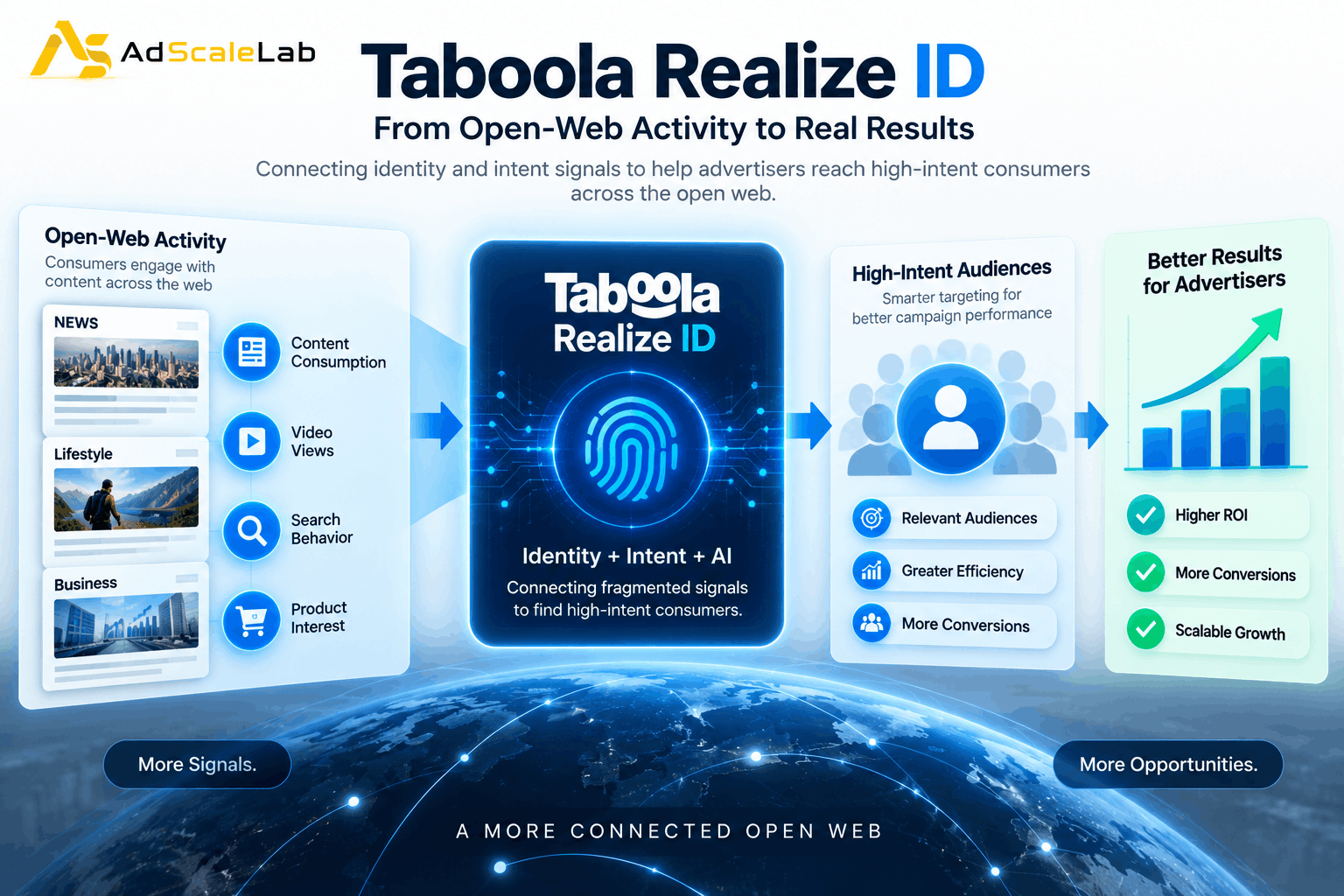
These signals become more useful when they are connected. A person spending a few seconds on an article may not tell an advertiser very much, but if that same person later searches for a product, interacts with an advertisement and begins a purchase process, those combined signals can provide a stronger indication of intent. That is the thinking behind Realize ID.
Taboola says the system can connect billions of buyer journeys and use AI to identify patterns between media consumption and buying behavior. Instead of relying on one action to understand a consumer, the system is intended to look at the larger journey and identify signals that may show when a person is becoming more likely to take action.
Where Does AI Fit Into Realize ID?
AI is an important part of the system because simply collecting data is not enough. Advertisers already have large amounts of information. The harder part is understanding what that information means and deciding which users are likely to take action.
Taboola says Realize ID uses AI to connect observed behavior with predicted intent. Its Realize website describes the product as a system that connects identity and behavioral signals and continuously predicts what users may want or do next. This is different from waiting for a consumer to make an obvious purchase signal.
For example, someone may not have searched for a specific product yet, but their content activity and previous engagement may indicate that they are becoming interested in that category. The goal is to identify that decision window earlier. If the prediction is useful, an advertiser may have a chance to reach the consumer before another advertising platform gets the final conversion. That is one of the main ideas behind Taboola’s latest product.
Taboola’s 2.4× Conversion-Efficiency Claim Explained
The biggest number attached to the Realize ID announcement is 2.4×. Taboola says early results showed up to a 2.4× increase in conversion efficiency through signal-enriched predicted-intent models. This number needs some context because it is a company-reported result rather than an independently verified performance benchmark.
It should not be written as “Realize ID increases conversions by 2.4× for advertisers.” That would make the result sound universal. The accurate wording is that Taboola reports up to a 2.4× increase in conversion efficiency from early results.
The public announcement does not provide a detailed methodology explaining exactly how every advertiser was measured, what the comparison group was, or whether the result applies equally across industries and campaign types. Therefore, advertisers should treat the number as a company-reported early result rather than a guaranteed performance level. That does not make the number unimportant; it simply means it needs to be reported correctly.
For AdScaleLab readers, this distinction matters because performance advertising numbers can change significantly depending on campaign goals, conversion definitions, traffic sources, creative, landing pages and measurement methods. A result from one set of campaigns should not automatically be treated as the expected outcome for every advertiser.
Why Taboola Thinks Its Open-Web Data Is Different
One of the more interesting parts of Realize ID is where Taboola says its data comes from. Taboola operates technology on both sides of the advertising transaction: it works with publishers and also provides advertising technology to advertisers. The company says this gives Realize access to a broader picture of the consumer journey, including what people read, how they interact with advertisements and what actions they take afterward.
Taboola’s Realize website describes signals including search and mail domains, context and device information, reader behavior, purchase data, lead data and ad engagement. This is the foundation of the company’s argument. The goal is not simply to identify a person; it is to understand where that person is in the buying process.
That is an important difference because advertisers are usually more interested in finding people who are likely to take action than simply reaching a large audience. If the platform can identify meaningful intent signals before a final conversion, the information could become useful for campaign optimization and audience decisions.
Realize ID Fits Into A Bigger Taboola Strategy
Realize ID did not appear out of nowhere. Taboola introduced the Realize platform in February 2025 as part of a move beyond its traditional native advertising business. The company said Realize would allow advertisers to pursue performance outcomes across a broader range of publisher, app and OEM inventory, including display formats.
In April 2026, Taboola also launched Realize+, an AI-powered system designed to automate campaign decisions and other parts of performance advertising. Then in August 2026, Taboola announced an expanded NBC News partnership in which Realize would power global programmatic display advertising across NBCNews.com and TODAY.com.
Just days before the Realize ID announcement, Taboola also announced an offer to acquire Dianomi, a finance-focused digital advertising network with relationships across premium business and financial publishers. Taboola said the proposed acquisition would strengthen Realize in finance advertising.
Taken together, these developments show a consistent direction: Taboola is trying to build Realize into a broader performance advertising platform rather than relying only on its historical native advertising identity. Realize ID adds another piece to that strategy by bringing identity and predictive intent into the platform.
What Could Realize ID Mean For Advertisers?
For advertisers, the potential benefit is not simply another targeting option. The larger idea is that an advertising platform may be able to understand a consumer’s journey earlier and across more parts of the open web. This could be useful for advertisers selling products with longer decision cycles.
A financial product, insurance policy, travel booking or expensive consumer product may involve several research sessions before the customer converts. In those situations, a single click does not explain the entire journey. Realize ID is designed around the idea that these smaller signals can become more useful when they are connected.
At the same time, advertisers should still look at the normal performance numbers. A sophisticated identity solution does not automatically mean a campaign will have a lower CPA or higher ROAS. Creative quality, landing pages, offers, conversion tracking, campaign structure and actual inventory still matter.
The Bigger Change May Be The Move From Clicks To Intent
The most interesting part of Realize ID may be the shift from thinking about advertising only in terms of clicks. A click tells an advertiser that someone interacted with an ad, while intent tries to answer a different question: what is this person actually trying to do? That is a much harder question.
If AI can help an advertising platform connect content behavior, search behavior, ad engagement and purchase signals, advertisers may be able to make decisions based on a more complete picture of the customer journey. That is the idea Taboola is now testing with Realize ID.
It also fits with the larger changes happening across digital advertising, where search, social, publisher websites and AI-powered discovery are increasingly becoming connected parts of the same consumer journey. The value of an advertising platform may therefore depend not only on how many people it can reach, but also on how well it can understand the signals that appear before a person converts.
What Advertisers Should Watch Next
The launch is new, so there are still important questions that cannot be answered yet. One is how consistently Realize ID performs across different industries and campaign objectives. Another is how advertisers will measure the value of the additional identity and intent signals against their existing targeting methods. The third is whether Taboola can turn its open-web data advantage into repeatable performance at scale.
These questions will become easier to answer as more advertisers use the system and more campaign results become available. For now, the important point is that Taboola is not presenting Realize ID as a standalone identity product. It is positioning it as part of the larger Realize performance advertising system, which makes the launch more significant than just another advertising ID announcement.
Final Thoughts
Taboola Realize ID is an attempt to solve a problem that has become increasingly important in digital advertising: the customer journey is spread across too many places to understand through one isolated interaction. Taboola’s solution is to connect identity, content behavior, ad engagement and buying signals, then use AI to predict when a consumer is moving toward a decision.
The company’s reported up to 2.4× conversion-efficiency improvement gives the launch an interesting performance angle, but advertisers should remember that this is a Taboola-reported early result, not a guarantee for every campaign. What makes the announcement more interesting is how it fits into Taboola’s wider Realize strategy. The company has spent the past two years expanding beyond traditional native advertising, adding display inventory, AI-powered campaign automation, publisher partnerships and specialized advertising capabilities.
Realize ID adds identity and predictive intent to that same strategy. Whether it becomes a major part of open-web performance advertising will depend on how the technology performs across more campaigns and how advertisers compare it with the other identity and targeting systems already available.
For now, though, Taboola has made its direction clear: use more of the open web’s signals to understand consumer intent and turn that understanding into measurable advertising outcomes.
Agency ad accounts, without the wait.
Buy and top up Google, Meta, native, and more from one dashboard.
Get started
No comments yet. Be the first to comment.
Comments are open to registered AdScaleLab clients.
Sign in to comment