






Agencies Expand Agentic Media Buying With New AI Tools
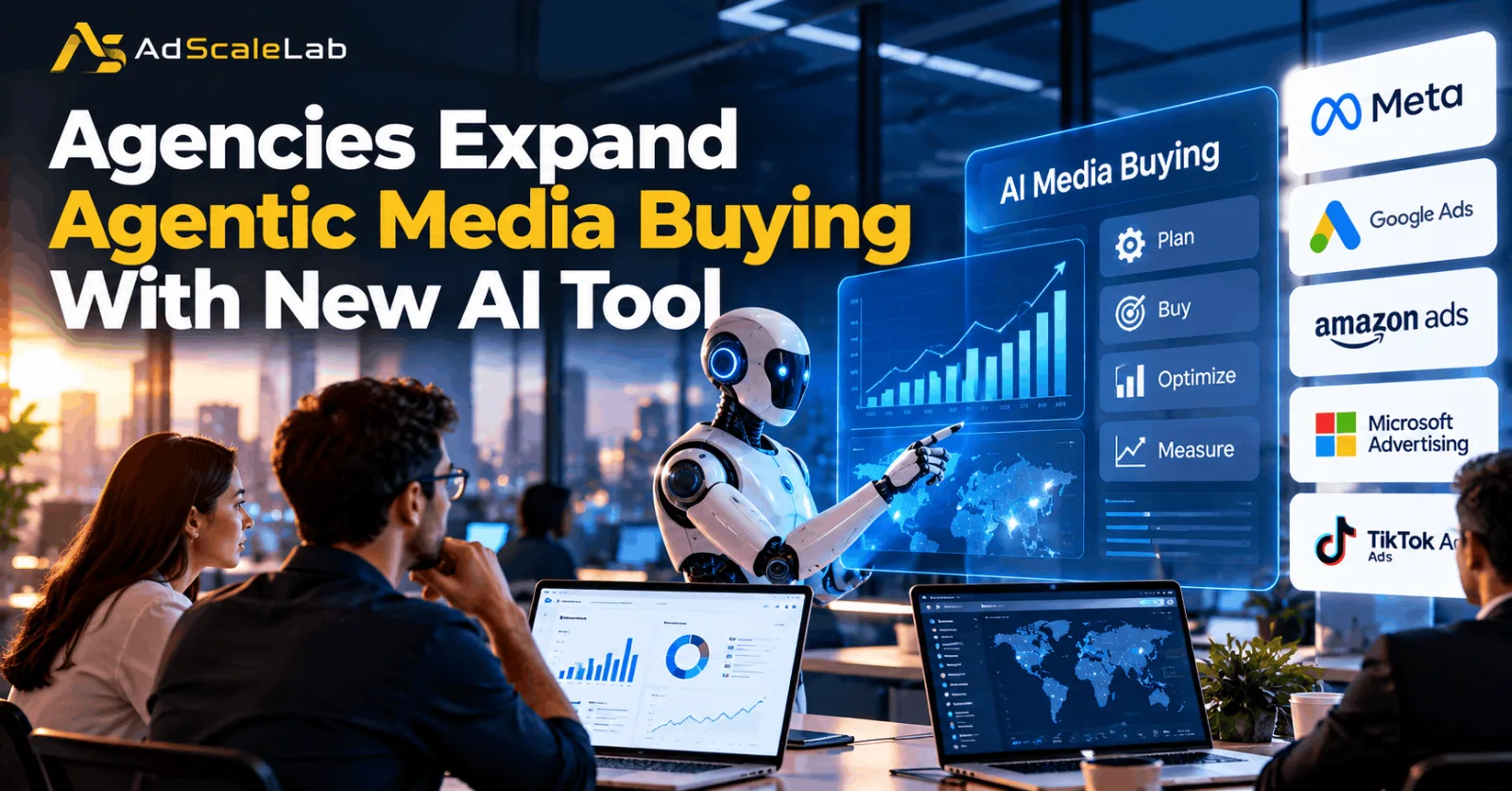
The advertising industry is moving another step toward AI-driven media buying, with major agencies and advertising technology companies putting agentic media buying into real campaign workflows. The latest development comes into focus on October 8, 2026, as agencies discuss how AI agents can take on more work in media planning, buying, optimization and measurement while still keeping people involved in important decisions. The issue is becoming more important as agencies move from experimenting with AI tools to using agents inside actual media operations.
One of the biggest developments behind this story is the work between Carat, NBCUniversal, FreeWheel and AI company Newton. The companies announced a new agentic media solution designed to help with planning, buying and optimization of upfront advertising investments. Dentsu said the first custom-built agent has already launched with a client in the luxury retail sector.
This is not simply another AI tool that creates advertising copy or summarizes campaign reports. The new approach is much closer to the actual media-buying process. It combines audience information, campaign performance signals, market information and other data to help guide media decisions. That difference is important because agentic media buying is about giving AI systems a more active role in deciding what should happen next. Instead of a marketer manually checking several dashboards, deciding what needs to change and then making the adjustment, an agent can analyze information and recommend the next action within a defined workflow.
Carat And NBCUniversal Bring Agentic AI Into Media Buying
The Carat development is one of the clearest examples of where this technology is heading. Dentsu said on October 6 that Carat, NBCUniversal, FreeWheel and Newton had introduced a programmatic agentic media solution for upfront inventory. The system is being built around custom agents that can be matched to individual client needs and campaign objectives.
The first advertiser using the solution is a luxury retail client working with Carat. The companies said the system can combine AI-powered intelligence with audience insights and performance signals to help optimize media activation across NBCUniversal inventory. The technology is also designed to work within existing media-buying infrastructure rather than forcing teams to completely replace their current systems. Dentsu said Newton's technology is integrated into its operating environment and built on FreeWheel Buyer Cloud.
This is one reason the development matters for the wider advertising market. Agencies have spent years building systems for planning, buying, measurement and optimization. Agentic AI is now being placed on top of, or directly inside, those workflows. The goal is not simply to make media buying automatic. It is to make the process more connected.
An advertiser could have audience data in one place, campaign performance in another and market signals somewhere else. An agentic system can potentially bring those signals together and use them when making recommendations. That could reduce some of the manual work that media teams deal with every day.
The Big Change Is Moving From AI Tools To AI Agents
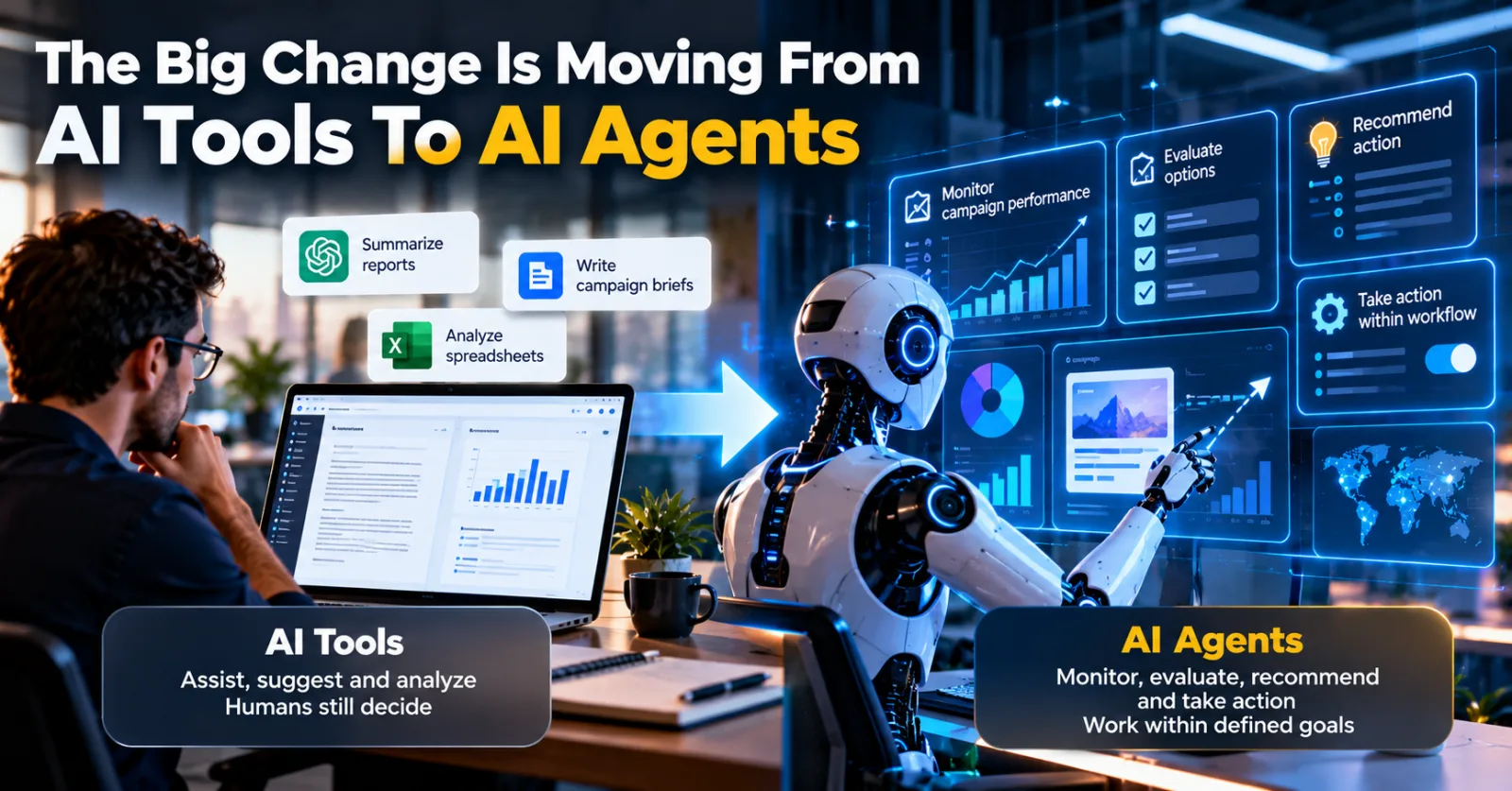
There is a major difference between using AI as an assistant and using an AI agent as part of a media workflow. A normal AI tool might help a media planner summarize a report, write a campaign brief or analyze a spreadsheet. The human still decides what to do.
An agent can go further. Depending on how it is designed, it can monitor information, evaluate different options, recommend an action and potentially carry out parts of the workflow. That is why agentic advertising is getting so much attention. The technology could change how agencies organize their teams and how quickly they respond to campaign changes.
The Interactive Advertising Bureau has also identified agentic AI as an important part of the 2026 advertising landscape. Its 2026 Outlook Study found that two-thirds of marketers were focused on agentic AI for ad buying and campaign execution, while measurement and accountability were also becoming bigger priorities. That combination is important. Advertisers want automation, but they also want to understand what the automation is doing. If an AI agent changes where significant advertising spend goes, marketers need to know why that decision was made, what data influenced it and who is responsible if something goes wrong.
Tinuiti Is Opening Its Measurement Layer To AI Agents
Carat is not the only agency moving in this direction. Independent agency Tinuiti announced the Bliss Point Model Context Protocol, or MCP, Server earlier this week. The system is designed to give compatible AI agents access to Tinuiti's media measurement and performance intelligence through a governed connection. MCP, or Model Context Protocol, is becoming an important part of the AI ecosystem because it allows AI systems to connect with external tools and information in a more structured way.
For advertisers, Tinuiti's approach is interesting because the agency is not simply giving an AI model access to one advertising platform. Its system is designed around normalized media data, measurement signals and approved third-party information across channels. That means an AI system can potentially work with a broader picture of campaign performance instead of looking at one platform in isolation.
Tinuiti says its MCP server can be connected with compatible versions of ChatGPT, Claude, Microsoft Copilot and clients' own AI agents, subject to permissions and configuration. The company also says brands can use the connection to combine media data with information such as sales, inventory or CRM data.
For a media buyer, this could eventually make it easier to ask questions such as why campaign performance changed, whether spending is pacing correctly or which channels are performing against a business target. The important part is governance. Tinuiti says its system is built around approved data access, defined objectives, human accountability and controls around how the technology is used.
Stagwell Is Also Rebuilding Its Media Agency Around AI
Another major development came from Stagwell this week. Stagwell announced on October 6 that its Assembly agency was being relaunched as Stagwell Media, with the new operation built around the company's agentic technology platform, Machine OS. Stagwell said the agency operates across more than 50 markets and works with clients including Lenovo, Mastercard, DP World and P&G. The company is positioning Stagwell Media as a more integrated media agency, combining media expertise with technology and AI-driven systems.
The company's approach is broader than simply automating media buying. Stagwell says its technology can connect media, data, commerce and other capabilities as part of a more integrated operating model. Its media technology includes The Media Machine, which has been described as a media-specific operating layer designed to support planning and activation across multiple platforms. This shows another side of the agentic media movement.
The change may not only be about giving individual media buyers new AI tools. Agencies themselves may be redesigned around AI systems. That could mean fewer repetitive manual tasks for teams and more time spent on strategy, client relationships, creative thinking and decisions that require human judgment.
Why Agencies Still Want Humans In The Loop
This is probably the most important part of the current story. The advertising industry is excited about agentic AI, but agencies are not simply handing over their advertising accounts to autonomous software.
The reason is simple. AI agents can make mistakes.
A media campaign involves money, brand safety, targeting, creative decisions, privacy and business objectives. A system that is allowed to act without controls could potentially make a decision that looks reasonable from a data perspective but is wrong for the advertiser. For example, an AI system might see a cheap source of traffic and decide it is attractive because the immediate performance numbers look good. A human media expert may notice something else, such as poor-quality placements, brand-safety concerns or a mismatch with the client's audience.
This is why human oversight is becoming part of the design rather than something agencies are trying to remove. WPP Media, for example, told Digiday that financial or activation-related decisions require explicit controls, approval thresholds and accountable human oversight. That suggests the near-term future is more likely to be human-guided agentic media buying rather than completely independent AI buying.
What Agentic Media Buying Could Mean For Advertisers
For advertisers, the biggest potential benefit is speed. Digital advertising produces huge amounts of information every day. Campaigns generate performance signals from audiences, creatives, placements, devices, channels and conversion events. Human teams can analyze those signals, but they cannot manually examine everything at every moment. An agent can potentially handle more of the repetitive analysis.
It could identify unusual campaign changes, compare performance against targets, recommend budget adjustments or surface opportunities that a planner may have missed. This could be particularly useful for large advertisers running campaigns across multiple platforms. Instead of treating every platform as a separate system, agencies are increasingly looking for ways to connect data and decision-making across the media ecosystem.
This direction also connects with the wider shift toward performance advertising. Tools such as MediaGo AI-generated creatives, MediaGo SmartBid 3.0 and MediaGo Auto Rules show how automation is already becoming part of campaign creation, bidding and optimization. Agentic systems take that idea further by trying to connect more parts of the workflow.
Measurement Will Become Even More Important
As more AI enters media buying, measurement will become more important, not less. If an advertiser allows an AI agent to recommend or make campaign decisions, the advertiser needs reliable data to judge those decisions. That means conversion tracking, attribution, campaign reporting and business outcomes need to be connected properly. A system cannot optimize toward a goal if the data describing that goal is incomplete or wrong.
This is one reason Tinuiti's focus on a unified measurement layer is notable. The company is trying to give AI agents access to normalized performance information instead of making the agent reconcile disconnected platform reports by itself.
For advertisers, this could eventually change the way campaign reporting works. Instead of waiting for a media team to prepare a report, marketers could ask an AI system for an explanation of campaign performance using approved business and media data. The important word here is approved. The future of advertising AI will depend not only on what agents can do, but also on what information they are allowed to access and what actions they are allowed to take.
Is Advertising Moving Toward Fully Automated Media Buying?
Not yet. The current developments show that the industry is moving toward more automation, but the systems being introduced are still being designed with people involved. Carat's agentic solution, Tinuiti's MCP server and Stagwell Media's Machine OS all point in the same general direction: AI is moving closer to the core of media operations. But the companies are also emphasizing interoperability, governance, measurement and human control.
That makes the current moment more interesting than simply saying “AI will replace media buyers.” The more realistic change is that the job of the media buyer may evolve.
Instead of spending most of the day moving data between platforms, checking reports and making repetitive campaign changes, media professionals could spend more time setting objectives, checking AI recommendations, managing exceptions and making strategic decisions. The people who understand both advertising and AI systems may become especially valuable.
What Happens Next For Agentic Media Buying?
The next stage will probably be about proving that these systems can work reliably at larger scale. Carat is already working on custom agents tied to specific client KPIs, while Stagwell is building agentic technology into a broader media-agency model. Tinuiti is approaching the problem from the measurement side by connecting its data layer with AI agents. The industry will now be watching whether these systems can produce better decisions without creating new problems around control, transparency, privacy and accountability.
For now, the October 8 news is clear: agentic media buying is moving from an industry conversation into real agency infrastructure.The biggest change is not that advertising agencies suddenly stopped using human media buyers. It is that AI agents are starting to become part of the systems those buyers use to plan, evaluate and optimize campaigns.
As agencies compete to build these systems, the next advantage may not come from having the most AI. It may come from having the best combination of AI, data, measurement and human judgment.
Agency ad accounts, without the wait.
Buy and top up Google, Meta, native, and more from one dashboard.
Get started
No comments yet. Be the first to comment.
Comments are open to registered AdScaleLab clients.
Sign in to comment