






Cost Per Lead Too High On Meta And What To Try Next
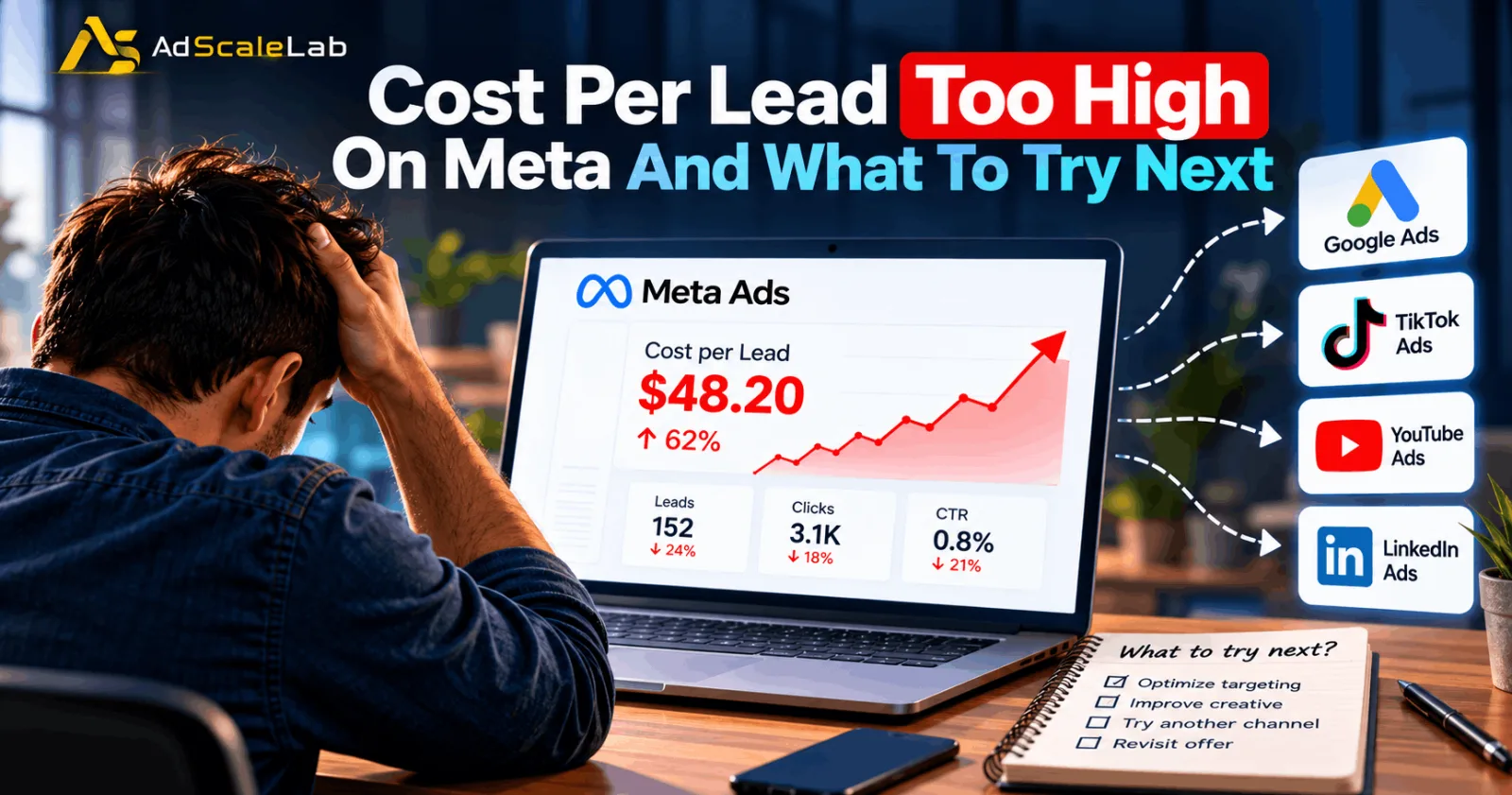
When the cost per lead too high conversation starts, it usually starts in the wrong place, with someone opening Ads Manager and changing bids, when the number on the screen is the end of a chain of four other numbers and only one of them is normally broken. Before moving budget anywhere, it is worth knowing what your ceiling actually is, which part of the chain slipped, and whether the channel itself has simply run out of people to show your ad to.
This walks through that in order, and then covers what to do if the answer really is that the channel is finished rather than the campaign.
First, Work Out What Too High Means For You
High is relative to what a lead is worth, so the first job is a ceiling rather than a benchmark from someone else's industry report.
Take the average value of a sale, multiply by the share of leads that close, and multiply again by the margin you keep. That gives the most you can pay for a lead before the maths stops working, and anything under it is a cost rather than a problem.
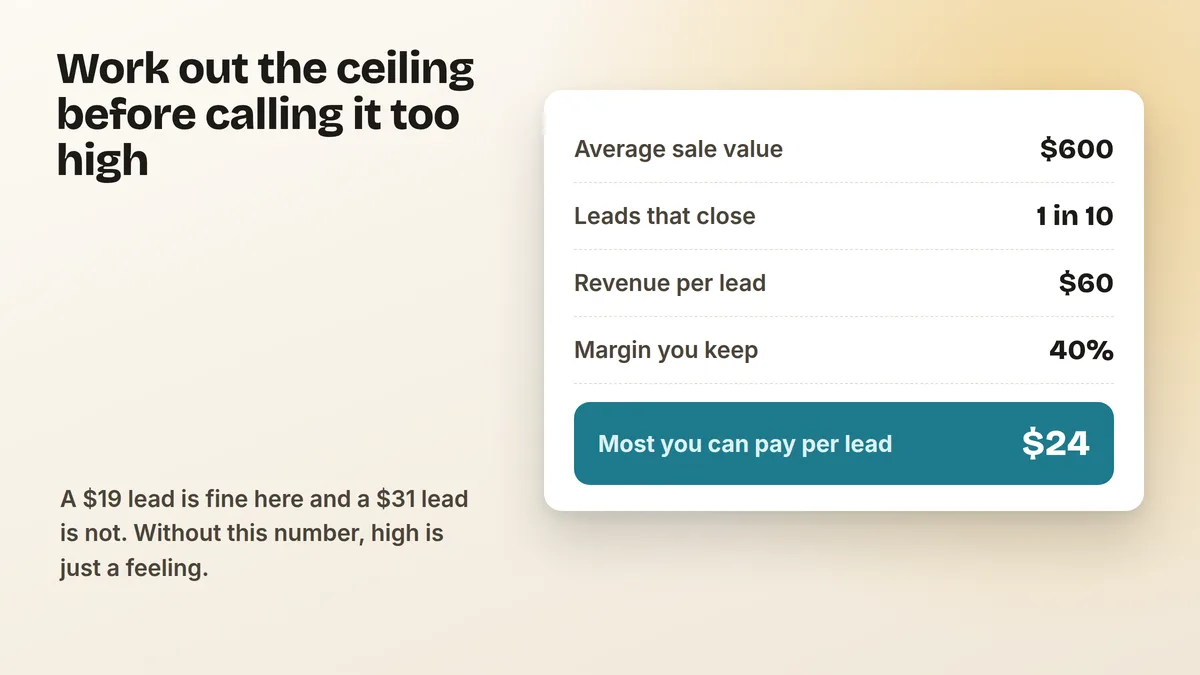
The number also tells you how much headroom you have for testing, since a business that can afford twenty four dollars a lead and is currently paying nineteen has room to experiment, while one paying thirty one is losing money on every form fill and needs to act this week.
Why Your Cost Per Lead Too High Problem Is Usually One Number
Cost per lead is made of four things, and treating it as one number is why people end up rebuilding campaigns that were never the issue.
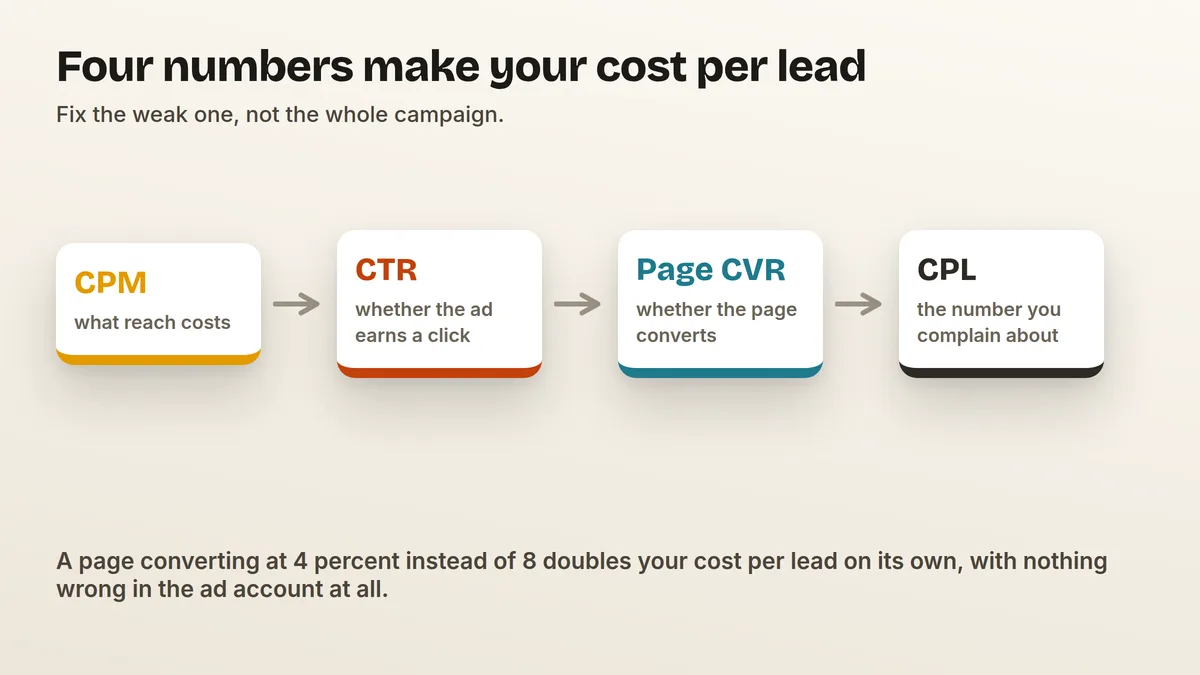
Nearly every cost per lead too high case traces to one of these rather than all four. CPM is what reach costs and it drifts up over time on every social platform, especially in competitive quarters. Click through rate reflects whether the creative still earns attention, and it decays as the same people see the same ad repeatedly. Page conversion rate is the one people check last and it moves the number most, since a page converting at four percent instead of eight doubles your cost per lead with nothing wrong inside the ad account at all.
Check them in that order, and the specific thing to look for is which one changed, because a CPL that doubled over six weeks has a cause somewhere in the chain rather than being a general decline.
Fixes That Usually Work Inside Meta
If the diagnosis points at the account rather than the market, the usual moves are worth running before giving up on the channel. Consolidating ad sets so the budget is not split into fragments that each learn separately, widening targeting rather than narrowing it, refreshing creative properly instead of rotating colour variants, excluding people who already converted, and optimising for the event you actually sell rather than a proxy like page views.
Fixing the page is usually the highest return of the lot, and it is also the cheapest, since shortening a form, making the offer clearer above the fold and getting load times down lifts every channel you ever run rather than just this one.
When The channel Is The Reason Your Cost Per Lead Is Too High
There is a pattern that tells you the audience is finished rather than the campaign being broken. Frequency climbs, click through rate softens, and cost per lead rises steadily even though nothing in the account changed, which is what running out of fresh people looks like from the inside.
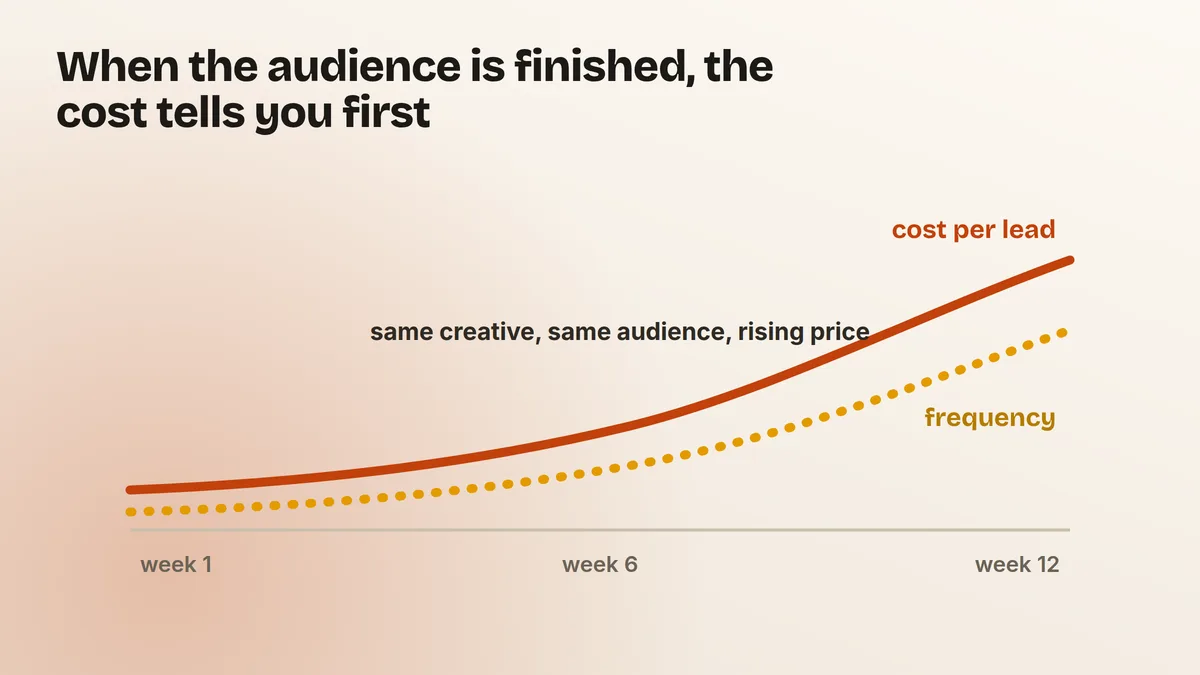
When that is what you are looking at, more optimisation inside the same platform buys you a little time rather than a fix, because the ceiling is the size of the audience you can profitably reach there. The answer is another source of people, not another round of creative.
What Native Does Differently For Lead Gen
Native ads run inside articles on publisher sites rather than in a feed, which changes three things that matter when your cost per lead is too high on social.
Reach is bought at a different price, since you are competing with a different set of advertisers for the same person's attention. The funnel is longer, so the offer gets a page to explain itself before the form appears, which suits considered purchases like insurance, finance and home services. And the audience skews older and more desktop, which is often exactly the buyer that social has been expensive at reaching.
It is not a magic cheaper channel, and we have written about where native beats social and where it does not, because sending native clicks straight to a form with no explanation usually produces worse numbers than the ones you are trying to escape.
How To Test It Without Betting The Month
Move a slice rather than the budget. Seventy percent stays where it is, thirty percent goes to the new source, the offer stays the same so you are testing the channel rather than a new funnel, and the tracking stays in one place so the two can be compared on the same basis.
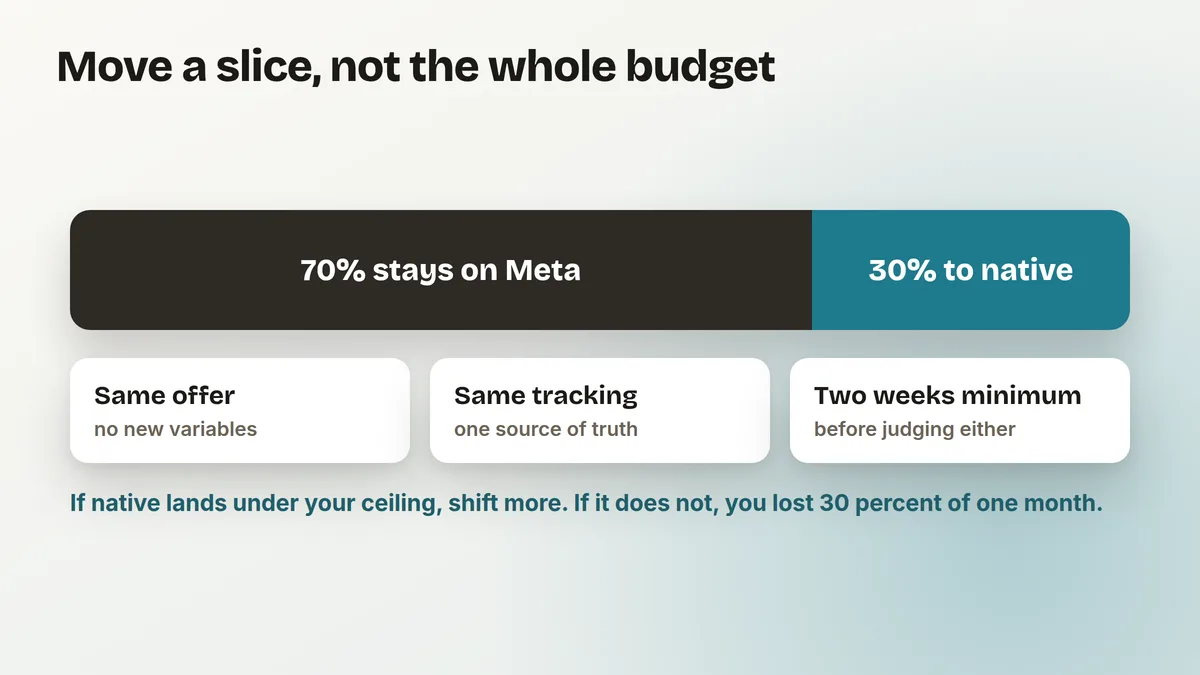
Give it two weeks minimum, since native bidding takes several days to settle and judging it on day three tells you nothing. Then compare against the ceiling you worked out at the start rather than against your current Meta number, because the question is whether the lead is profitable, not whether it is cheaper than the channel you were already unhappy with.
The practical setup for each platform is in our guides to Taboola and MediaGo, and if you would rather not learn a second platform while your cost per lead is too high on the first one, we can supply the accounts with your landing page checked by our compliance team first, or run the campaigns for you.
Agency ad accounts, without the wait.
Buy and top up Google, Meta, native, and more from one dashboard.
Get started

No comments yet. Be the first to comment.
Comments are open to registered AdScaleLab clients.
Sign in to comment