





How To Identify Creative Fatigue In Native Advertising Campaigns
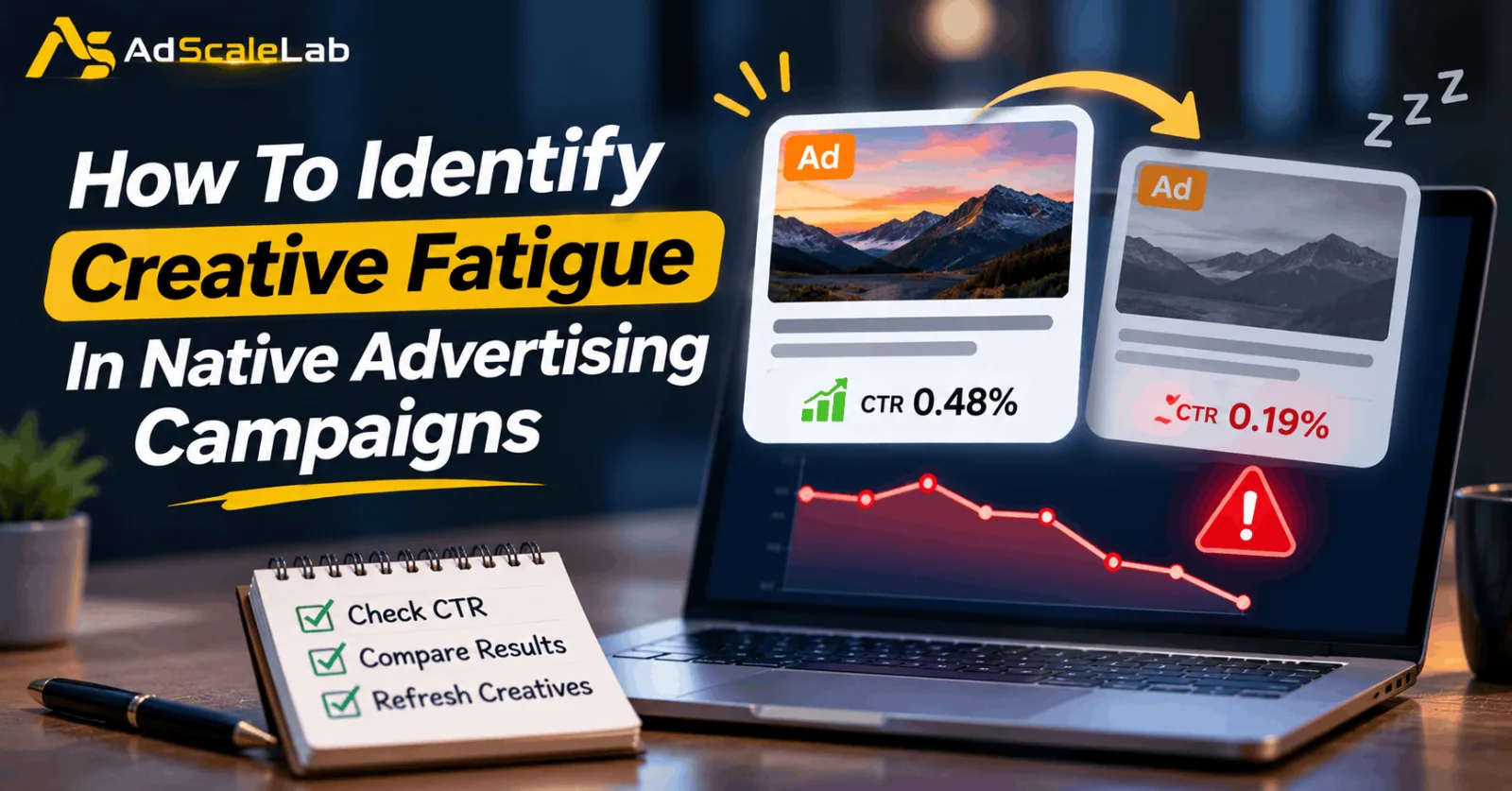
Creative fatigue in native advertising is something many advertisers experience, especially when they run the same campaigns for several weeks or months. An ad may perform really well when it is first launched, bringing clicks and conversions at a reasonable cost. But after some time, the results may start slowing down. The headline that once attracted attention may stop getting clicks, and the same image may no longer make people curious enough to visit the landing page.
This does not always mean the product or campaign has become less interesting. Sometimes, people have simply seen the same advertisement too many times and are no longer responding to it. This is known as creative fatigue. It can affect campaigns running on native advertising platforms such as Taboola, Outbrain (now part of Teads), and other recommendation networks. The difficult part is knowing when a campaign is actually suffering from creative fatigue. A drop in clicks alone does not prove that an ad has become tired. Changes in publisher traffic, competition, bidding, landing-page performance and tracking can also affect results.
In this guide, we will explain the common signs of creative fatigue, show you how to check your campaign data and walk through practical steps to refresh native ad creatives without making unnecessary changes to a campaign that is still performing well.
What Is Creative Fatigue In Native Advertising?
Creative fatigue happens when an advertisement gradually loses its ability to attract attention and generate responses from its audience. This often happens when people keep seeing the same image, headline or advertising message.
Think about a native ad promoting a skincare product. When the campaign first starts, its image and headline may catch people's attention. Users click the ad because they want to learn more about the product. After seeing the same advertisement several times, however, some of those users may start ignoring it. The advertisement has not necessarily changed, but the audience's response has.
Native advertising relies heavily on headlines, images and short descriptions to encourage people to visit a website or landing page. This makes the creative an important part of campaign performance. Taboola's own creative guidance recommends using authentic images, clear visuals and different emotional angles rather than relying on cluttered or repetitive designs.
It is also important to understand that creative fatigue and general ad fatigue are related but not exactly the same. Creative fatigue is mainly about a particular advertising asset losing its impact. General ad fatigue can involve a wider problem where people become less interested in seeing a brand's advertisements overall. For advertisers, the practical question is simple: is the creative losing attention, or is something else causing the campaign to perform poorly?
Why Creative Fatigue Can Become A Problem For Native Ad Campaigns
Native ads appear within content feeds and recommendation placements across publisher websites. People may come across them while reading articles, browsing news or exploring other online content. This gives advertisers an opportunity to reach people while they are already consuming information. But it also means the same creative can appear repeatedly as a campaign continues running.
Imagine that you are running a Taboola campaign with one image and one headline. The campaign starts well, and you continue using the same creative because it is bringing conversions. After some time, its CTR begins to decline. Get Taboola ads agency account here

If you continue spending without checking what is happening, you may end up paying for impressions that are no longer attracting the same level of interest. The same situation can happen on Outbrain or other native advertising platforms. A headline that works on one publisher placement may not perform equally well on another. The audience, content environment and competition can all influence how people respond. This is why advertisers should regularly review creative performance rather than assuming that an ad will keep producing the same results forever.
What Are The Main Signs Of Creative Fatigue?
There is no single number that confirms creative fatigue in every native advertising campaign. Instead, advertisers should look for several changes happening together. One of the first signs is a steady decline in click-through rate. If an ad previously attracted a reasonable number of clicks but its CTR continues falling under similar campaign conditions, the creative may be losing attention.
Another sign is an increase in cost per click or cost per conversion. When fewer people respond to an advertisement, the campaign may become less efficient. However, these costs can also change because of bidding and competition, so they should not be used alone to diagnose fatigue. Get Outbrain ads agency account here

You may also notice that impressions continue coming in while clicks become weaker. This can suggest that the ad is still receiving exposure but is no longer attracting the same response. Conversions are another important part of the picture. If the number of conversions falls along with CTR, the creative may be losing its ability to attract interested visitors. But if clicks remain stable and conversions fall, the problem could be the landing page, offer or checkout process instead.
Finally, look at the creative itself. If the same image, headline and message have been running for a long time without meaningful changes, it may be time to test something new. The important thing is to compare these signs over time. One bad day does not mean an advertisement has reached the end of its useful life.
How To Identify Creative Fatigue In Native Advertising Campaigns
Once you understand the warning signs, the next step is to check your campaign properly. The following seven steps can help you find out whether your native ads are losing their impact and decide what to do next.
Step 1: Check The CTR Of Your Existing Creatives
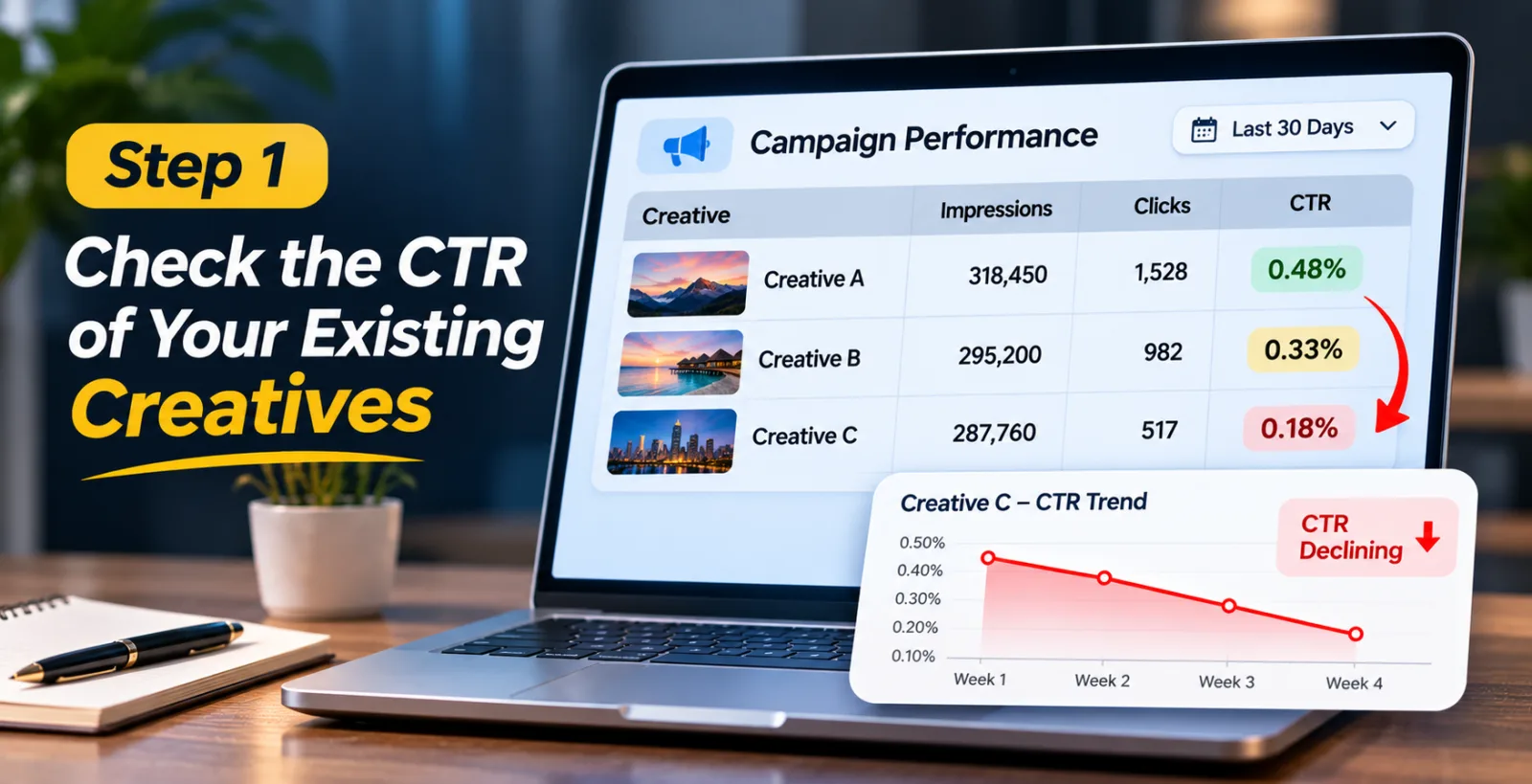
Start by opening your campaign dashboard and reviewing the click-through rate of each active advertisement. Look at which headlines and images are getting clicks and compare their recent performance with earlier periods. For example, an ad that maintained a stable CTR during its first few weeks but has now experienced a sustained decline deserves a closer look.
Do not compare completely different date ranges without considering traffic volume and campaign changes. Try to compare similar periods so that the results are more useful. If you are running several ads in the same campaign, check them individually. One creative may be losing attention while another is still performing well.
Step 2: Compare Recent Results With Your Previous Performance
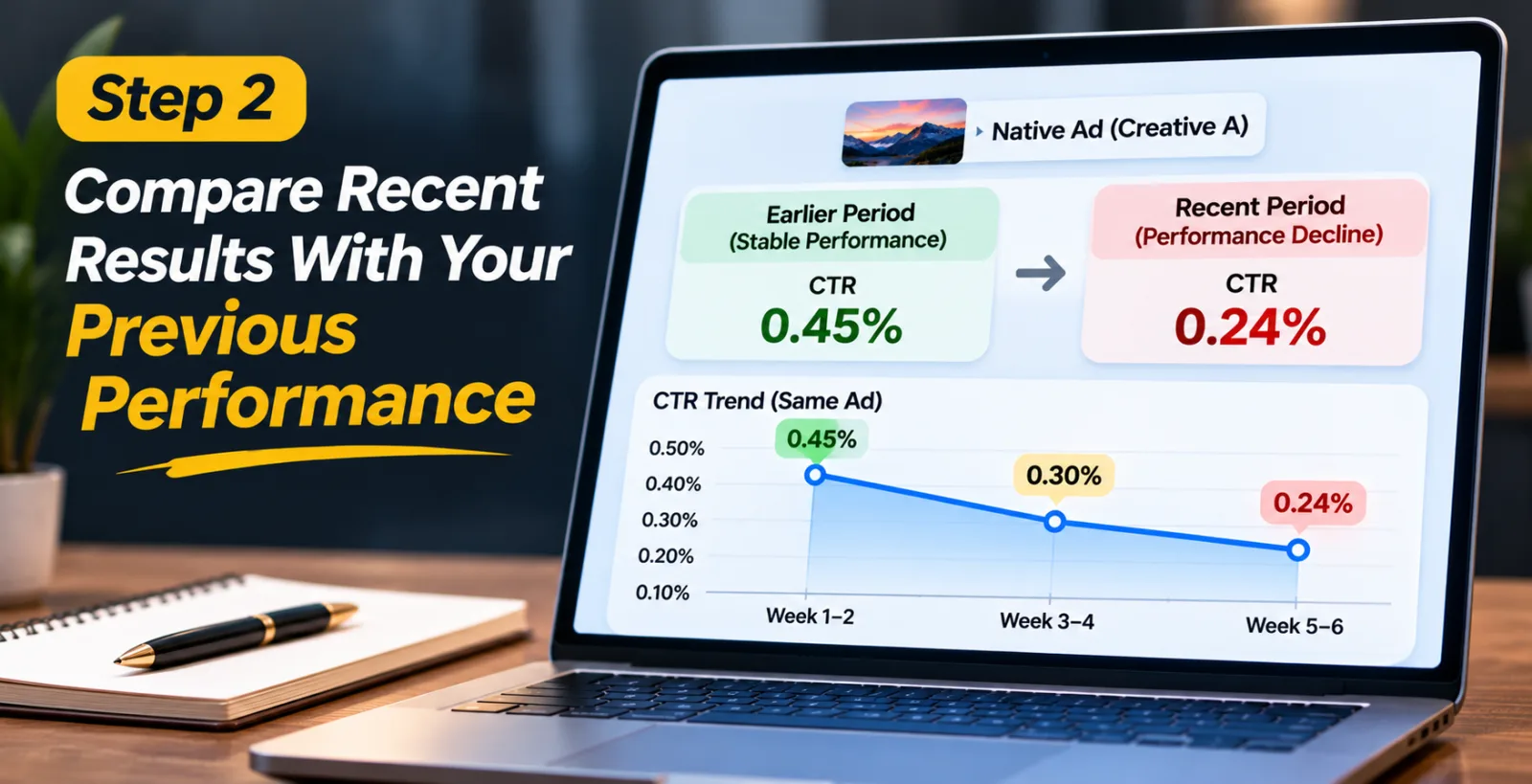
After checking CTR, compare the current results with the period when the creative was performing well. For example, suppose one of your native ads received a CTR of 0.45% during its earlier stable period. Over the following weeks, it gradually falls to 0.30% and then 0.24%.
That change is worth investigating, especially if the campaign's audience, budget and traffic conditions have remained similar. These numbers are only an example, not a universal creative-fatigue benchmark. Every campaign has a different starting point, so it is better to compare an advertisement against its own history rather than applying the same CTR target to every campaign.
Step 3: Review Spending And Conversion Performance
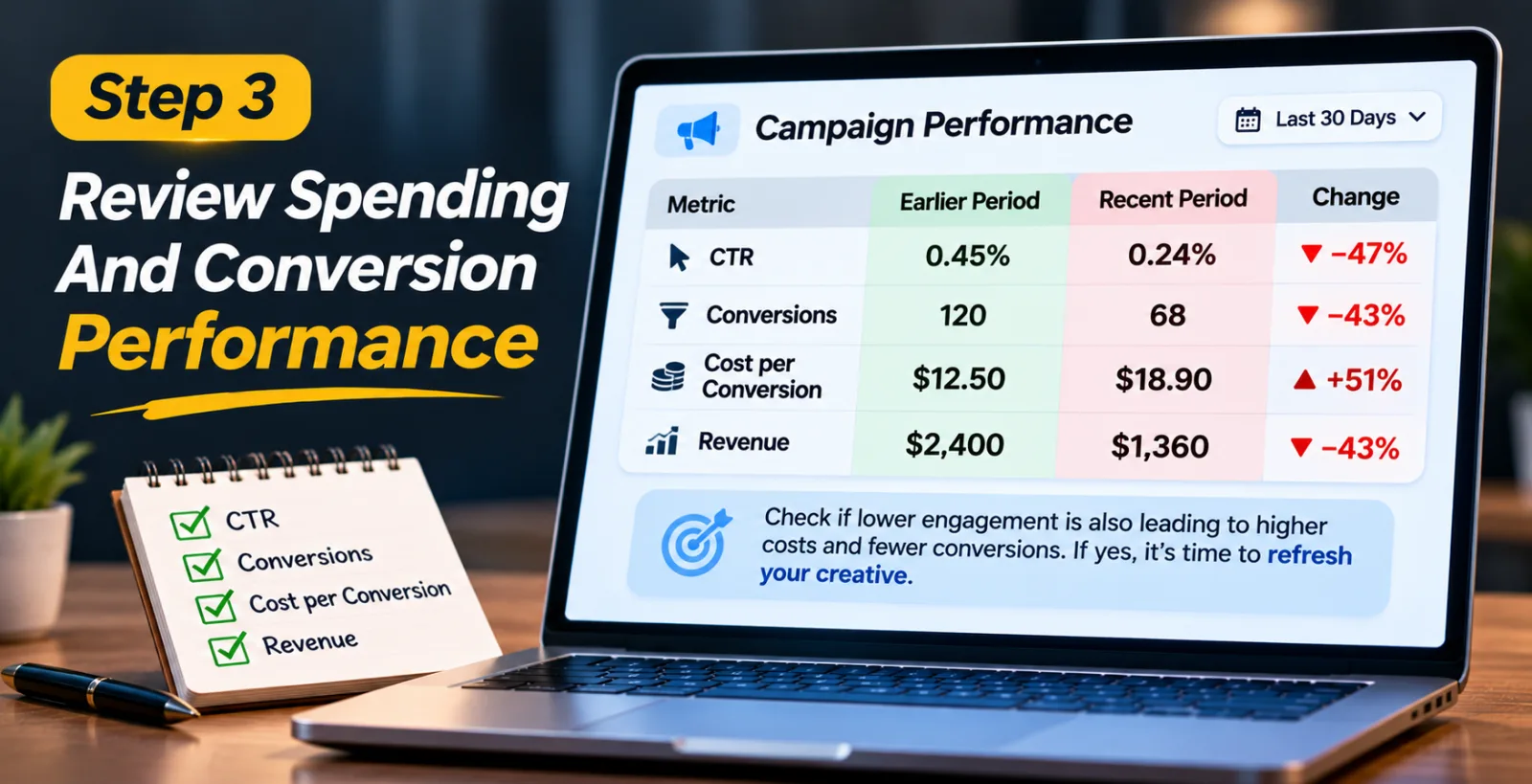
Now check whether the decline in engagement is affecting the campaign's actual results. Look at cost per conversion, total conversions and revenue if your campaign tracks purchases. If you are running a lead generation campaign, check whether the number and quality of leads are changing.
For example, an ad might receive fewer clicks but still generate conversions at an acceptable cost. In that situation, replacing it immediately may not be necessary.
On the other hand, if CTR is falling while cost per conversion is rising and the number of useful leads is decreasing, there may be a stronger reason to refresh the creative. Always connect your creative decisions to the campaign's main goal. A high CTR is useful, but it does not automatically mean that the advertisement is profitable.
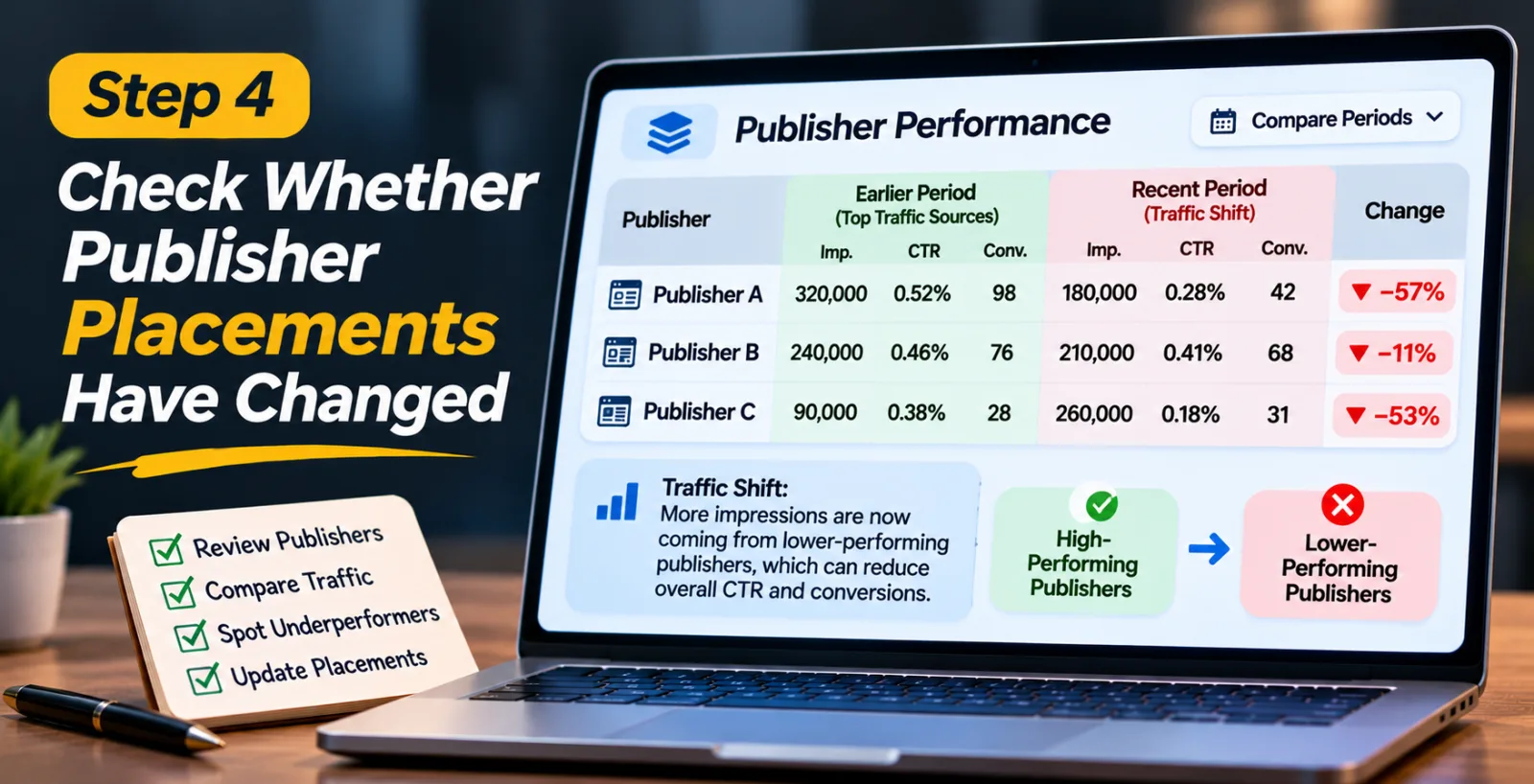
Step 4: Check Whether Publisher Placements Have Changed
Sometimes, a native ad's performance drops because the traffic coming from publisher placements has changed. For example, a campaign may previously have received most of its traffic from a group of publishers that produced good results. Later, its traffic distribution may change, or a larger share of impressions may come from placements that generate fewer clicks or conversions. If you only look at the overall campaign CTR, you might incorrectly blame the creative.
Check publisher-level performance and compare the traffic sources across the periods you are reviewing. Outbrain's advertiser guidance recommends auditing publisher lists and reviewing underperforming sources when optimizing campaigns.
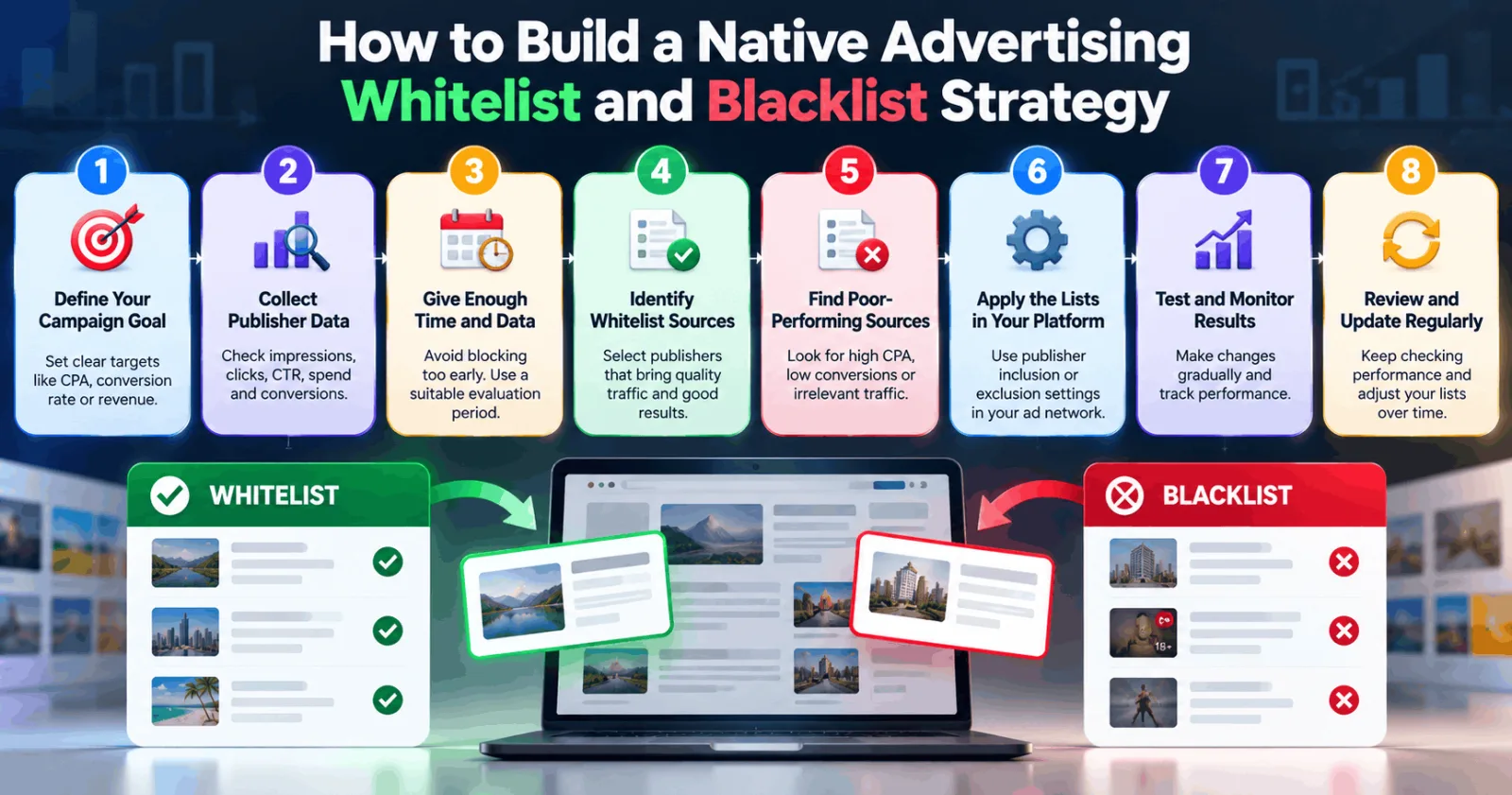
You can also read AdScaleLab's guide on how to build a native advertising whitelist and blacklist strategy. It explains how advertisers can review publisher sources and make more informed placement decisions.
Step 5: Check Your Headlines And Images Separately
Your headline and image work together, but they do not always perform equally well. An image may still attract attention while the headline has become less interesting. In another case, the headline may be strong, but the image no longer stands out among the other recommendations on a publisher website.
Review each part of the advertisement separately. Look at whether the image still represents the offer clearly, whether the headline gives people a reason to click and whether the description matches the landing page. Taboola's creative best-practice guide recommends authentic-looking images, a clear visual focus and testing different emotional angles. These ideas can help advertisers prepare new versions without making every advertisement look the same.

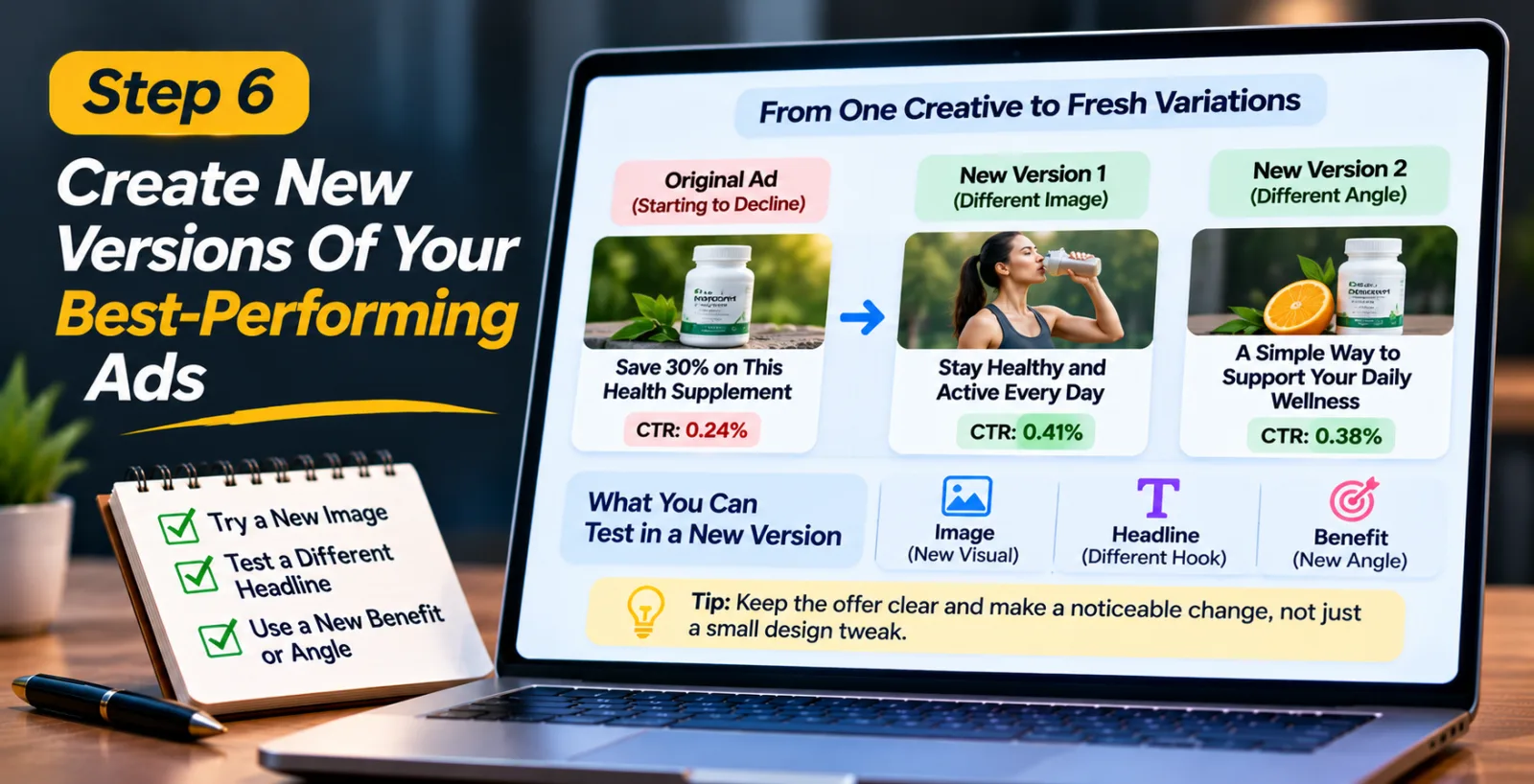
Step 6: Create New Versions Of Your Best-Performing Ads
Once you have identified a creative that may be losing its impact, start preparing new versions. You do not always need to create a completely different advertisement. Sometimes, changing the image while keeping the original message can be a useful first test. You can also try a different headline, a new benefit or another way of presenting the same product.
For example, if your original native ad uses a product image and a headline focused on saving money, you could test another image that shows the product being used in a real situation. You could also test a headline that focuses on convenience rather than price.
The goal is to give people a fresh reason to notice the advertisement while keeping the offer clear. Avoid creating several versions that are almost identical. Changing only a small colour detail may not give you enough information about what actually attracts the audience.
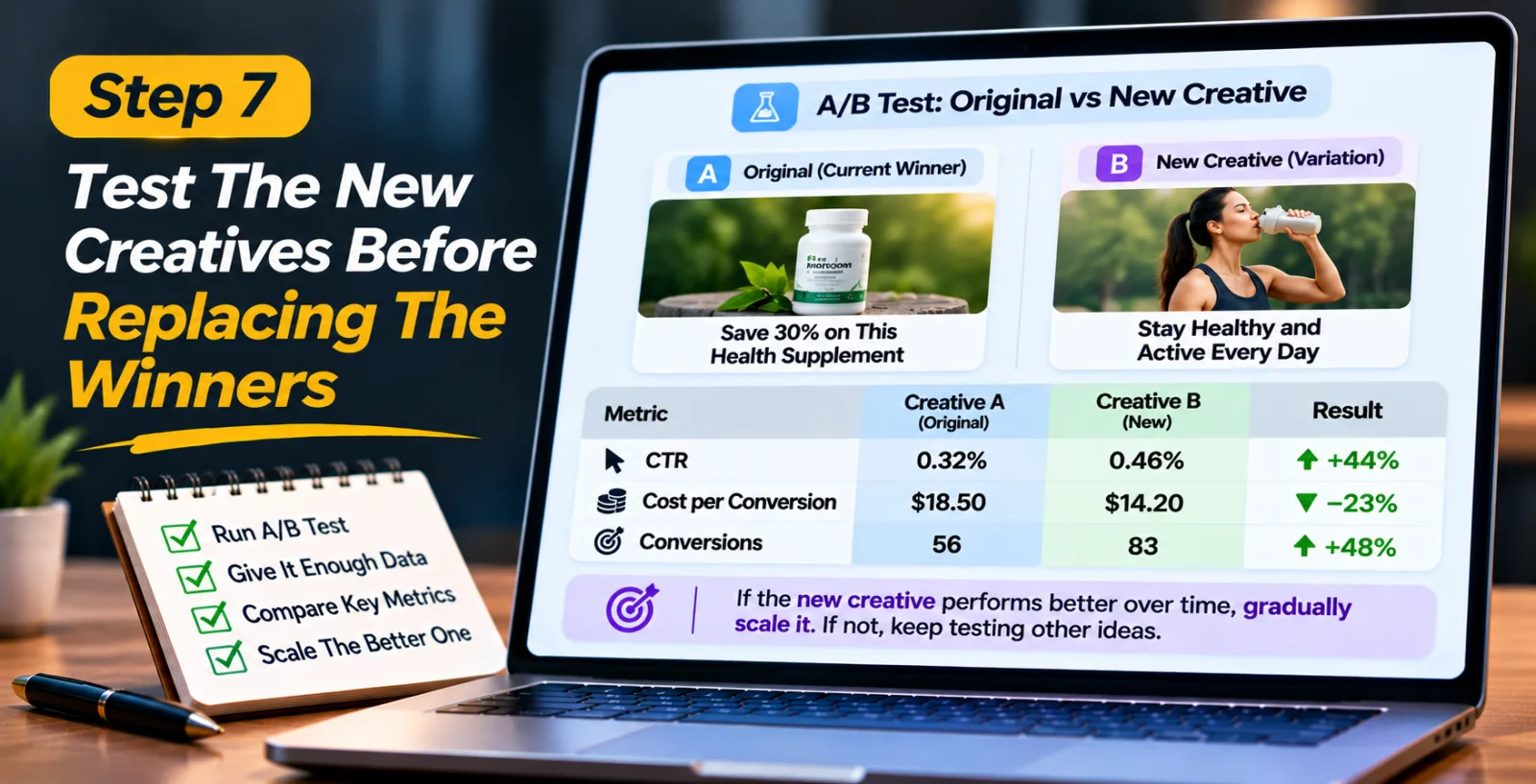
Step 7: Test The New Creatives Before Replacing The Winners
When your new advertisements are ready, test them against the existing creative where your campaign setup allows it. Give the new versions enough impressions and clicks to collect useful information. Do not pause an existing winner just because a new image receives a few early clicks.
Compare the results using the same campaign objective and relevant performance metrics. Check CTR, cost per conversion and the quality of the traffic.
If the new creative performs better and continues to deliver useful results, you can gradually give it more room in the campaign. If it performs poorly, keep testing other ideas rather than assuming that the original advertisement was necessarily the problem. This approach helps you avoid making unnecessary changes and gives you a clearer idea of what your audience responds to.
How To Refresh Native Ad Creatives Without Wasting Budget
Identifying creative fatigue is only useful if you know how to respond to it. The first thing to avoid is changing everything at once. If you replace the headline, image, description, landing page and targeting settings together, it becomes difficult to understand which change affected the results.
Instead, start with the part of the creative that appears to be losing attention. If the image is no longer attracting clicks, test a different visual. If the headline is not generating interest, try a new angle while keeping the rest of the advertisement consistent. It is also a good idea to keep copies of your previous winning creatives. You may want to review their performance later or use their strongest ideas when preparing new advertisements.
Another useful approach is to maintain a small collection of ready-to-test images and headlines. This makes it easier to introduce new creative ideas when performance begins to slow down instead of waiting until the campaign has already lost momentum.
You should also consider the publisher environment. A creative that performs well on one type of website may not attract the same response on another. Testing different formats and visual approaches can help you understand what works across your traffic sources. There is no fixed refresh schedule that works for every campaign. Some creatives may remain effective for a long time, while others may need attention much sooner. Let the campaign data guide your decisions.
Common Mistakes Advertisers Should Avoid
One common mistake is pausing a creative after a single bad day. Advertising results can move up and down for many reasons, and a short-term decline is not enough to prove fatigue. Another mistake is focusing only on CTR. An advertisement with a lower CTR may still generate better-quality visitors and more valuable conversions than an ad that attracts many clicks but few customers.
Some advertisers also create too many similar versions of the same image. These variations may look different at first, but they do not always offer a genuinely new message or reason to click. It is also important not to ignore tracking problems. If your conversion tracking stops recording correctly, you may think that a creative has stopped working when the real issue is measurement.
Finally, avoid making major bid or targeting changes at the same time as a creative refresh unless there is a clear reason. Keeping the test controlled makes it easier to understand the results.
Final Thoughts
Creative fatigue is a normal challenge in native advertising, but it does not mean that every campaign needs to be rebuilt when performance starts falling. The better approach is to look at the numbers, compare recent results with the creative's earlier performance and check whether the problem is really coming from the advertisement. Changes in publisher traffic, bidding, landing pages and conversion tracking can all affect campaign results.
If the creative is losing attention, start by testing a new headline, image or message. Keep your previous winners available, compare the new versions fairly and make decisions based on conversions rather than clicks alone.
For advertisers running campaigns through Taboola, Outbrain and other native advertising networks, this kind of regular review can help keep campaigns organized and reduce unnecessary spending on advertisements that are no longer delivering the results they once did.
Agency ad accounts, without the wait.
Buy and top up Google, Meta, native, and more from one dashboard.
Get started

No comments yet. Be the first to comment.
Comments are open to registered AdScaleLab clients.
Sign in to comment