





How To Use MediaGo SmartBid LoopMax For Lead Generation Campaigns
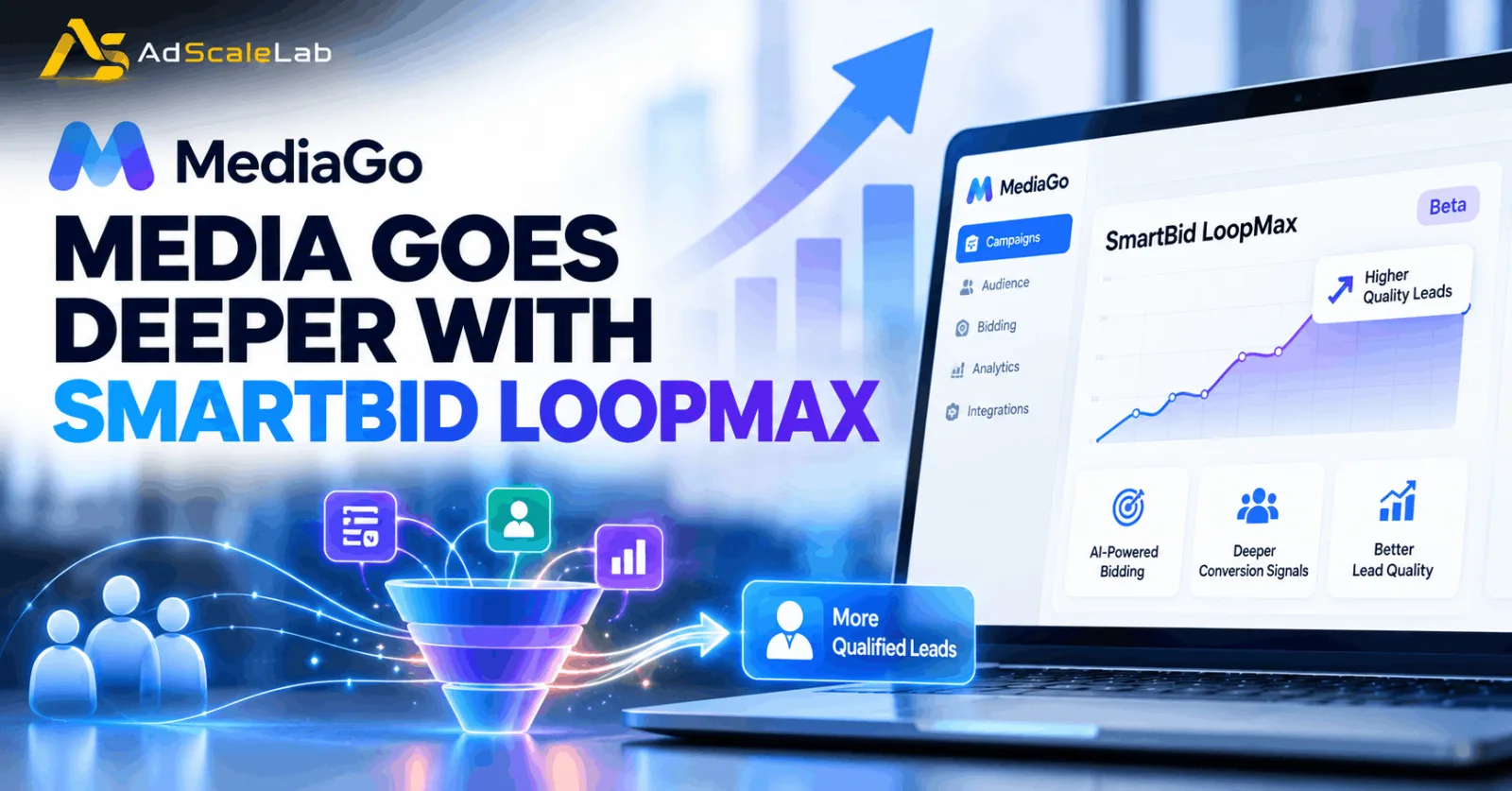
MediaGo SmartBid LoopMax is designed to address one of the biggest challenges in modern lead generation: getting leads is not always the same as getting valuable customers. At first, lead generation sounds simple. An advertiser runs an ad, a person clicks on it, fills out a form, and the company gets a new lead. But in real advertising campaigns, the process is much more complicated.
A lead is not always a customer. Some people fill out a form because they are only curious, some provide incomplete information, and others may never respond to a sales team. This creates a problem for advertising platforms because a campaign can appear successful while actually bringing in a large number of low-quality leads.
This is the problem MediaGo is trying to address with SmartBid LoopMax.
MediaGo introduced SmartBid LoopMax in September 2026 as a new intelligent bidding product for Lead Gen advertisers. The product is currently in Beta and is designed to move campaign optimization beyond basic actions such as clicks and form submissions toward deeper conversion events.
Instead of only asking, “Who is likely to submit a form?”, the idea is to give the bidding system more information about what happens after the form is submitted. For example, a campaign could have this journey: Ad impression → Click → Landing page → Form submission → Qualified lead → Sales appointment → Customer.
Traditional optimization may put a lot of importance on the form submission. SmartBid LoopMax is designed to learn from the later stages as well.
What Is MediaGo SmartBid LoopMax?
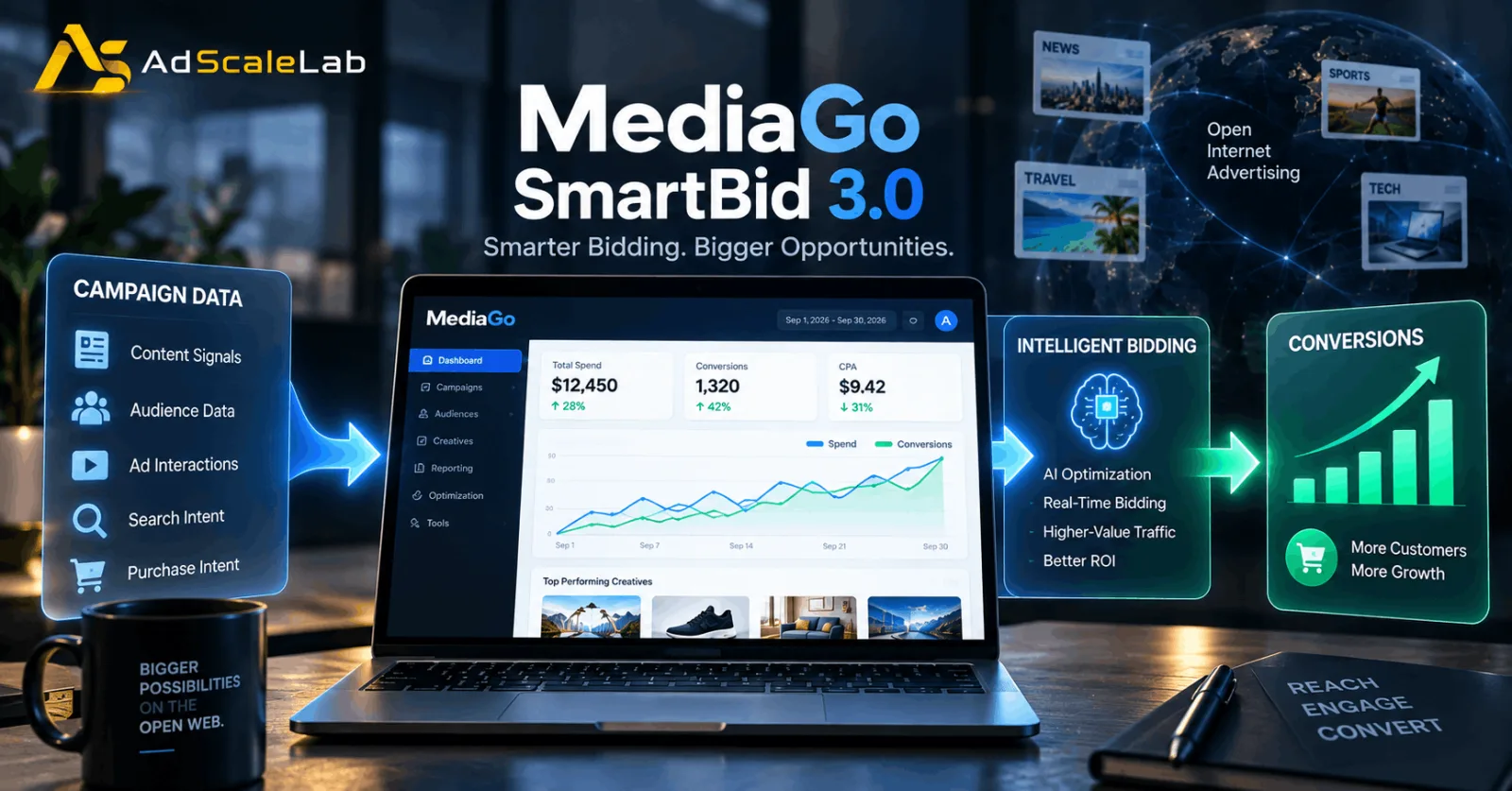
MediaGo SmartBid LoopMax is a deep-funnel optimization product built on top of MediaGo's SmartBid 3.0 technology.
MediaGo already uses SmartBid as its intelligent bidding system. The company's platform describes SmartBid as a system that processes large amounts of advertising data and uses deep learning for bidding and performance optimization. MediaGo also says its platform can predict conversion-related signals in real time and adjust bidding based on the expected business value of advertising inventory.
SmartBid 3.0 was launched in 2025 with a focus on improving campaign scaling and stability. MediaGo said SmartBid 3.0 could reduce cold-start time by more than 50% and improve spend completion, while its Max CV and tCPA modes were designed to help advertisers manage conversion volume and cost.
LoopMax takes this idea further for lead generation.
The main difference is the type of conversion data being used. Instead of stopping at a form submission, advertisers can provide deeper information about what happens to those leads later in the customer journey. For example: Ad impression → Click → Landing page → Form submission → Qualified lead → Sales appointment → Customer.
Why Lead Generation Campaigns Need Deeper Optimization
Imagine two advertisers both generate 1,000 leads.
The first advertiser gets 1,000 cheap leads, but only 20 become customers. The second advertiser gets 700 leads, but 80 become customers. Looking only at the number of leads, the first campaign appears bigger. Looking at the actual business result, the picture is very different. This is why lead quality matters.
MediaGo says one of the problems with traditional Lead Gen optimization is that important information can remain inside an advertiser's CRM or backend system. If that information does not flow back into the advertising system, the bidding model has limited knowledge about which leads eventually become valuable customers.
This can create a feedback problem. If the platform keeps receiving form submissions as its main success signal, it may continue finding people who are good at submitting forms rather than people who are more likely to become customers. SmartBid LoopMax is designed to close that gap.
How MediaGo SmartBid LoopMax Works
The easiest way to understand MediaGo SmartBid LoopMax is to think about it as a learning loop.
First, the advertising campaign generates normal upper-funnel signals. These can include clicks, page views, bookings, and form submissions.
Then, deeper conversion information can be connected to the campaign. This can tell the system which users eventually become qualified prospects or reach another valuable stage.
Finally, the additional information becomes feedback for future bidding decisions.
MediaGo describes three major sources of signals for LoopMax: upper-funnel conversion signals, MediaGo's own deep conversion data, and first-party multi-channel conversion signals from advertisers. The important part is that these signals work together. The system can use early actions to understand initial interest while using deeper conversion information to distinguish between different types of leads.
In simple words, the goal is not just to find more people who fill out the form. It is to find more people who are likely to have real value later in the funnel.
How To Use MediaGo SmartBid LoopMax For Lead Generation
Because LoopMax is currently a Beta product for eligible Lead Gen advertisers, the exact account-level interface and onboarding process may vary. MediaGo has not publicly provided a complete step-by-step dashboard manual. However, the published product information gives advertisers a clear picture of how a campaign should be prepared.
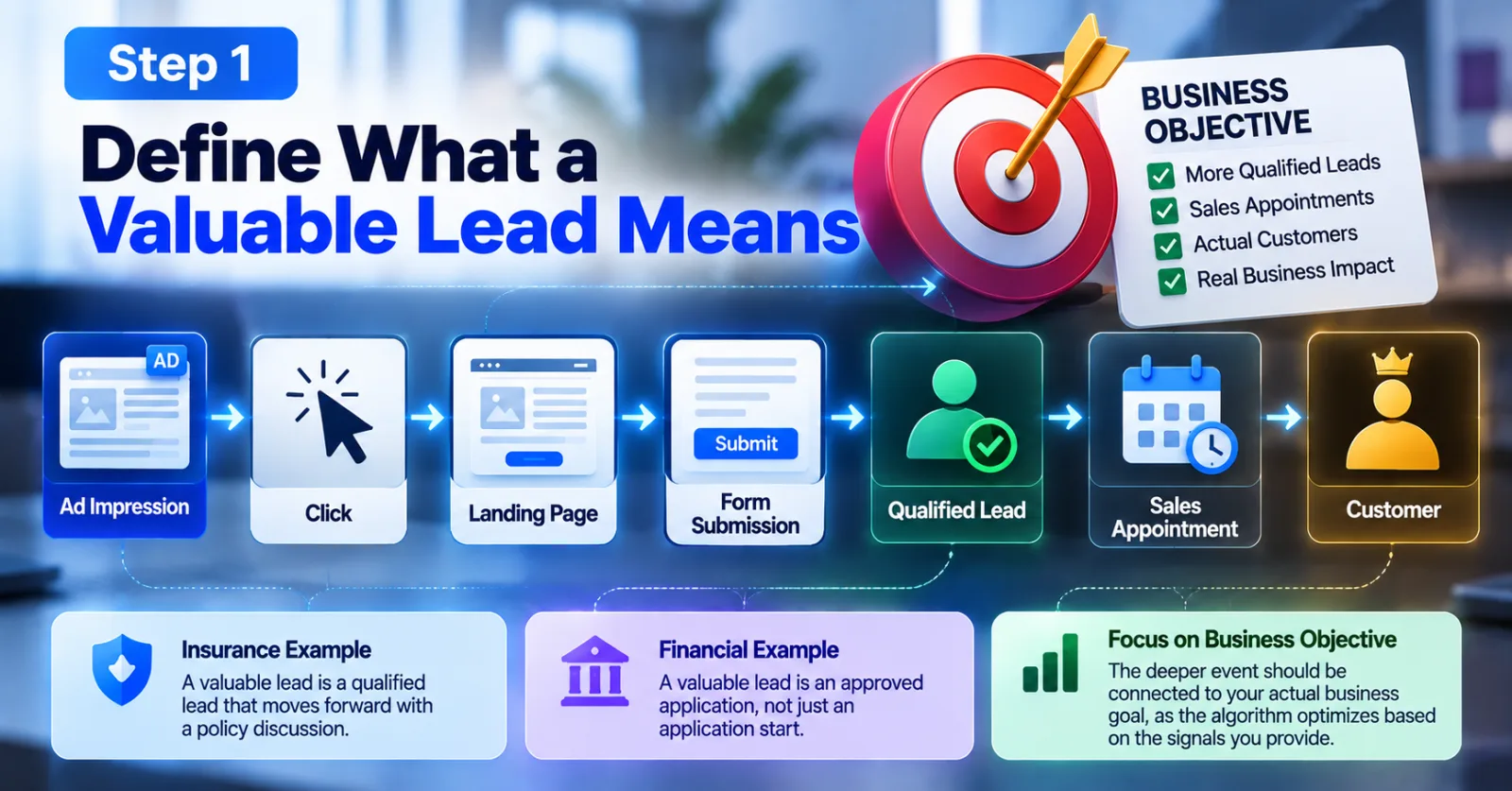
Step 1: Define What A Valuable Lead Means
Before starting with any optimization system, first decide what the campaign is actually trying to achieve. Do not simply define success as “more leads.” Think about what happens after a person submits a form.
For example, an insurance company may consider a lead valuable when the person is qualified and moves forward with a policy discussion. A financial company may care about an approved application rather than just an application start.
The deeper event should be connected to an actual business objective. This is one of the most important steps because the algorithm can only optimize toward the signals that the advertiser provides.
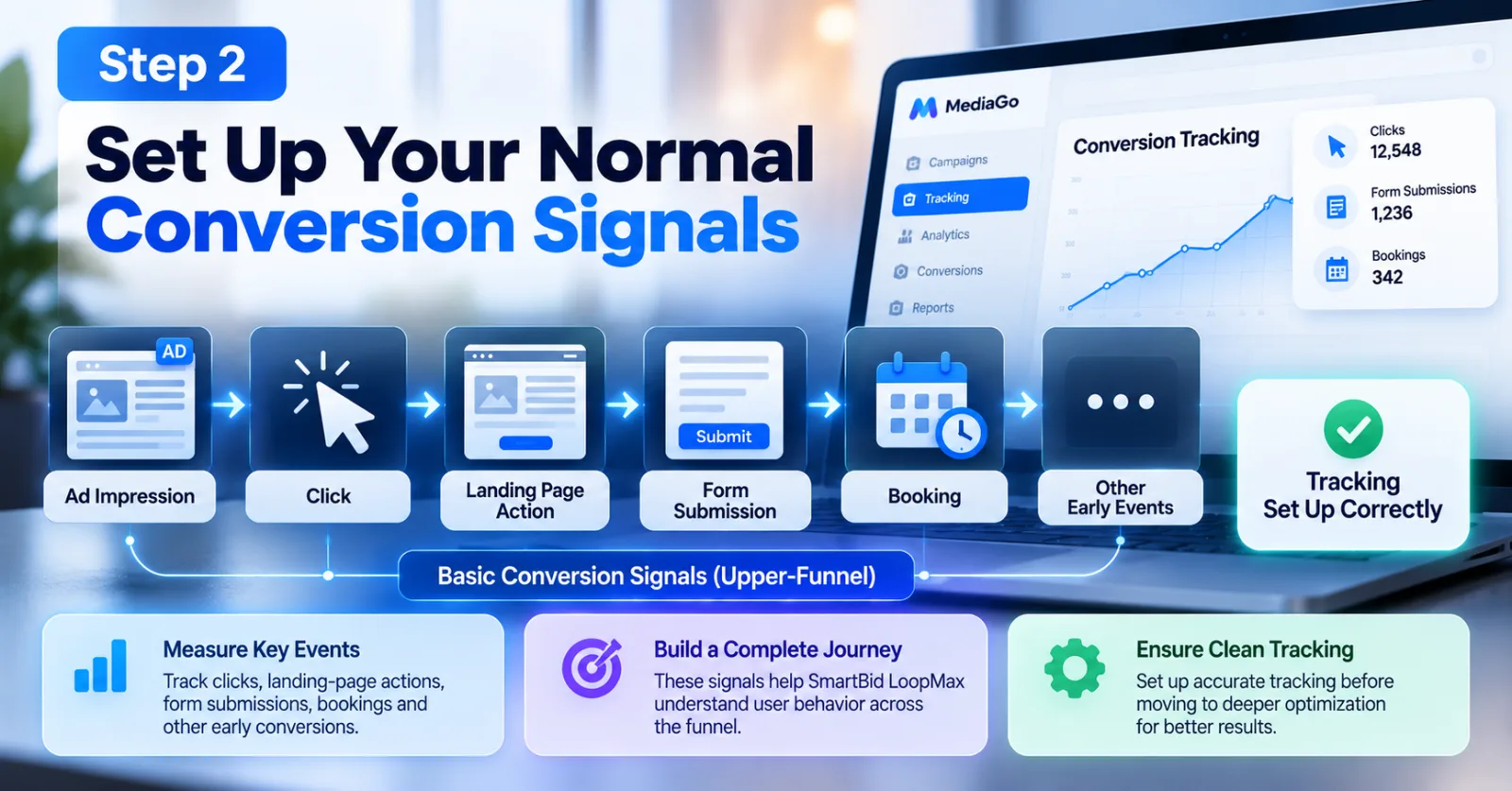
Step 2: Set Up Your Normal Conversion Signals
The next step is to make sure the basic conversion journey is being measured correctly. This can include clicks, landing-page actions, form submissions, bookings, or other early events.
These signals still matter. SmartBid LoopMax does not make upper-funnel data useless. Instead, MediaGo describes them as one of the three signal groups that can help the system understand the entire customer journey.
A campaign should therefore have clean tracking before deeper optimization is introduced. If the basic conversion tracking is broken, adding more advanced optimization will not fix the underlying problem.
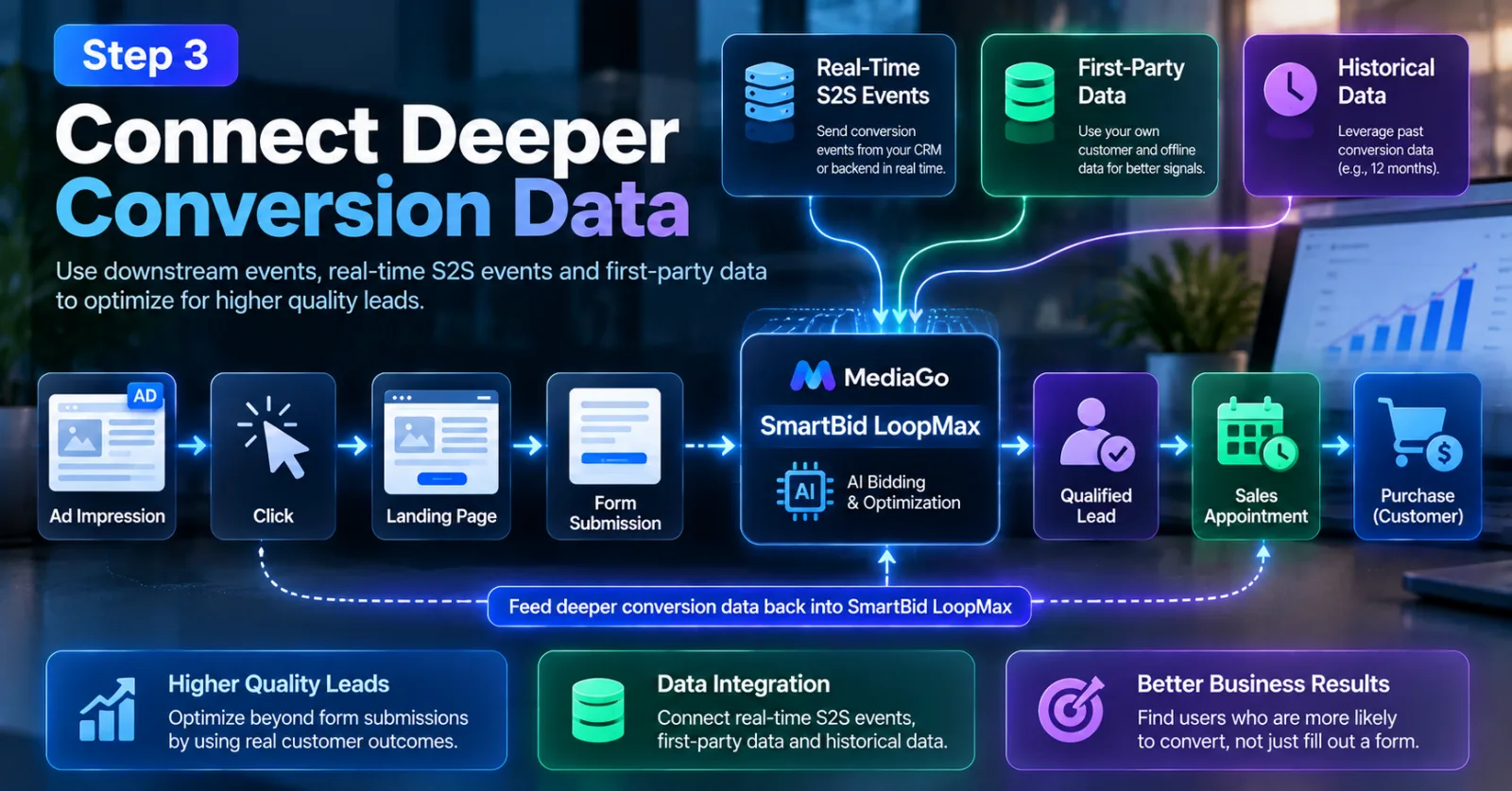
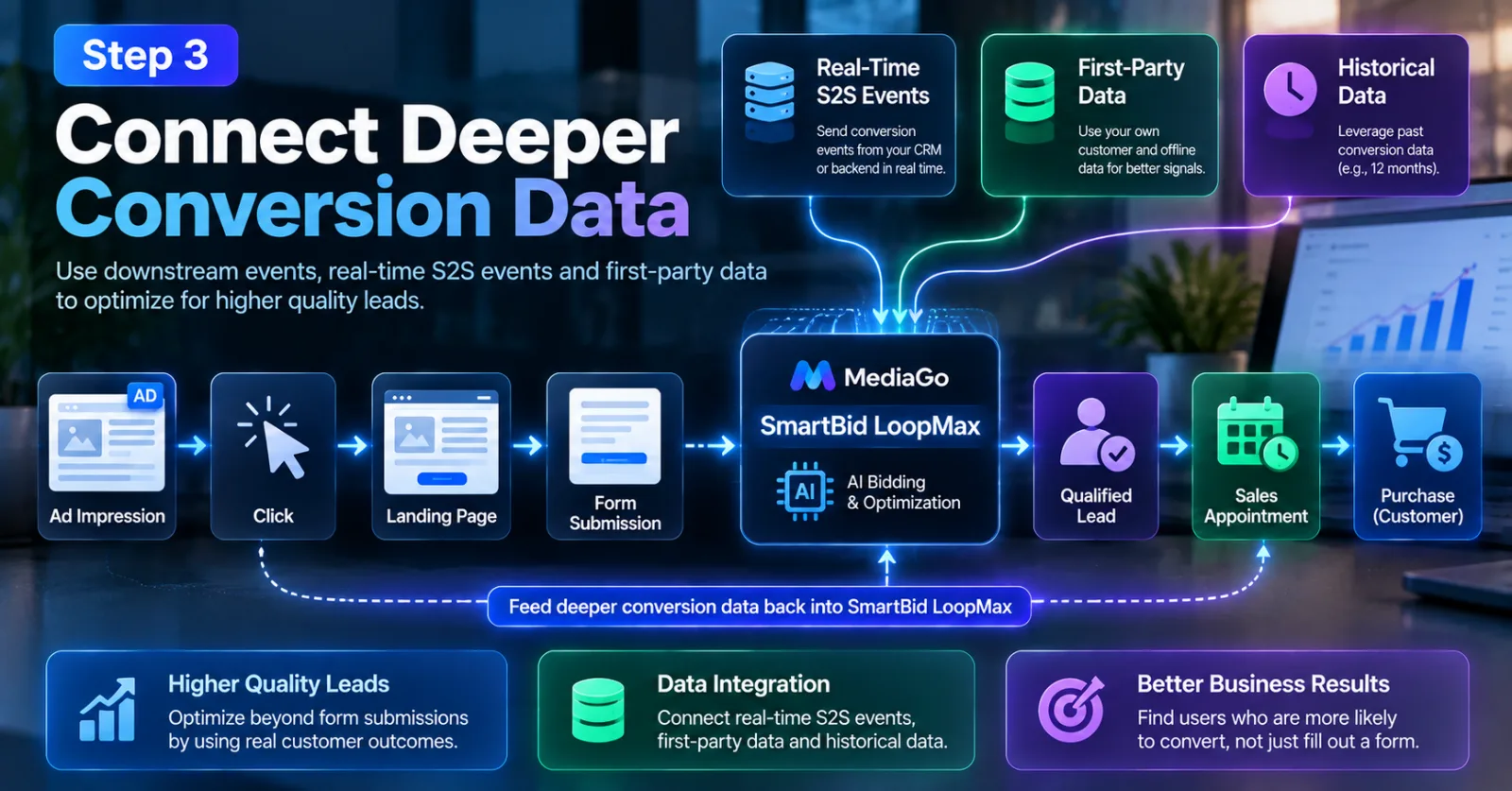
Step 3: Connect Deeper Conversion Data
This is where SmartBid LoopMax becomes different from a normal lead-generation setup.
Advertisers need to provide information about what happens after the initial conversion. For example: A visitor fills out a form. The lead is checked by the sales team. The lead becomes qualified. The person books a meeting. The customer eventually purchases. The advertiser can use appropriate downstream events as deeper conversion signals.
MediaGo's September 22 announcement says LoopMax can work with real-time S2S events and first-party data, including historical data. In one reported U.S. insurance test, the advertiser connected real-time server-to-server events and 12 months of historical first-party data before running a 30-day A/B test.
This shows why data integration is an important part of the strategy. The quality of the deeper conversion signal is more important than simply sending large amounts of data.
Step 4: Start With A Clear Deep-Conversion Goal
Do not try to optimize everything at once. Choose the business event that matters most and make sure it is measured consistently. For some businesses, that might be a qualified lead. For another business, it could be a completed appointment or another later-stage event.
MediaGo's latest description says LoopMax can support up to seven customized deep-conversion goals. This gives Lead Gen advertisers the ability to represent different stages of their sales process instead of treating every lead as equal.
The exact goals should depend on the advertiser's sales funnel rather than simply copying another company's setup.
Step 5: Give The System Enough Data To Learn
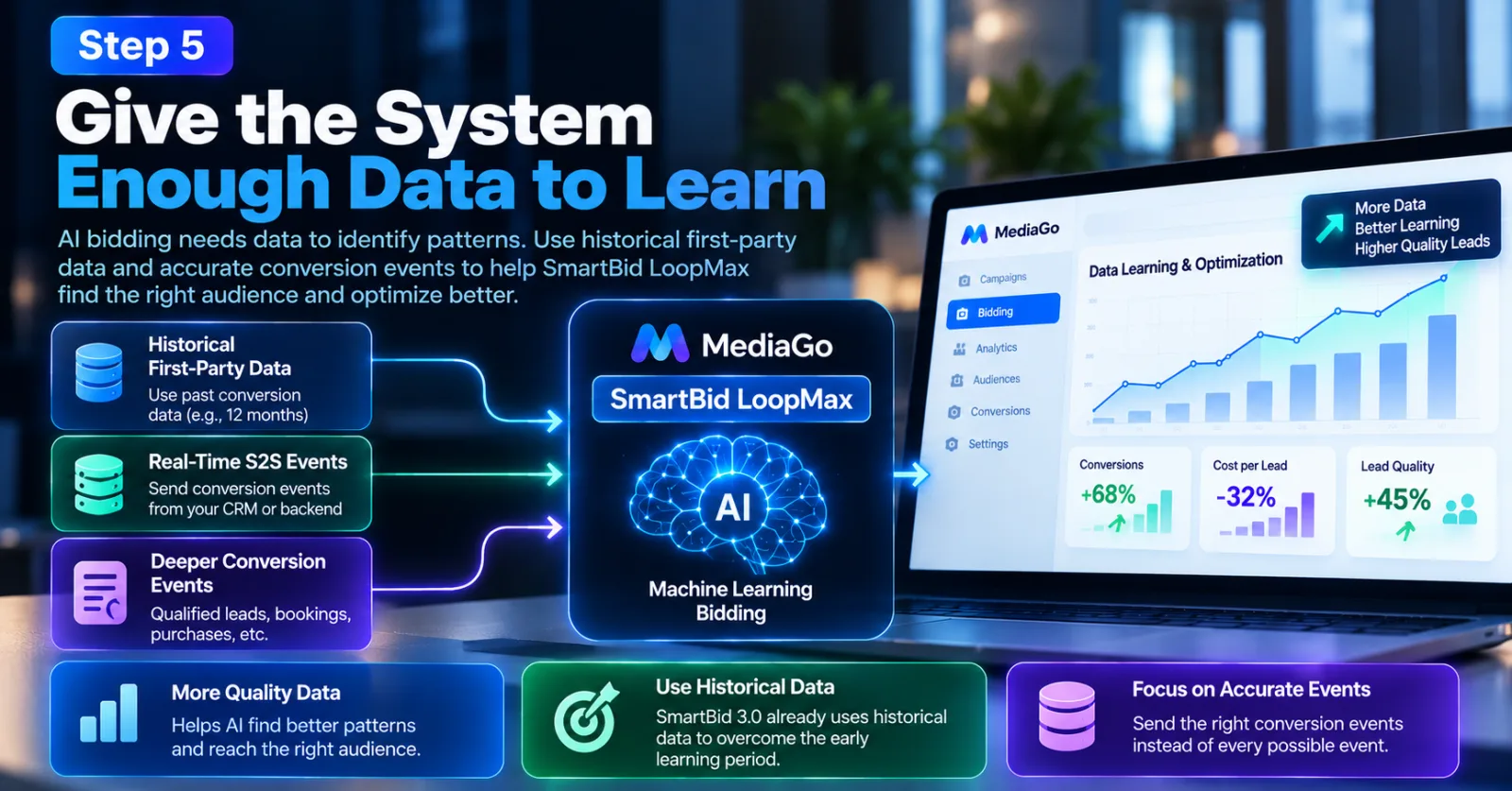
AI bidding needs data to identify patterns. If an advertiser sends only a very small number of deep conversions, it can be difficult to distinguish useful patterns from normal campaign variation. This is why historical first-party data can be useful when available and properly integrated.
MediaGo's SmartBid 3.0 already uses historical information and machine-learning-based bidding to help campaigns overcome the early learning period.
For LoopMax, the quality of the deeper conversion signal is especially important. A company should therefore focus on sending accurate conversion events rather than sending every possible event just to create more data.
Step 6: Let SmartBid LoopMax Adjust Bids
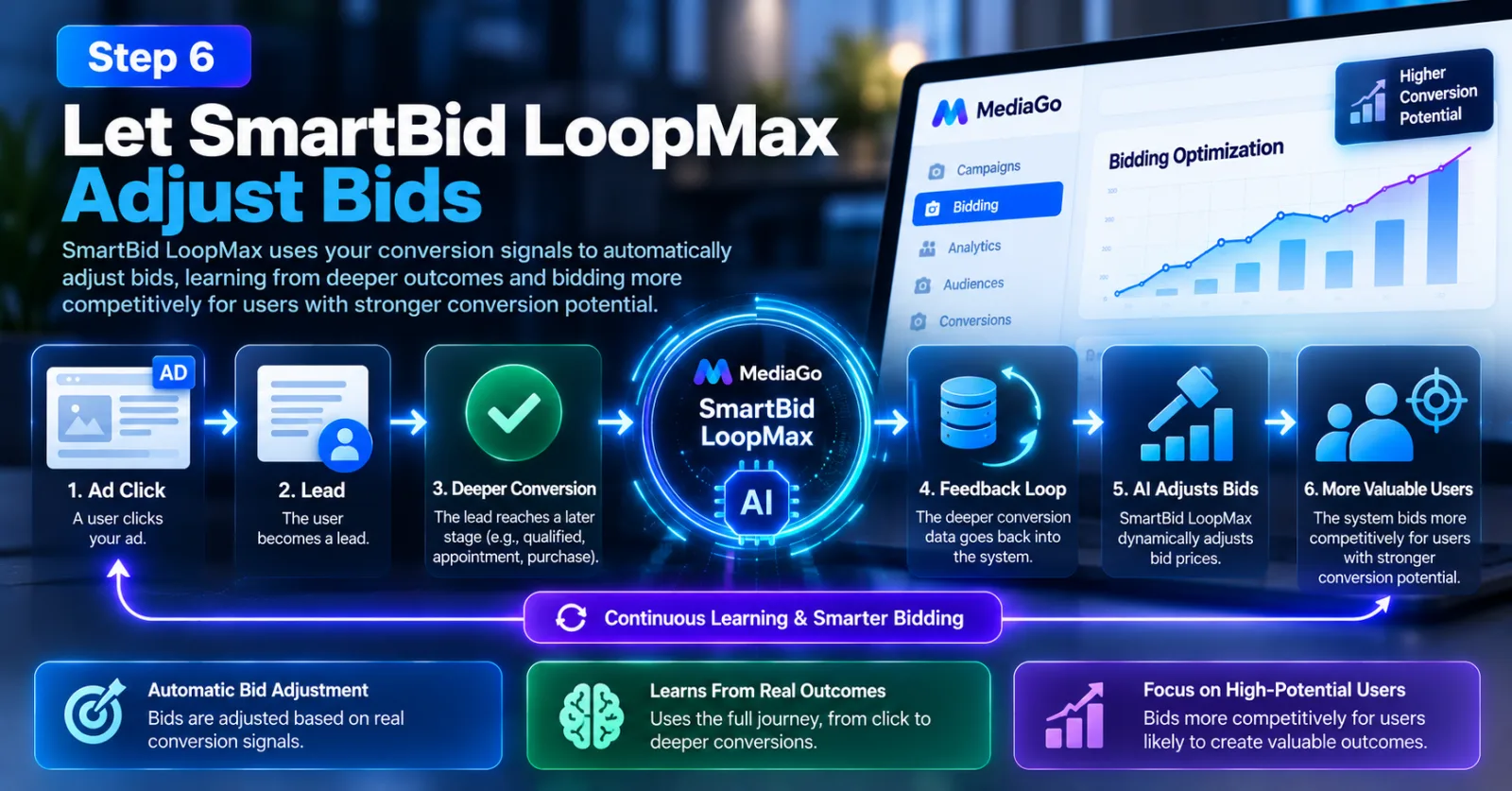
Once the campaign is sending the required signals, the bidding system can use them to estimate which users are more likely to create valuable outcomes.
This is where the “loop” in LoopMax becomes important. A person clicks an advertisement. The person becomes a lead. The lead later reaches a deeper conversion stage. That information goes back into the optimization system. The model can then use what it learned to make future bidding decisions.
MediaGo says SmartBid LoopMax dynamically adjusts bid prices based on the combined signals and aims to bid more competitively for users with stronger conversion potential. The advertiser's job is not to manually decide the bid for every individual user. The important work is making sure that the system receives useful and trustworthy conversion information.
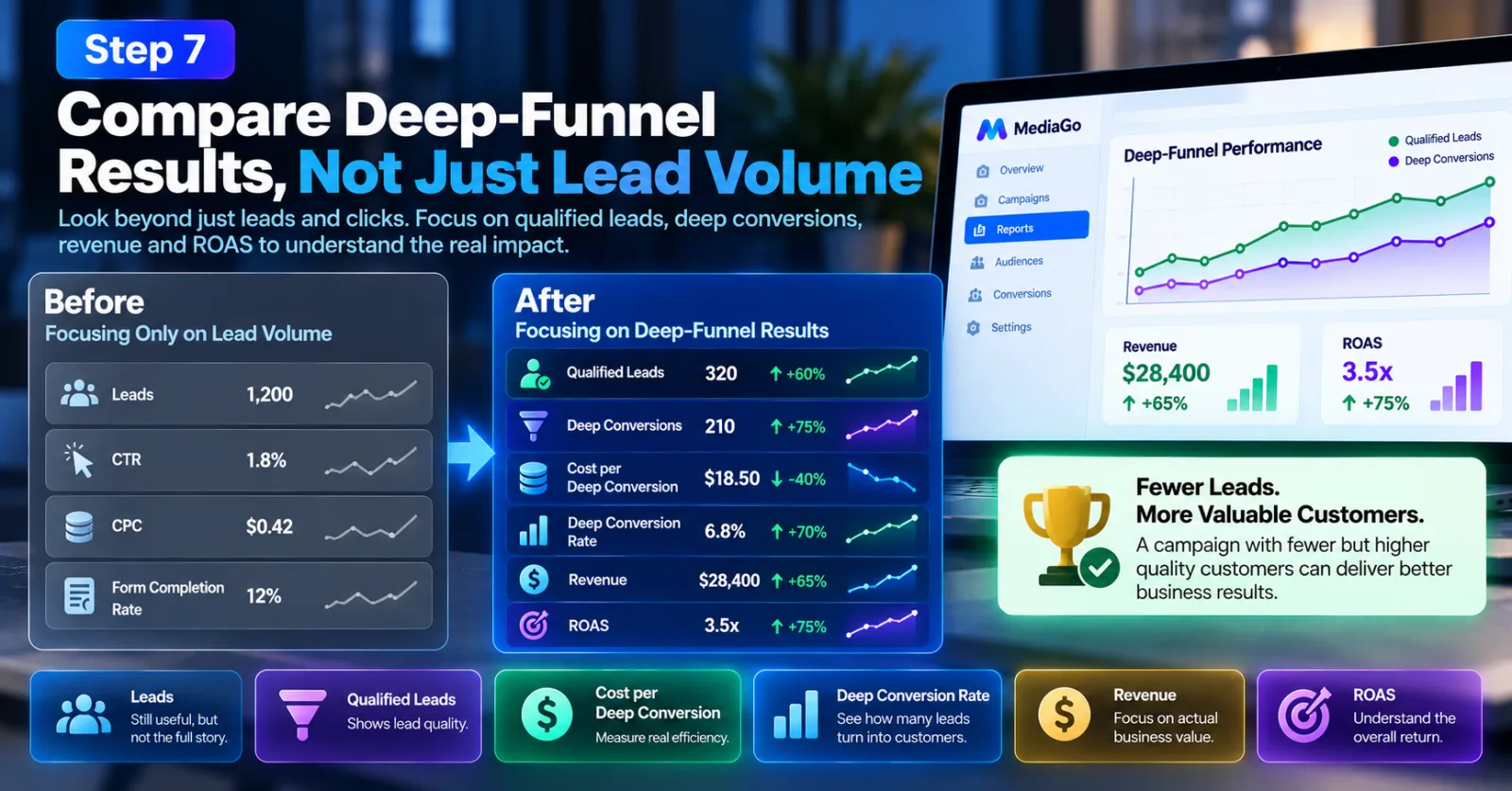
Step 7: Compare Deep-Funnel Results, Not Just Lead Volume
This is probably the biggest reporting change advertisers should make.
Do not judge the campaign only by number of leads, click-through rate, CPC, and form completion rate. Those numbers still have value, but they do not tell the complete story. Instead, also look at qualified leads, deep conversions, cost per deep conversion, deep conversion rate, revenue or downstream value, and ROAS where applicable.
A campaign that produces fewer leads but significantly more valuable customers may be doing a better job for the business.
What Results Has MediaGo Reported?
There are already several pieces of evidence around MediaGo's broader SmartBid technology, although advertisers should separate those results from the newer LoopMax Beta claims. For example, MediaGo previously reported that Xevio used SmartBid technology and reduced CPL by 20% below its target while improving lead quality by 30% over a two-month period. The campaign covered areas including solar, real estate, and heat pumps.
MediaGo has also reported results from SmartBid 3.0 campaigns. Its published case studies include a North American personal finance advertiser that used Max CV with tCPA as a secondary constraint and reported a 76% ROAS improvement, as well as a lead-generation advertiser that reported a 32% increase in conversions and a 300% increase in lead volume after using deeper optimization and S2S integration. These are company-reported case studies, so they should be viewed as examples rather than guarantees for every advertiser.
For SmartBid LoopMax specifically, MediaGo reported a test with a U.S. insurance advertiser in which daily spend increased 20x, cost per deep conversion decreased 20%, the deep conversion rate increased 50%, and ROAS increased 29%. MediaGo said the test used real-time S2S events and 12 months of historical first-party data, followed by a 30-day A/B test.
These numbers are interesting, but they are still vendor-reported Beta results, not an independent guarantee of performance.
SmartBid LoopMax vs Normal Lead Optimization
The main difference can be explained very simply.
Normal lead optimization asks: “Who is most likely to become a lead?”
Deep-funnel optimization asks: “Which potential users are more likely to become valuable customers?”
That does not mean the first approach is useless. Form submissions are still important because they provide the first clear signal of interest. The difference is that LoopMax is designed to add information from later in the customer journey. This can be especially useful for industries with longer sales cycles, where a person may submit a form today but become a customer several weeks later.
What Advertisers Should Watch Before Using It
SmartBid LoopMax is not a magic button that automatically fixes a weak campaign.
The landing page still needs to work. The offer needs to make sense. The creative needs to attract the right audience. The sales team also needs to follow up properly. Most importantly, the conversion data needs to be accurate. If an advertiser sends incorrect or incomplete downstream signals, the bidding system can learn from bad information.
It is also important to remember that LoopMax is currently in Beta and available to eligible Lead Gen advertisers. MediaGo says participating advertisers receive dedicated resources and support during the testing period. So advertisers should treat early results as testing data and compare them against a suitable control rather than assuming that every campaign will deliver the same outcome.
Final Thoughts
MediaGo SmartBid LoopMax is an interesting development because it focuses on a problem that many lead-generation advertisers already face: getting a large number of leads is not the same as getting a large number of valuable customers. The product builds on MediaGo's SmartBid 3.0 technology and attempts to connect advertising optimization with what happens after the initial lead. Its approach combines upper-funnel signals, MediaGo's own conversion information, and first-party data from other channels.
For advertisers, the basic process is straightforward in principle: define the real business goal, make sure normal conversion tracking works, connect reliable deeper conversion signals, choose meaningful deep-conversion goals, give the system enough useful data, and then measure the campaign based on lead quality and downstream results. The biggest change is the way success is measured.
Instead of stopping at “How many leads did we get?”, advertisers can start asking a more useful question: “How many of those leads actually moved the business forward?”
That is the problem SmartBid LoopMax is built to solve.
Agency ad accounts, without the wait.
Buy and top up Google, Meta, native, and more from one dashboard.
Get started
No comments yet. Be the first to comment.
Comments are open to registered AdScaleLab clients.
Sign in to comment