






How To Optimize Taboola Campaigns By Country And Device
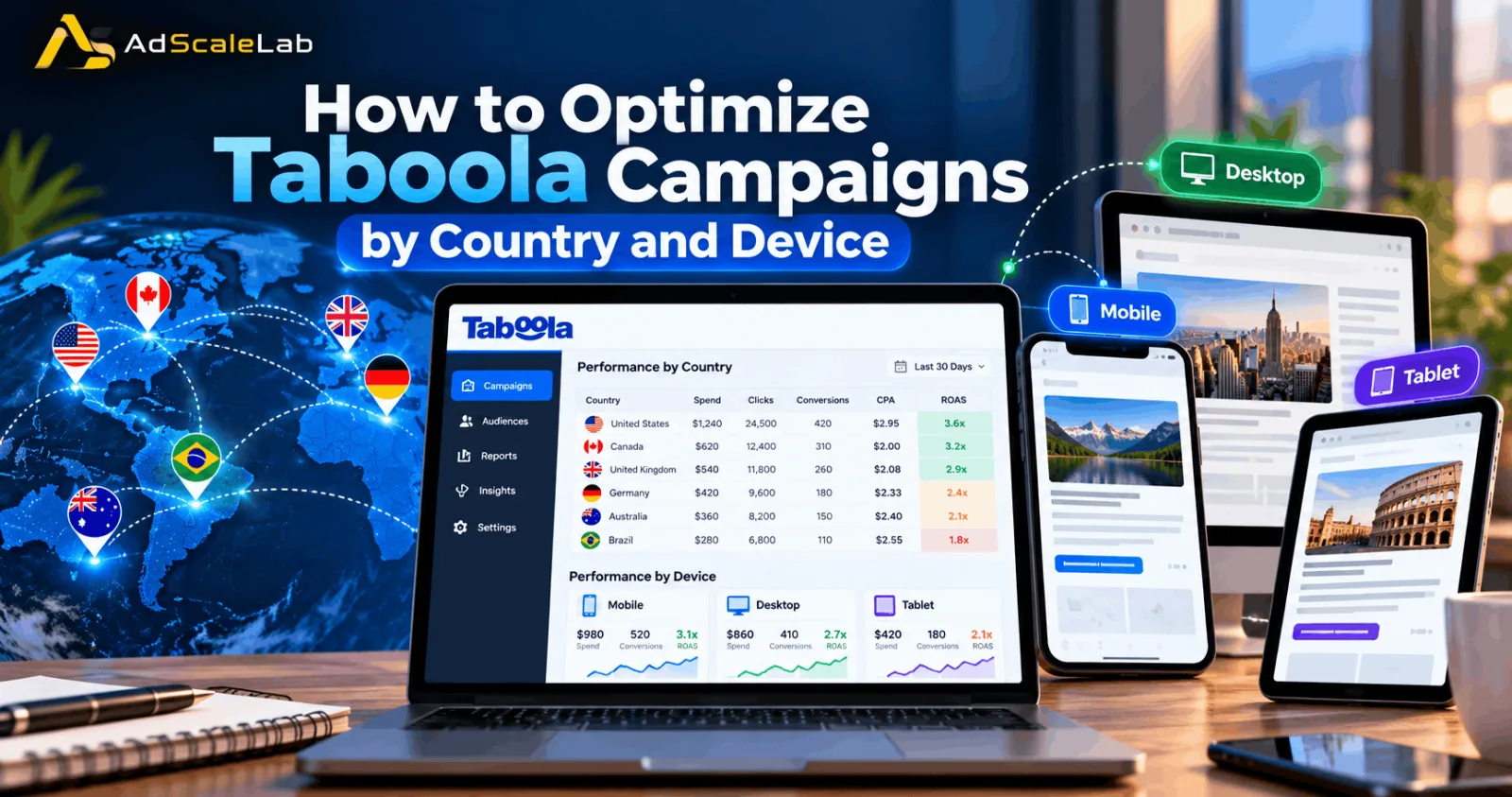
Running a Taboola campaign can bring visitors from different countries and devices, but not all of that traffic will produce the same results. Some countries may bring visitors who are ready to buy, while others may generate many clicks without enough conversions. The same difference can appear between mobile phones, tablets and desktop computers.
Learning how to optimize Taboola campaigns by country and device helps advertisers understand where their budget is going and which traffic sources are worth testing further. Instead of treating every visitor the same, marketers can compare performance, identify useful patterns and make changes based on real campaign data.
Taboola provides targeting options for geographic locations and devices, along with reporting that helps advertisers review country and platform performance. The important part is knowing what to measure and when to make a change. A country or device that looks weak at first may need more data before you can judge it fairly. Here is a practical process for improving country and device performance without making unnecessary changes to a campaign.
Why Country And Device Targeting Matters In Taboola
People behave differently depending on their location, device, internet connection and the content they are reading. A campaign targeting customers in the United States may have different costs and conversion rates from a campaign targeting the United Kingdom or Australia. Even within one country, mobile and desktop visitors may respond differently to the same advertisement.
For example, mobile visitors may click an advertisement while reading an article during a short break. Desktop visitors may spend more time reviewing a product or filling out a longer form. These are possible patterns, not fixed rules. Your own campaign data must show whether they apply to your offer.
Country and device targeting also affects how you manage spending. If one market brings valuable conversions at an acceptable cost, you may want to test increasing its budget. If another market receives clicks but produces very few useful actions, you need to investigate before continuing to spend at the same rate. The goal is not to exclude as many users as possible. It is to find the locations and devices that help your campaign meet its business objective.
Step 1: Check Taboola Conversion Tracking Before Optimizing Campaigns
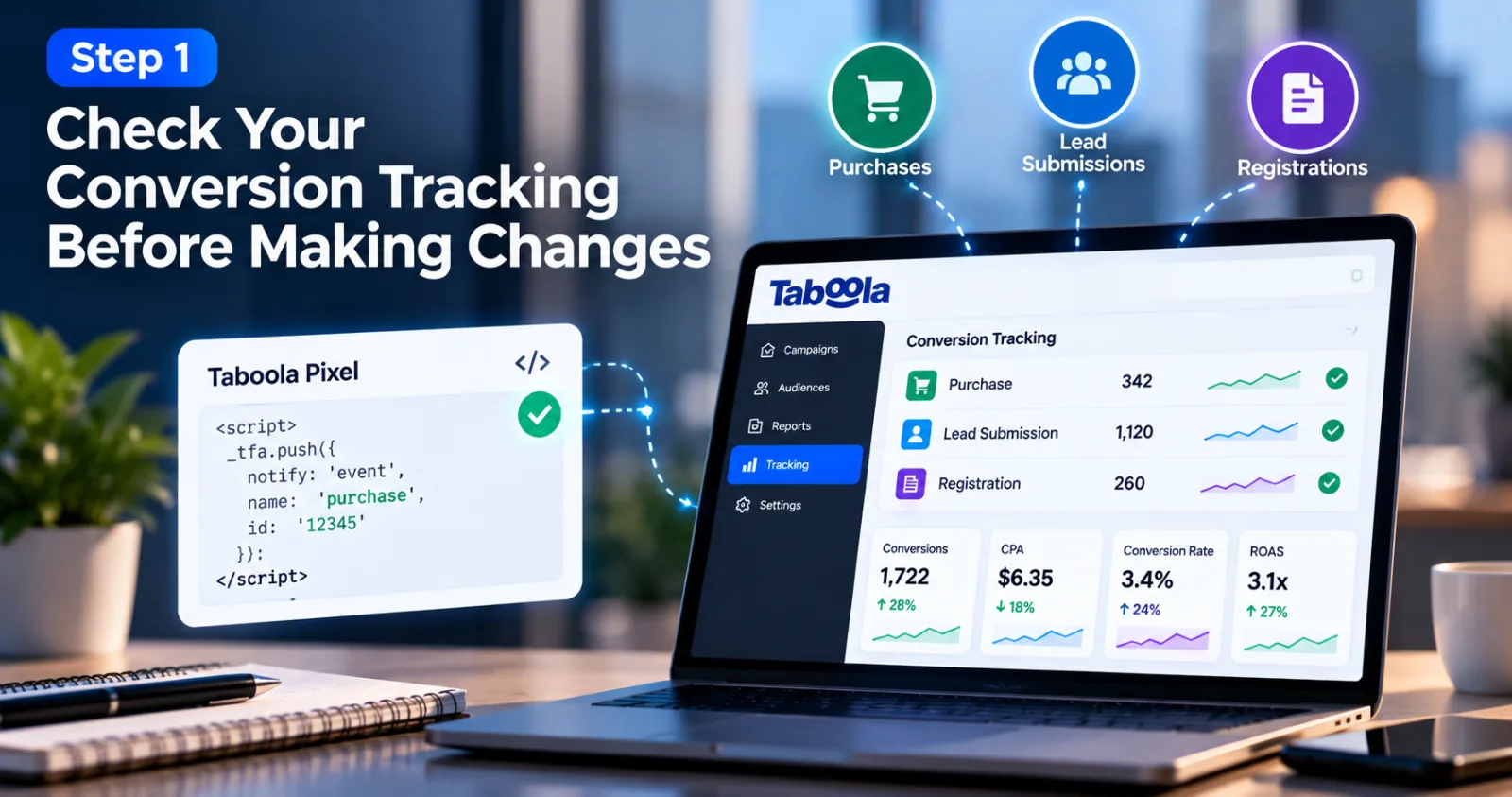
Before you optimize Taboola campaigns by country and device, make sure your tracking is working correctly. Without reliable conversion data, it is difficult to know whether a country or device is performing well or simply appears to perform well because some conversions are missing.
Check that your Taboola Pixel or relevant conversion tracking setup records the actions that matter to your business. These could include purchases, lead submissions, registrations or other meaningful events. If you use a third-party tracking tool, confirm that its campaign parameters are being passed and recorded correctly. Do not rely only on clicks and click-through rate. A campaign can attract plenty of visitors but still fail to generate valuable actions. Review conversions, cost per acquisition (CPA), conversion rate and return on ad spend (ROAS), where those metrics apply to your campaign.
If tracking has recently been installed or changed, test it before making major targeting decisions. Missing or duplicated conversions can lead you to pause a profitable campaign or continue spending on traffic that is not working. For more help with identifying which traffic sources convert, read AdScaleLab's guide to analyzing Taboola tracking parameters.
Step 2: Optimize Taboola Campaigns by Country And Device Using Performance Data
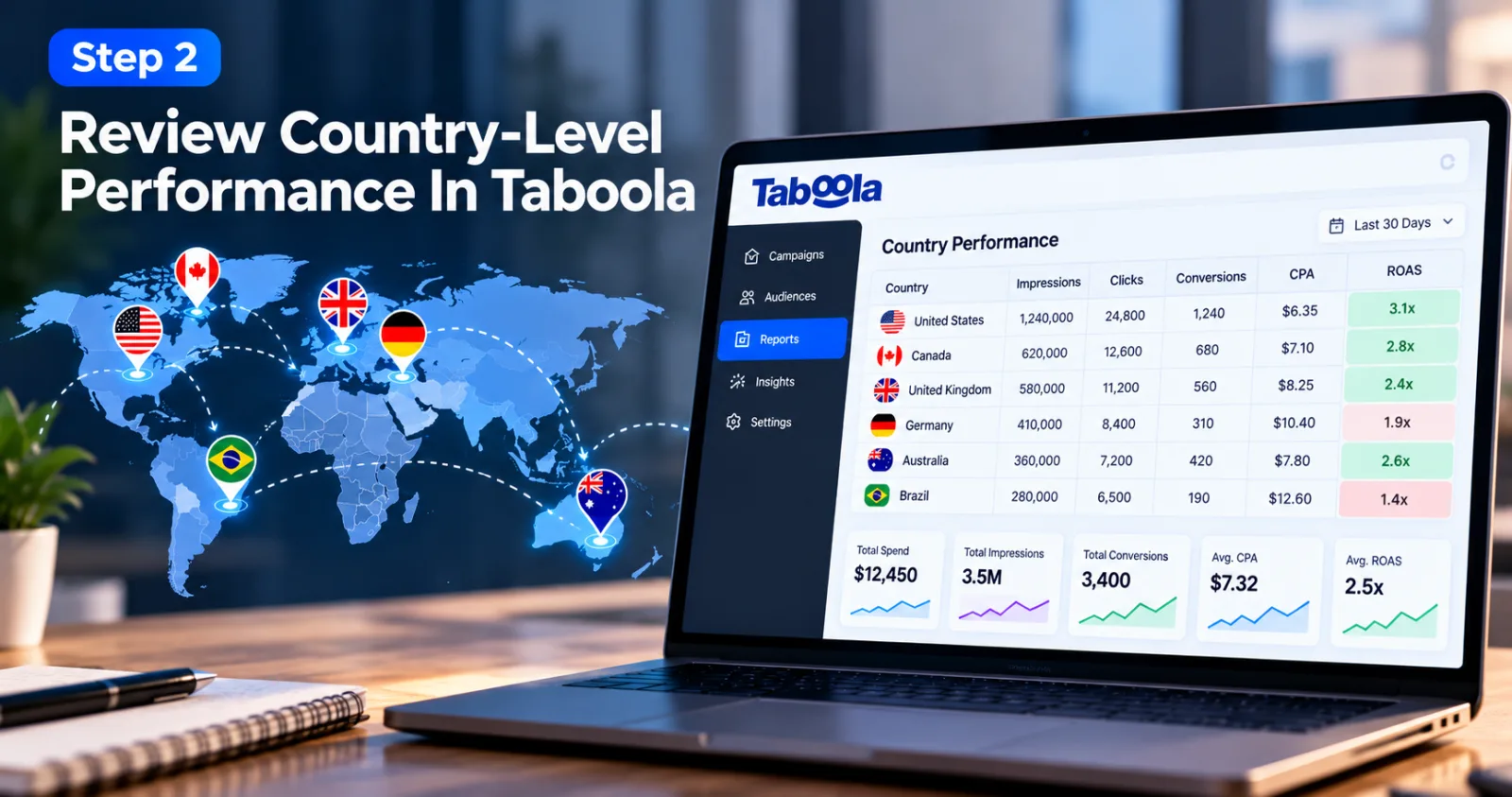
The next step is to compare results by country. Open your campaign reporting dashboard and look for the country or geographic breakdown. Taboola's reporting guidance explains that advertisers can review campaign data by country, helping them understand how results differ across locations. Do not judge a country by its click volume alone. A market may generate fewer clicks but produce more conversions at a lower cost. Another may bring a large number of visitors without enough completed actions to justify the spending.
Compare the amount spent, impressions, clicks, conversions, conversion rate and CPA for each country. If you are running an ecommerce campaign, check revenue and ROAS as well. For lead generation, look at the cost of qualified leads instead of counting every form submission as equally valuable.
You should also consider the value of each market. A country with a higher CPA may still be profitable if customers spend more or generate greater lifetime value. Likewise, a low CPA does not always mean success if the leads rarely turn into paying customers. Use these comparisons to create a shortlist of countries that deserve further testing. Keep in mind that a small amount of data can make results look better or worse than they really are.
Step 3: Separate Countries When You Need Better Control
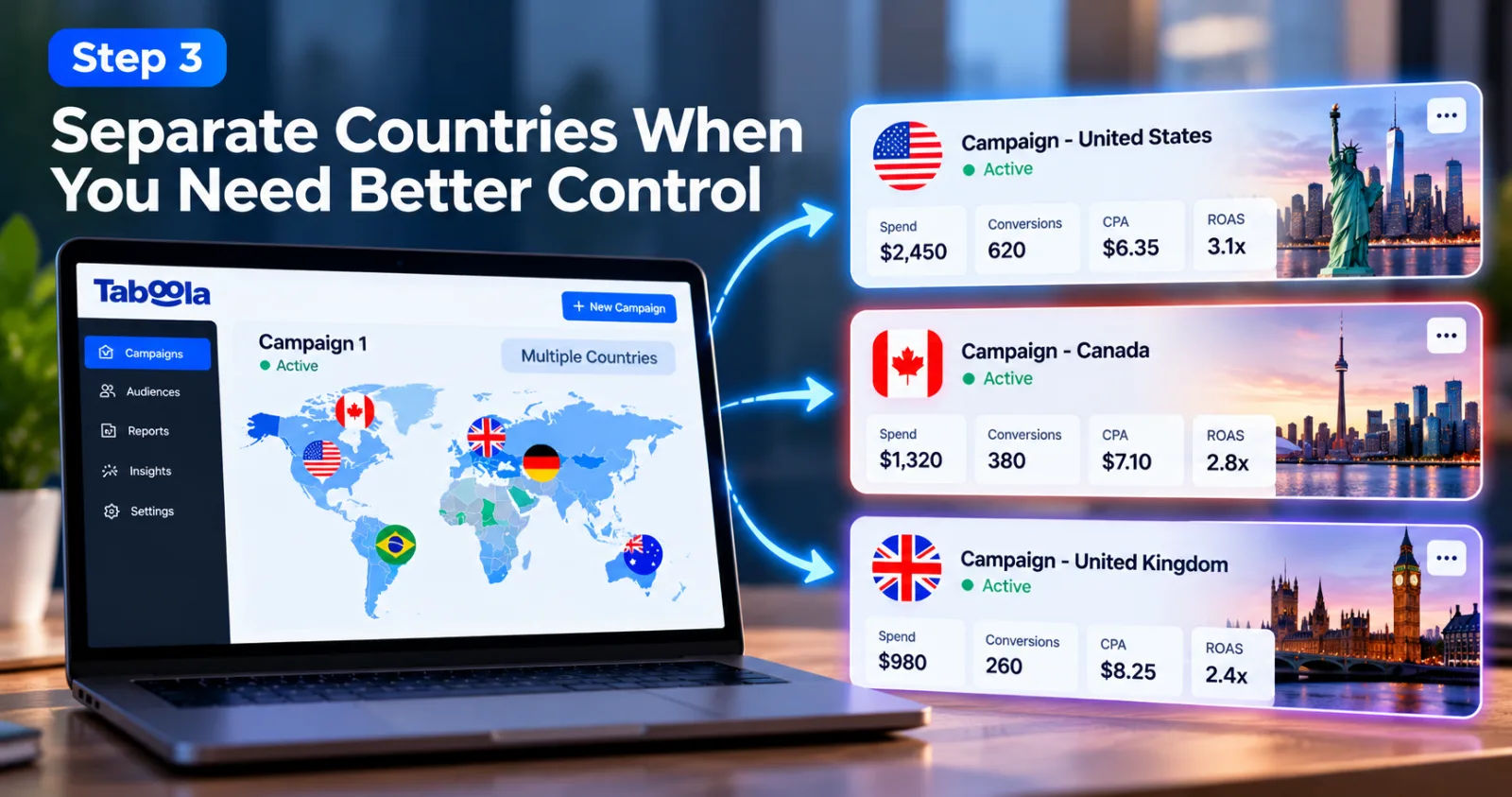
If your campaign targets several countries, consider whether keeping them together makes it difficult to understand performance or manage spending. Different markets may have different costs, conversion rates, customer values and levels of competition. Creating separate campaigns for important markets can make it easier to set individual budgets, manage bids and compare results. It also helps prevent a country receiving most of the spend simply because it generates more traffic, while another market with promising conversion results receives too little.
Taboola's official documentation allows a campaign to target multiple countries. It also states that when targeting regions across several countries, advertisers should create a separate campaign for each country. The right structure depends on your targeting needs and how much control you require.
You do not need to create a separate campaign for every country immediately. If you are still testing a new offer with limited budget, too many campaigns can divide the available data and make optimization slower. Start with a manageable structure and separate markets when the difference in performance or business requirements justifies it.
For example, if the United States and Canada show different CPAs and customer values, separate campaigns may make it easier to adjust spending independently. Treat this as a decision to test using your own data, rather than a rule that every campaign must follow.
Step 4: Compare Mobile, Desktop And Tablet Results
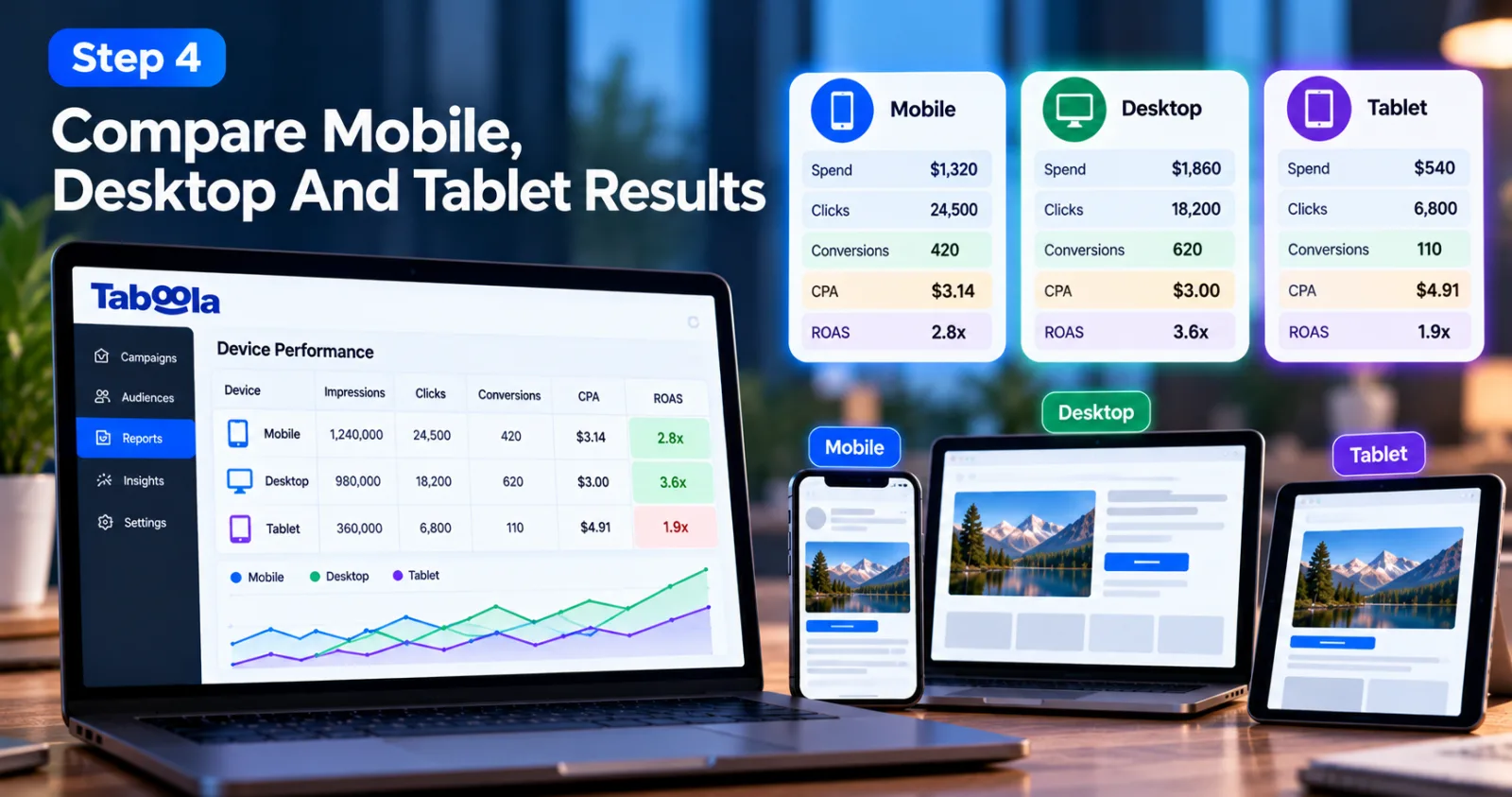
After reviewing countries, examine performance by device. Taboola supports platform targeting for devices, including desktop computers, smartphones and tablets. Depending on the campaign setup, advertisers can use this information to understand which device types are bringing useful results.
Mobile traffic should not automatically be considered better or worse than desktop traffic. The difference depends on the offer, audience, creative and landing page. A simple newsletter form may work well on a phone, while a complicated application form may be easier for some visitors to complete on a desktop. Check the same core metrics for each device: spending, clicks, conversions, conversion rate and CPA. For ecommerce campaigns, also compare revenue and ROAS. If a device receives many clicks but few conversions, investigate whether the landing page works properly on that screen before deciding to reduce its traffic.
A mobile campaign may look weak because the page loads slowly, the form is difficult to use or an important button is hidden below the fold. These issues can reduce conversions even when the audience is relevant. Desktop traffic may have its own problems, such as an awkward layout or an offer that does not match what visitors expect. Use the device report to find where further testing is needed. Make a separate campaign or device-specific adjustment only when you have a clear reason to do so and the available campaign settings support it.
Step 5: Review The Landing Page For Each Country And Device
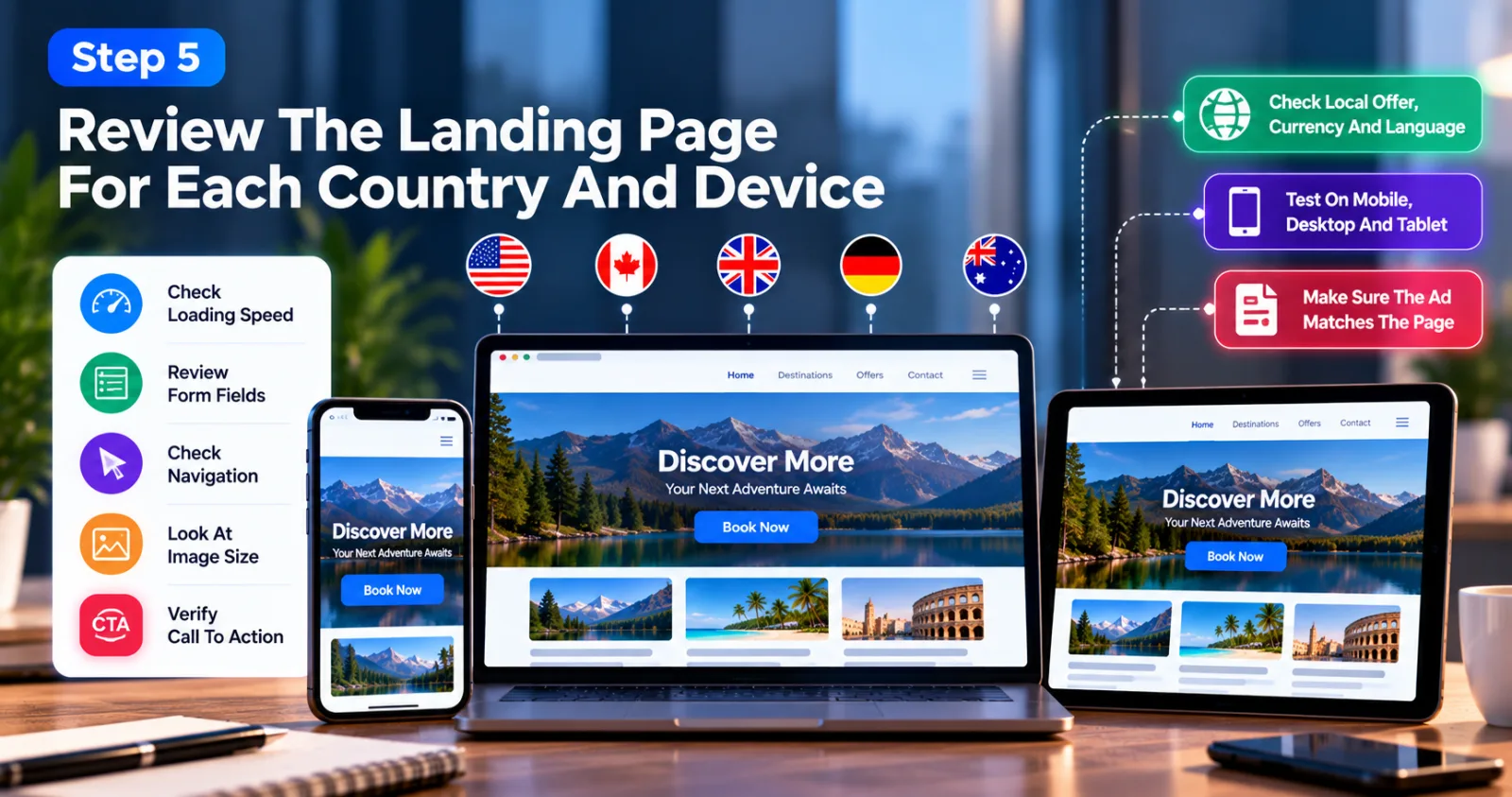
Campaign performance does not depend on targeting alone. The landing page also affects whether a click turns into a conversion. If visitors from a particular country or device leave quickly, the problem may be the page experience rather than the traffic itself. Start by opening your landing page on a phone, tablet and desktop computer. Check loading speed, form fields, navigation, image size and the visibility of the main call to action. Make sure the page is easy to use without excessive scrolling or zooming.
For campaigns running across countries, check that the offer is relevant to each market. Prices, shipping terms, currency, payment methods and language can all affect whether visitors complete an action. A product that is available in one country may be unavailable or too expensive in another.
The advertisement should also match the page. If the headline promises a discount or a specific benefit, visitors should see that information clearly after clicking. A mismatch between the ad and the landing page can lead to wasted traffic even when targeting is correct. Fix obvious technical or usability problems before excluding a country or device. This helps you avoid cutting traffic that could perform better after the visitor experience improves.
Step 6: Adjust Bids And Budgets Based On Results
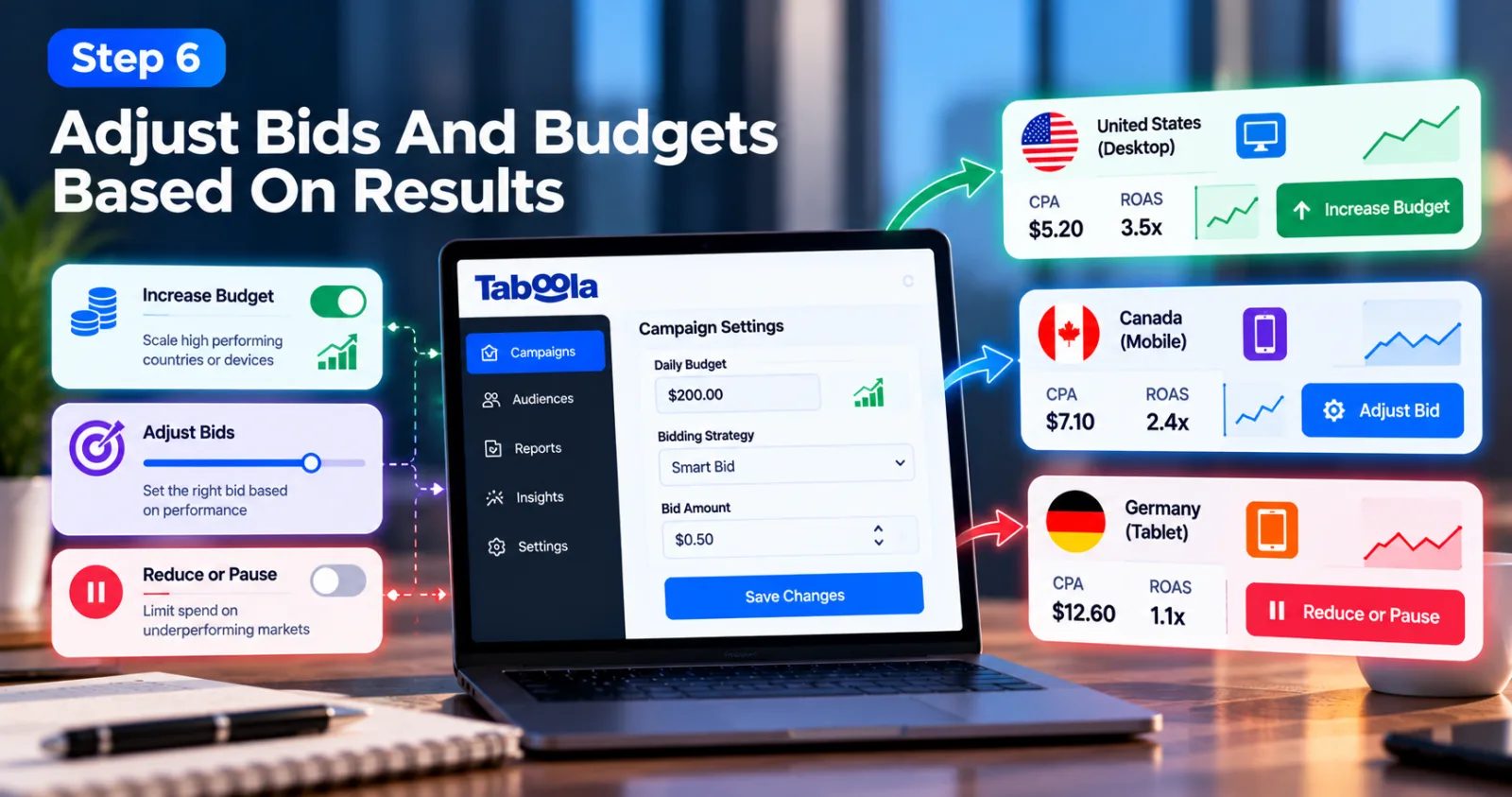
Once you have enough reliable data, use your country and device analysis to guide spending decisions. If a market or device consistently generates valuable conversions at an acceptable CPA, you can consider testing a gradual increase in budget. If performance is weak, investigate the cause before reducing spending or pausing traffic. The right target depends on your business. A campaign that generates leads may have a maximum acceptable cost per qualified lead, while an ecommerce campaign may be judged by its ROAS and profit margin. Set your targets before making adjustments so that you are not changing bids based on a feeling that one country or device looks expensive.
Taboola offers bidding and optimization options that can help advertisers work toward their campaign goals. Check which bidding controls are available in your account, and avoid making manual changes that conflict with your selected optimization strategy. Change one important variable at a time when possible. If you change the bid, targeting, creative and landing page at the same moment, it becomes harder to understand what caused the result to improve or decline.
Also, do not increase spending simply because a country has a high conversion rate from a handful of visitors. Confirm that the result is supported by enough data and that the cost remains reasonable as traffic grows.
Step 7: Give The Campaign Time To Collect Useful Data
One of the common mistakes in Taboola campaign optimization is making large changes too quickly. A country may record no conversions during its first few days and then begin producing results later. A device may appear expensive during a small test but improve once more visitors have completed the conversion process. Taboola's advertiser guidance recommends starting with broad targeting and narrowing it based on campaign data. Its initial-weeks guidance also advises advertisers to avoid major changes during the learning phase and allow time for meaningful results to develop.
This does not mean you should leave every campaign running without checking it. Monitor spending, tracking and performance regularly, but distinguish between a genuine problem and normal variation in early results. Set a review period that fits your budget, traffic volume and conversion cycle. A campaign receiving many conversions may provide useful evidence sooner than a campaign with a low daily volume. There is no single number of days that guarantees every campaign will have enough data.
If a country or device has spent a meaningful amount without producing conversions, investigate its landing page, tracking and traffic quality. Then make a measured change and observe what happens instead of repeatedly changing settings every few hours.

Step 8: Keep Testing And Scale The Strongest Results Carefully
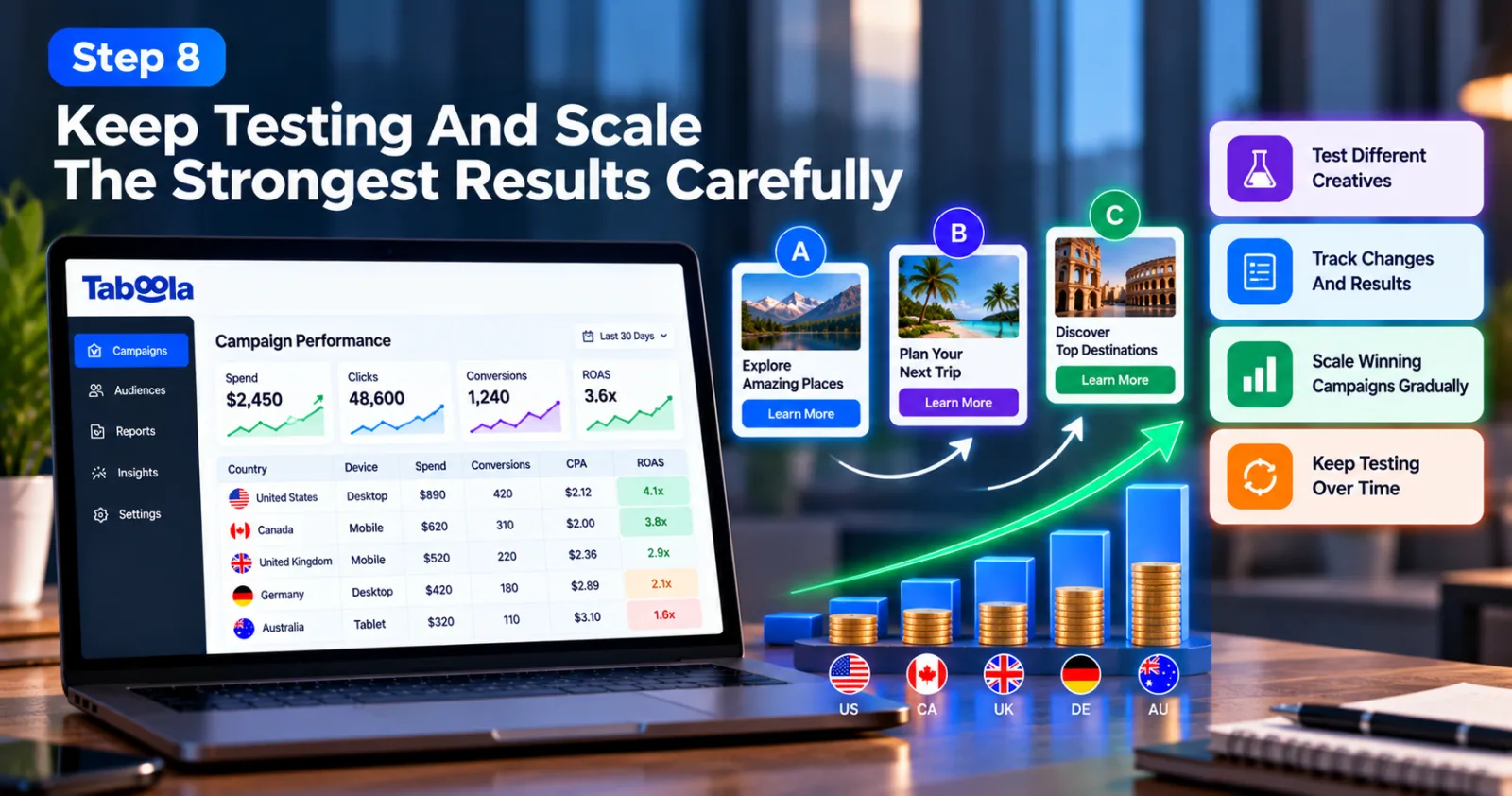
Optimization should continue after you identify countries and devices that perform well. Costs, competition, audience behaviour and creative performance can change over time. A market that performs strongly this month may need a new creative or landing page test later.
Keep a simple record of the changes you make, including the country or device affected, the reason for the change and the results you expect. Review performance after the change has had enough time to produce useful data. This makes it easier to learn from both successful and unsuccessful tests. You can also test different headlines, thumbnails and landing-page variations for the traffic segments that matter most. Make sure the creative matches the audience and the content they see. A strong headline on one device or in one country may not deliver the same results everywhere.
When increasing budget, do it gradually and watch whether CPA, ROAS and conversion quality remain acceptable. Avoid scaling every campaign at once. Focus first on the locations and devices that have shown consistent results, then expand testing as your budget allows. For more help with launching and structuring campaigns, see AdScaleLab's guide on how to advertise on Taboola.
Common Mistakes To Avoid When Optimizing Taboola Campaigns
One mistake is treating all countries as if they have the same costs and customer value. A second is assuming that mobile traffic is always cheaper or desktop traffic always converts better. Neither assumption is reliable without campaign data. Advertisers can also make mistakes by excluding a country after only a few clicks, changing several settings at once or judging performance using click-through rate alone. These choices can hide the real cause of weak results and may remove traffic that could have performed well with a better landing page or more appropriate creative.
Another problem is using very narrow targeting from the beginning. Restricting countries, devices, browsers and audiences all at once can reduce reach and make it harder for the campaign to collect enough data. Begin with targeting that fits your business requirements, then use reporting to decide where tighter controls are useful.
Finally, never ignore tracking quality. If conversions are missing or recorded incorrectly, country and device comparisons can lead to the wrong decisions. Reliable measurement should come before major optimization changes.
Final Thoughts
Learning how to optimize Taboola campaigns by country and device is about understanding what happens after people click your ads. Country reports help you compare markets, while device reports show whether visitors on phones, tablets and desktops behave differently. Conversion tracking, landing-page quality and realistic performance targets help you interpret those results. Start by checking tracking, review country and device performance, and separate campaigns only when it gives you useful control. Then make measured bid or budget changes, allow enough time for results to develop and keep testing your strongest opportunities.
There is no universal country or device that will perform best for every advertiser. The most reliable approach is to use your own data, make changes carefully and scale the traffic that consistently supports your business goals.
Agency ad accounts, without the wait.
Buy and top up Google, Meta, native, and more from one dashboard.
Get started


No comments yet. Be the first to comment.
Comments are open to registered AdScaleLab clients.
Sign in to comment