






Taboola Creative Performance Data Improve Ad Variations
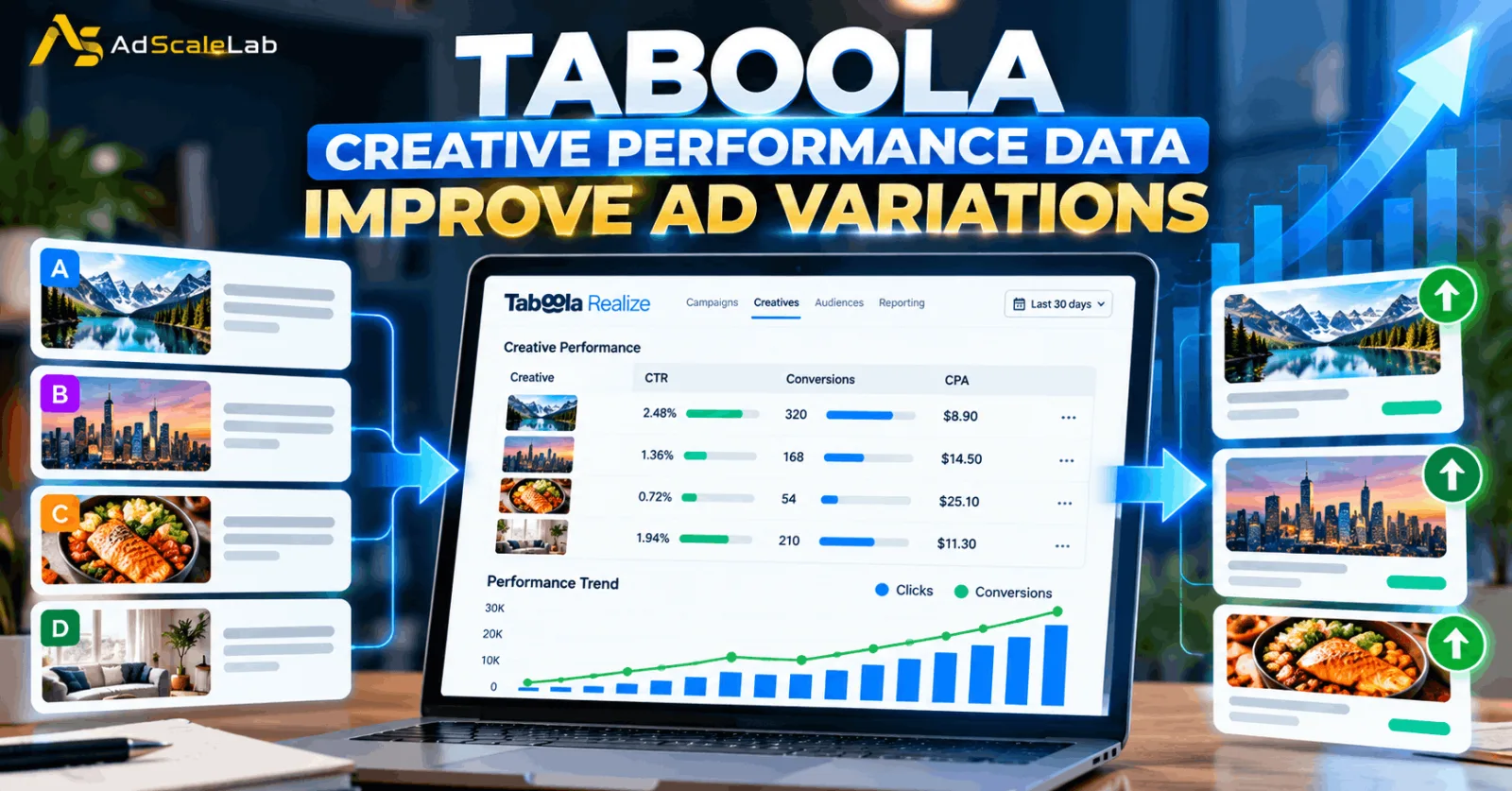
When a Taboola campaign is getting clicks but the results are not improving, the first thing to check is often the creative. Taboola Creative Performance Data can show which headlines, thumbnails, and ad combinations are getting attention and which ones are helping users take action after the click. Instead of guessing what to change, advertisers can use the data to build better variations and keep improving the campaign.
This matters because native advertising gives the user very little information before the click. The image has to stop the user, while the headline has to give them a reason to continue. Taboola’s own Realize guidance says advertisers can use reporting to understand which titles, thumbnails, and landing pages are driving better results. Taboola also recommends adding more title and thumbnail variations when an advertiser wants to increase click volume.
The goal is not to create dozens of random ads. The goal is to learn what the current data is saying, make one useful change at a time, and create new variations from that learning.
What Is Taboola Creative Performance Data?
Taboola Creative Performance Data is the performance information you can use to understand how individual creative elements are working inside a campaign. In Realize, advertisers can look at campaign items and compare results using measures such as click-through rate, conversion or engagement rate, and cost per action. Taboola says these metrics can help advertisers decide which titles, thumbnails, and landing pages deserve more budget or further testing.
A simple example makes this easier to understand. Imagine you have three thumbnails and five headlines. One combination gets a lot of clicks but very few conversions. Another gets fewer clicks but produces more valuable actions after the click. If you only look at CTR, you may choose the wrong winner. If you look at the complete journey, you can see which creative is actually helping the campaign.
That is why creative optimization should not mean “find the ad with the highest CTR and keep it forever.” It should mean finding the creative patterns that bring useful traffic and then testing new versions of those patterns.
Why Ad Variations Matter On Taboola
Realize lets advertisers create ads using a Variations option, where creatives can automatically be paired with headlines. Advertisers can also add ads one by one or through an RSS feed. This makes it easier to create several combinations instead of building every ad manually.
Taboola’s campaign guidance also recommends using multiple titles and thumbnails for a destination URL. Its performance guidance says performance marketers can start with 5–10 different titles and thumbnails for a unique destination URL. This gives the platform more creative choices to learn from. It also gives the advertiser more information about what works.
But there is a trap here. More variations do not automatically mean better performance. If every variation changes the image, headline, offer, landing page and audience at the same time, you will not know what caused the result. Good testing is about learning, not just producing more ads.
How To Use Taboola Creative Performance Data To Improve Ad Variations
Step 1: Start With One Destination URL
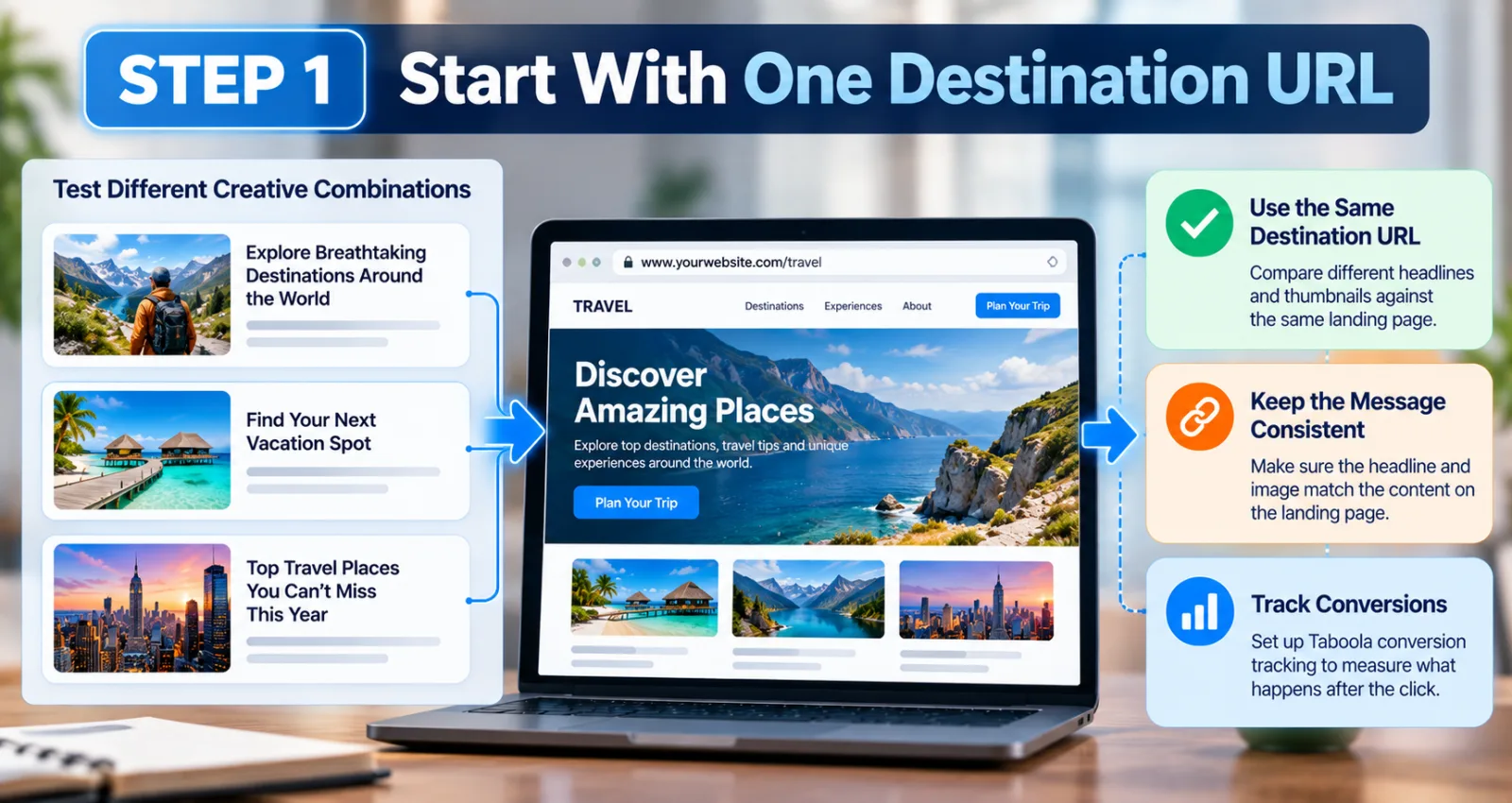
Before changing your ads, make sure you know what page the ads are sending people to. This is important because creative performance cannot be separated from the landing page experience. If one headline promises a simple solution but the landing page talks about something completely different, the ad may get clicks while the visitor leaves quickly. Taboola specifically advises advertisers to make titles and thumbnails match the experience users will find after the click.
For a clean test, start with one destination URL and compare different creative combinations against the same page.
If you need help with the tracking side, AdScaleLab’s guide on Taboola conversion tracking can help you make sure the actions after the click are being measured correctly.
Step 2: Look At CTR, But Do Not Stop There
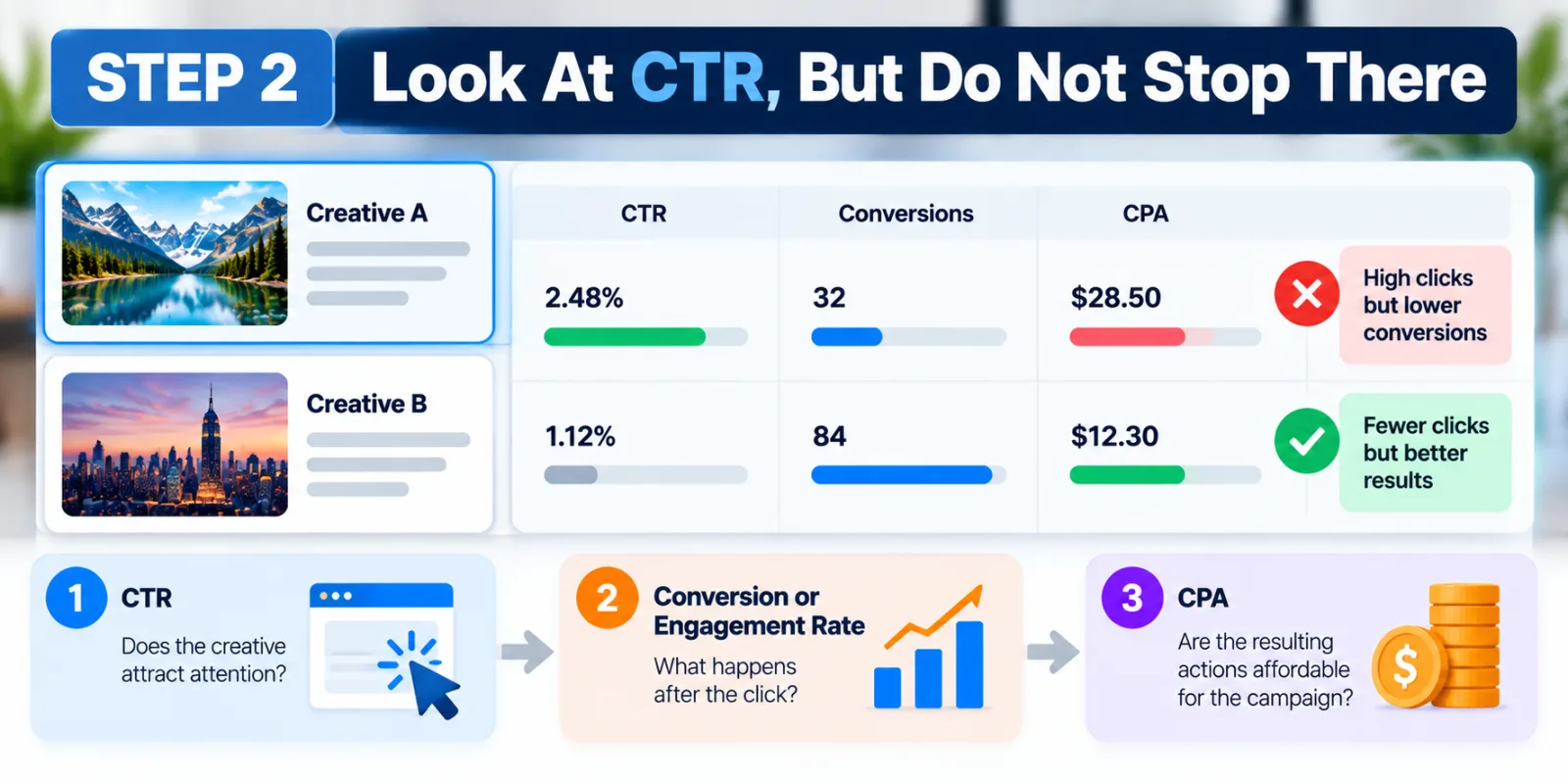
CTR is useful because it tells you whether people are clicking. But it does not tell you whether those people are valuable. Suppose Creative A has a stronger CTR than Creative B. That sounds like a clear win. But if Creative A produces a much lower conversion rate, the extra clicks may not be helping the business. Taboola’s own optimization guidance recommends looking at a combination of CTR, conversion or engagement rate, and CPA when assessing campaign items.
This simple approach prevents you from replacing a useful ad just because another ad gets more clicks.
Step 3: Find The Weak Part Of The Creative
Now look at the creative itself.
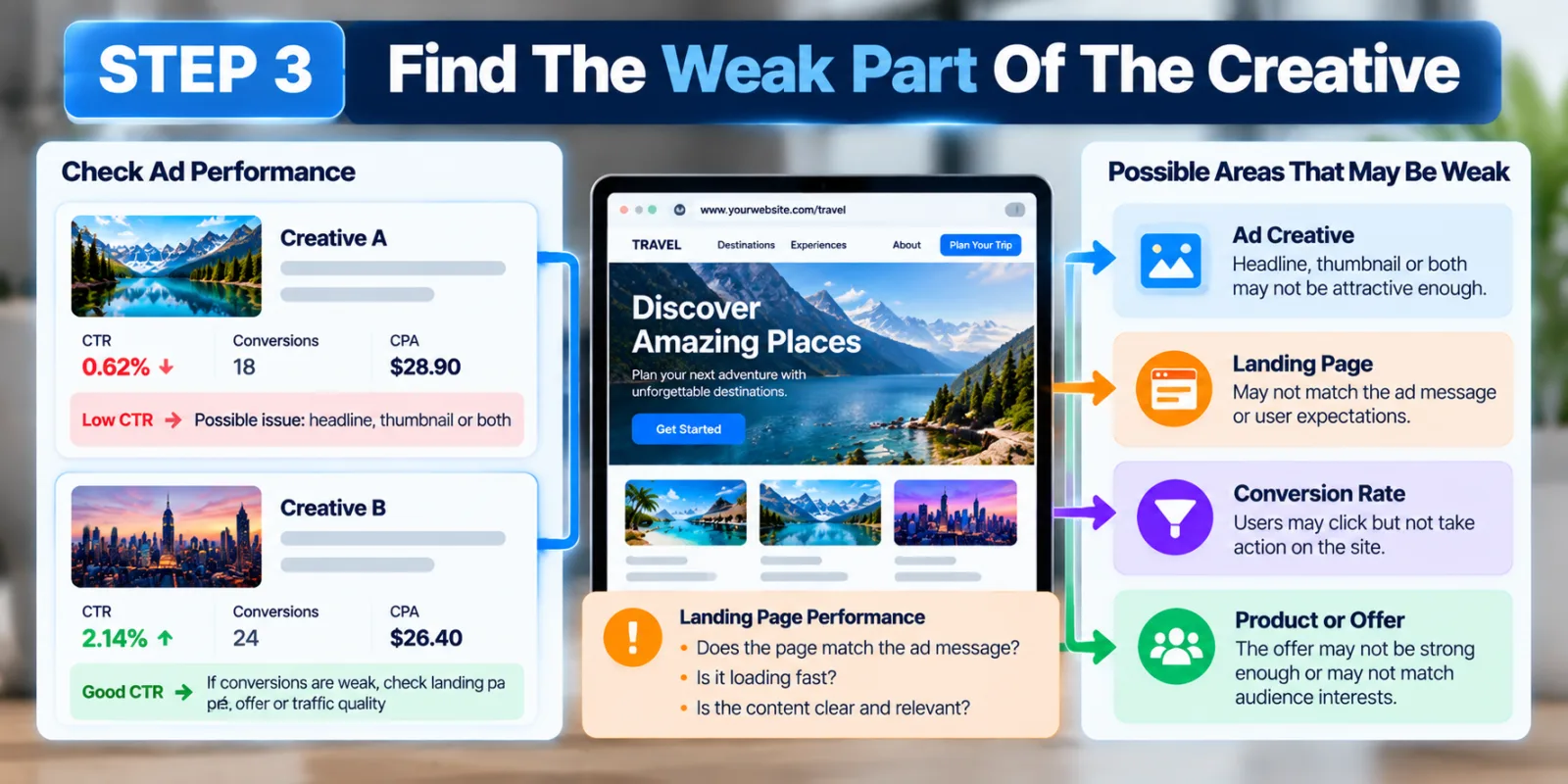
If an ad has low CTR, the problem may be the headline, thumbnail, or both. If CTR is good but conversion rate is weak, the problem may be the message after the click, the landing page, or the quality of the traffic.
Taboola's Realize guidance also describes a broader diagnostic approach: advertisers should avoid changing the entire funnel at once because that makes it harder to find the real problem. Its guidance on low-converting creative separates ad performance, landing-page performance, conversion rate and product or offer issues. This is a very useful idea for creative testing. Do not immediately create a new campaign. First ask what part is actually weak.
Step 4: Separate Headline Testing From Thumbnail Testing
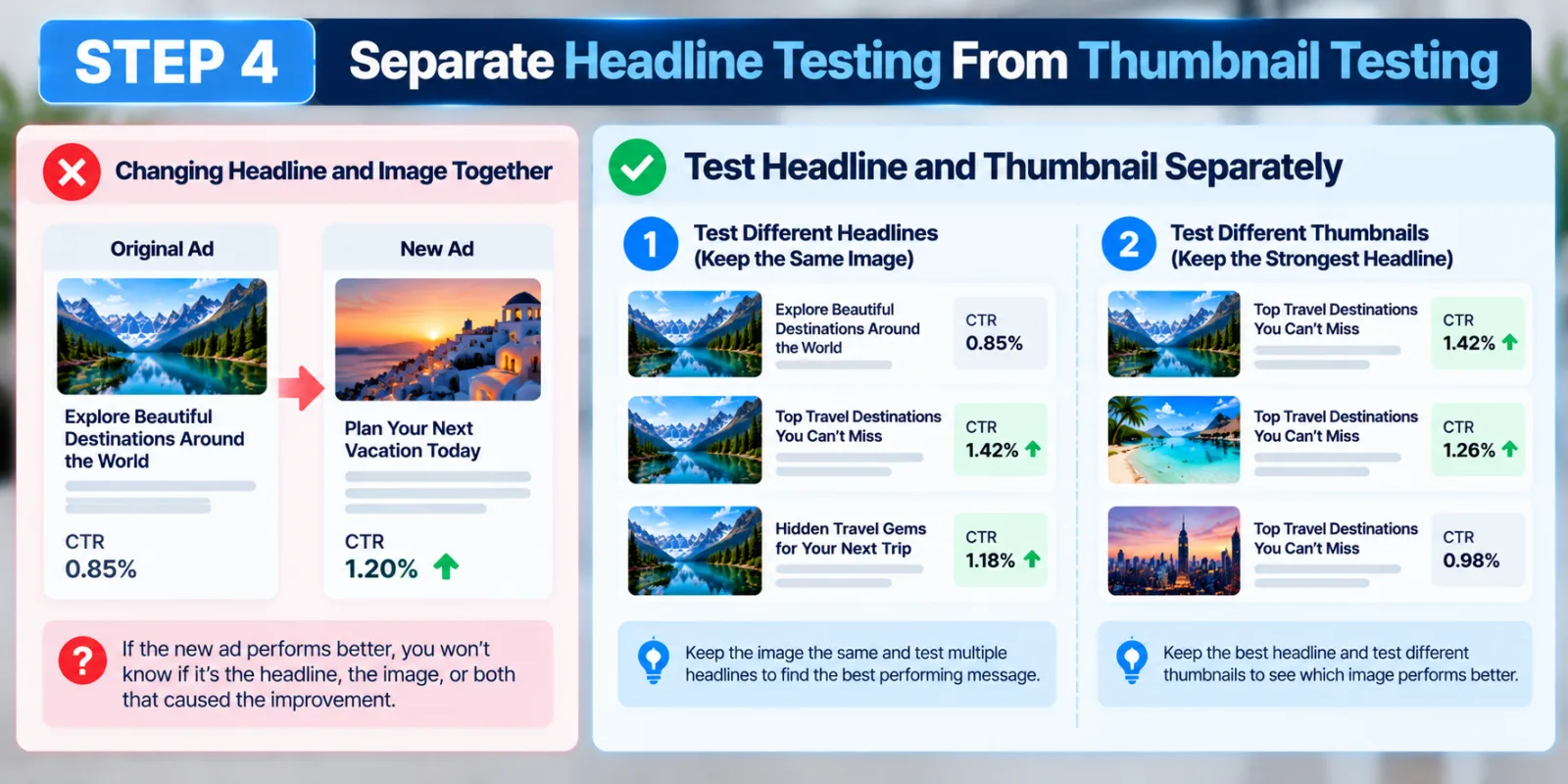
A common mistake is changing the headline and image at the same time and then calling the new ad a test.
For example, suppose the original ad has Headline A + Image A. Then you replace it with Headline B + Image B. If the new version performs better, you still do not know whether the improvement came from the headline, the image, or the combination.
A better approach is to create controlled variations. Keep the image the same and test different headlines. Then keep the strongest headline and test different thumbnails. This takes more time, but the learning is much clearer. Taboola’s Creative Best Practices also recommends testing multiple creative elements, including titles and images.
Step 5: Use Taboola Trends Before Creating New Variations
You do not have to create every new idea from your imagination.
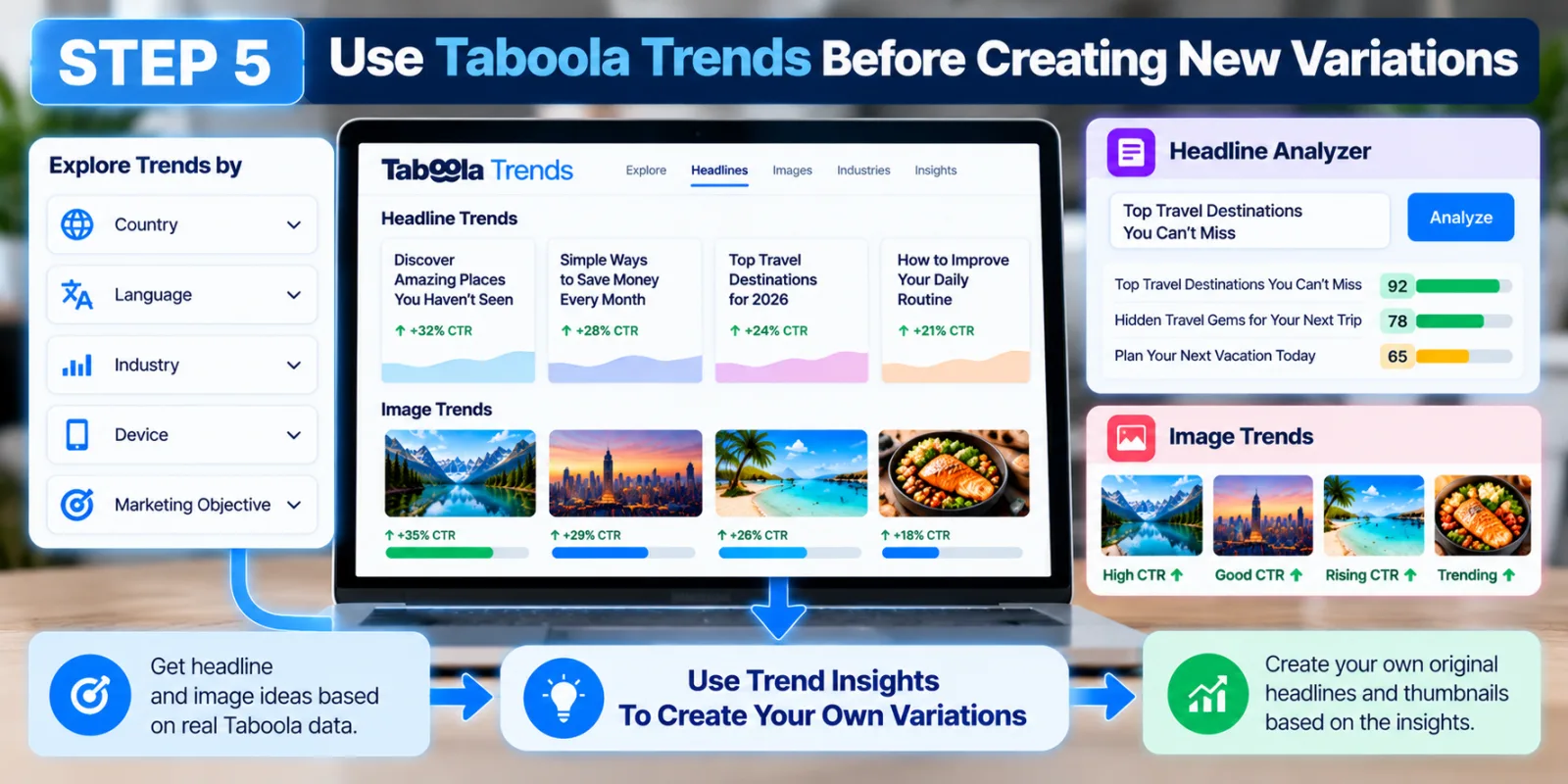
Taboola Trends provides information about headline and image trends across its network. Taboola says advertisers can filter the data by country, language, industry, device and marketing objective. Its Headline Analyzer can also evaluate several possible headlines using historical Taboola data, while Image Trends provides information about visual elements associated with CTR or CVR.
Use this as an idea-generation tool, not as a promise of performance.
For example, if your current headlines are very product-focused, Trends may help you discover a different way to frame the topic. You can then create your own original headline based on that insight. Do not copy another advertiser’s ad. Use the trend as a direction and create something that fits your own product and landing page.
Step 6: Build Variations Around A Clear Hypothesis
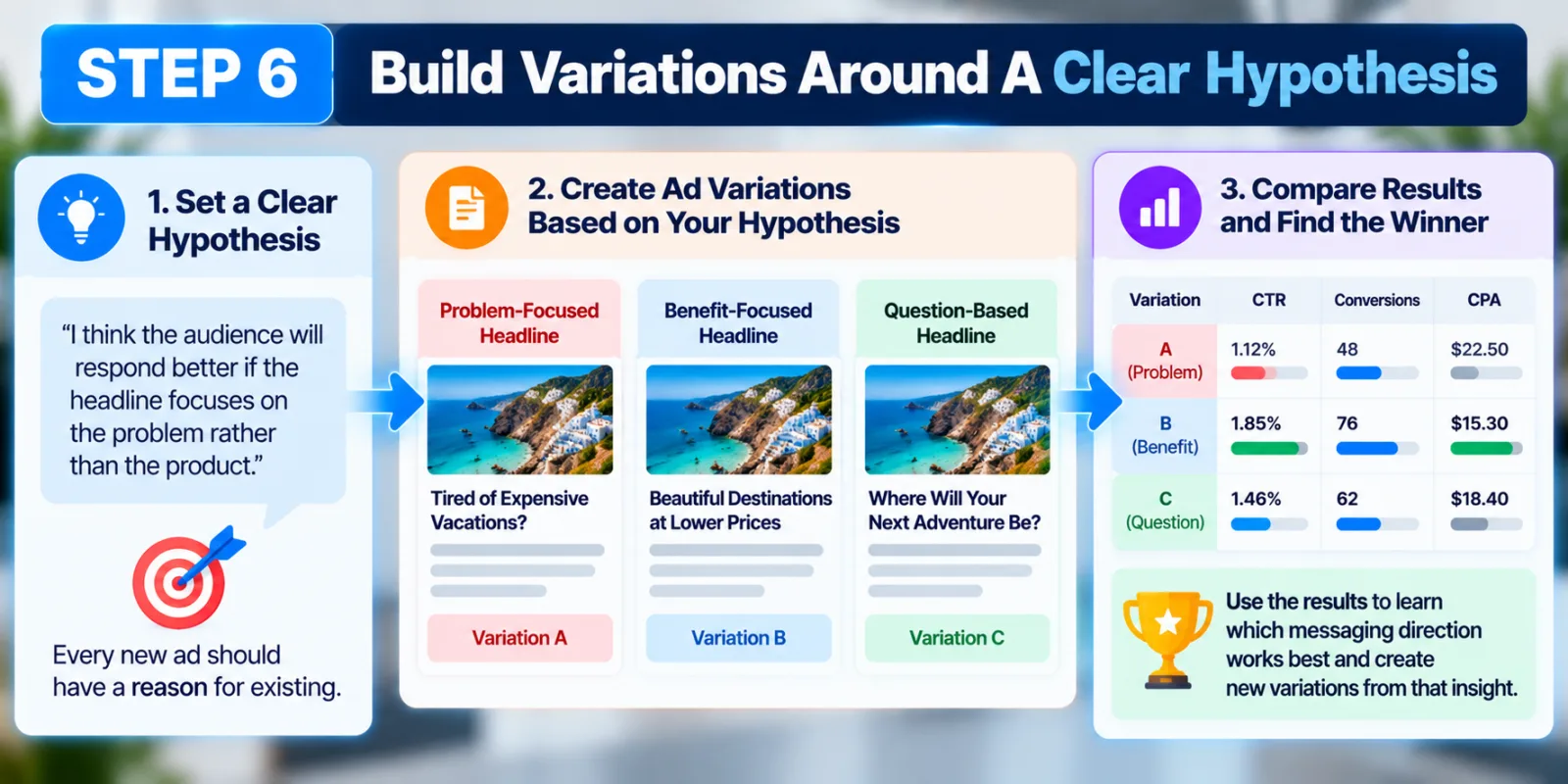
Every new ad should have a reason for existing.
Instead of saying, “Let us make five new ads,” write a simple hypothesis: “I think the audience will respond better if the headline focuses on the problem rather than the product.” Then create several variations around that idea. For example: Problem-focused headline + existing image; Benefit-focused headline + existing image; Question-based headline + existing image.
You can then compare the results and learn which messaging direction deserves another round. This is much better than changing random words every day.
Step 7: Keep The Message Consistent With The Landing Page
A strong creative should not only earn a click. It should attract the right click.
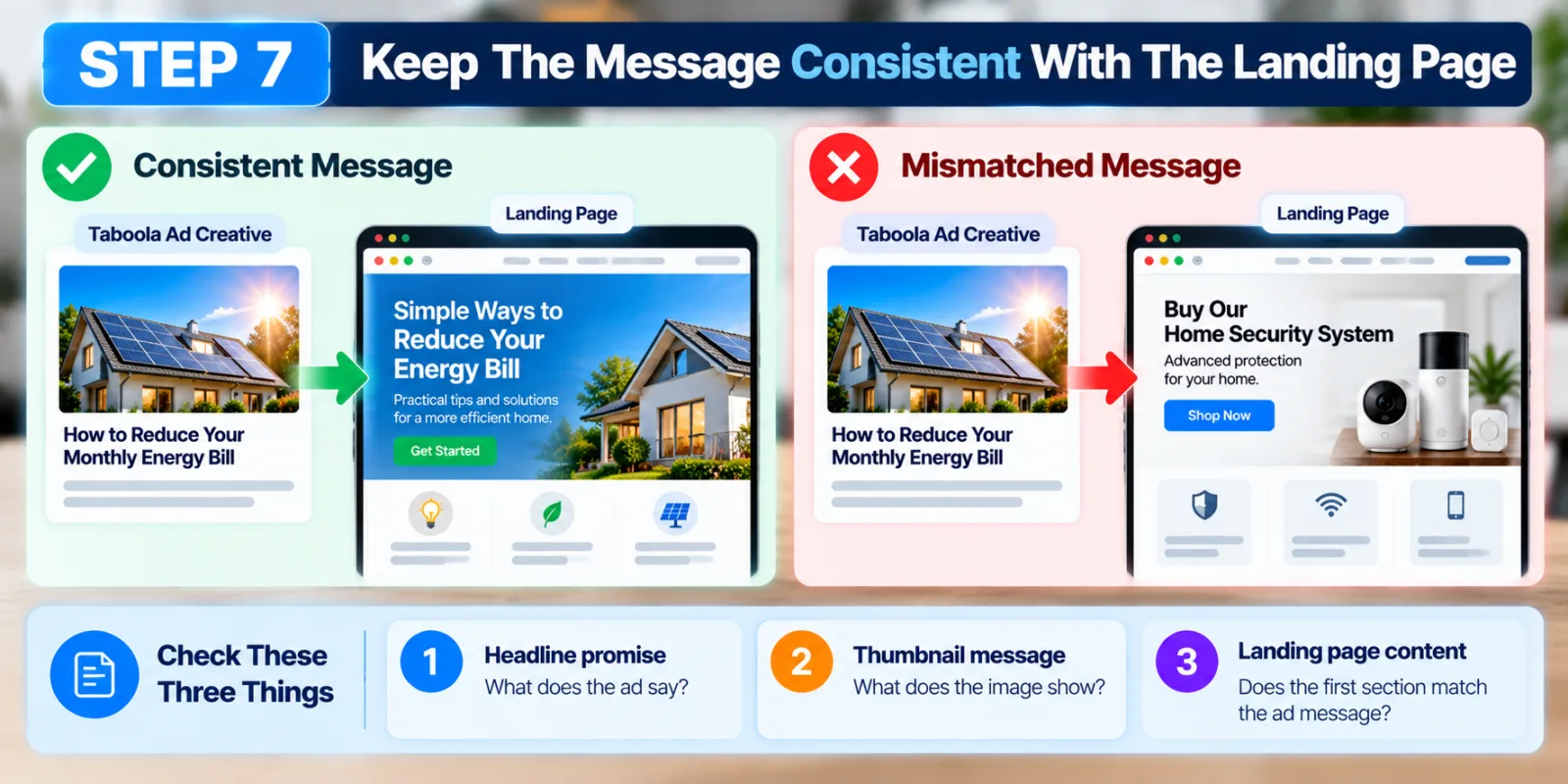
Taboola’s current Realize guidance describes titles and thumbnails as a way to pre-qualify clicks. The basic idea is simple: people should have a reasonable understanding of what they will see after clicking. If the ad says “How to Reduce Your Monthly Energy Bill” but the landing page immediately pushes a completely unrelated product, the click may not turn into a useful visitor.
When creating a new variation, compare three things: the headline promise, the thumbnail message, and the first section of the landing page. They do not need to use identical words, but they should tell the same story.
Step 8: Give New Variations Enough Data
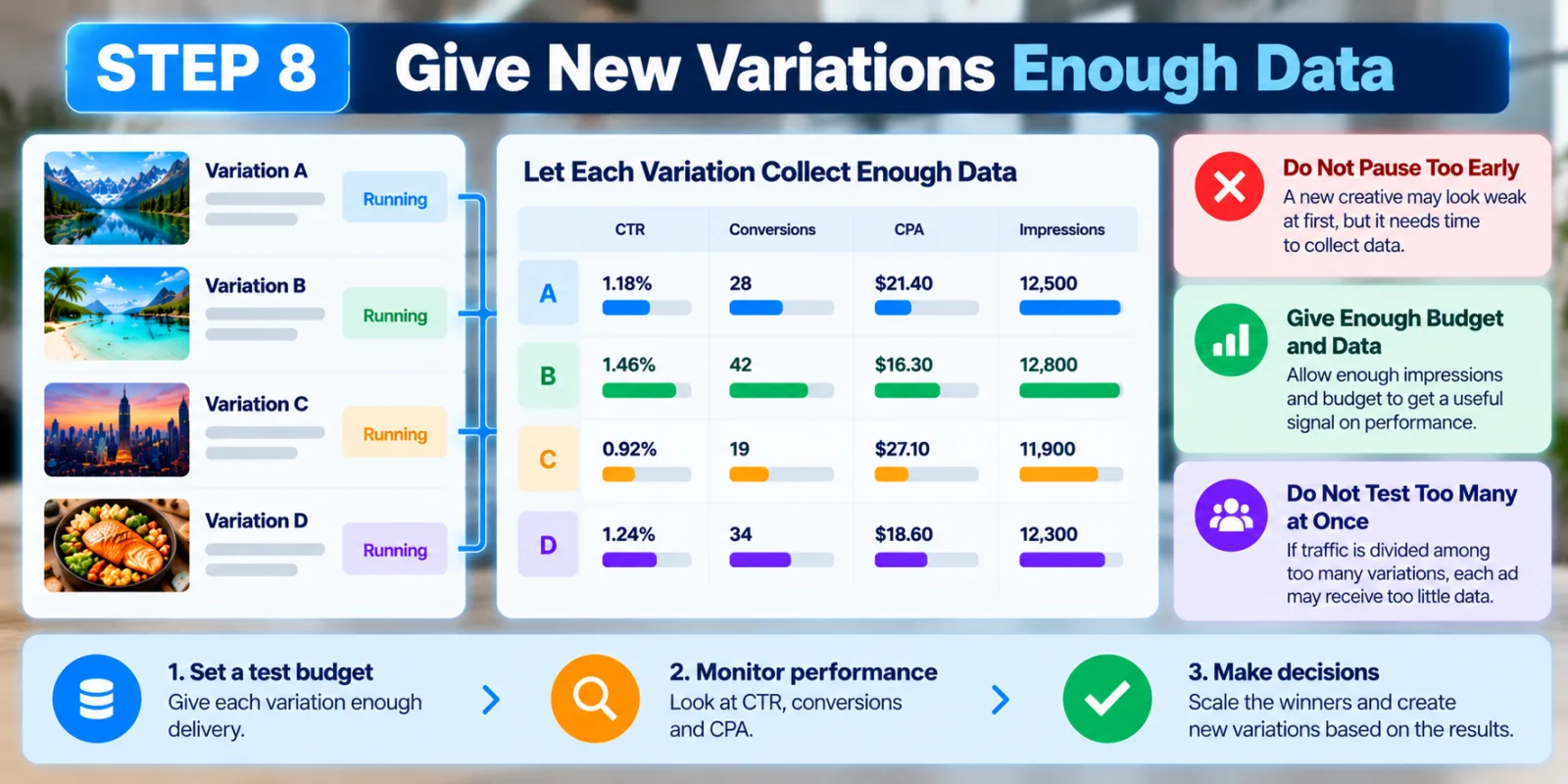
Do not pause a new creative after a few impressions because it looks weak.
A new variation needs enough delivery to give you a useful signal. Taboola’s campaign optimization guidance says advertisers need enough budget and data to make informed decisions. It also recommends starting with a test budget and adding campaign items after assessing performance.
This is especially important when several variations are running at the same time. If you divide limited traffic among too many ads, each ad may take longer to collect useful data. So there is a balance: create enough variations to learn, but not so many that every variation receives too little data.
Step 9: Keep Winners, But Keep Testing
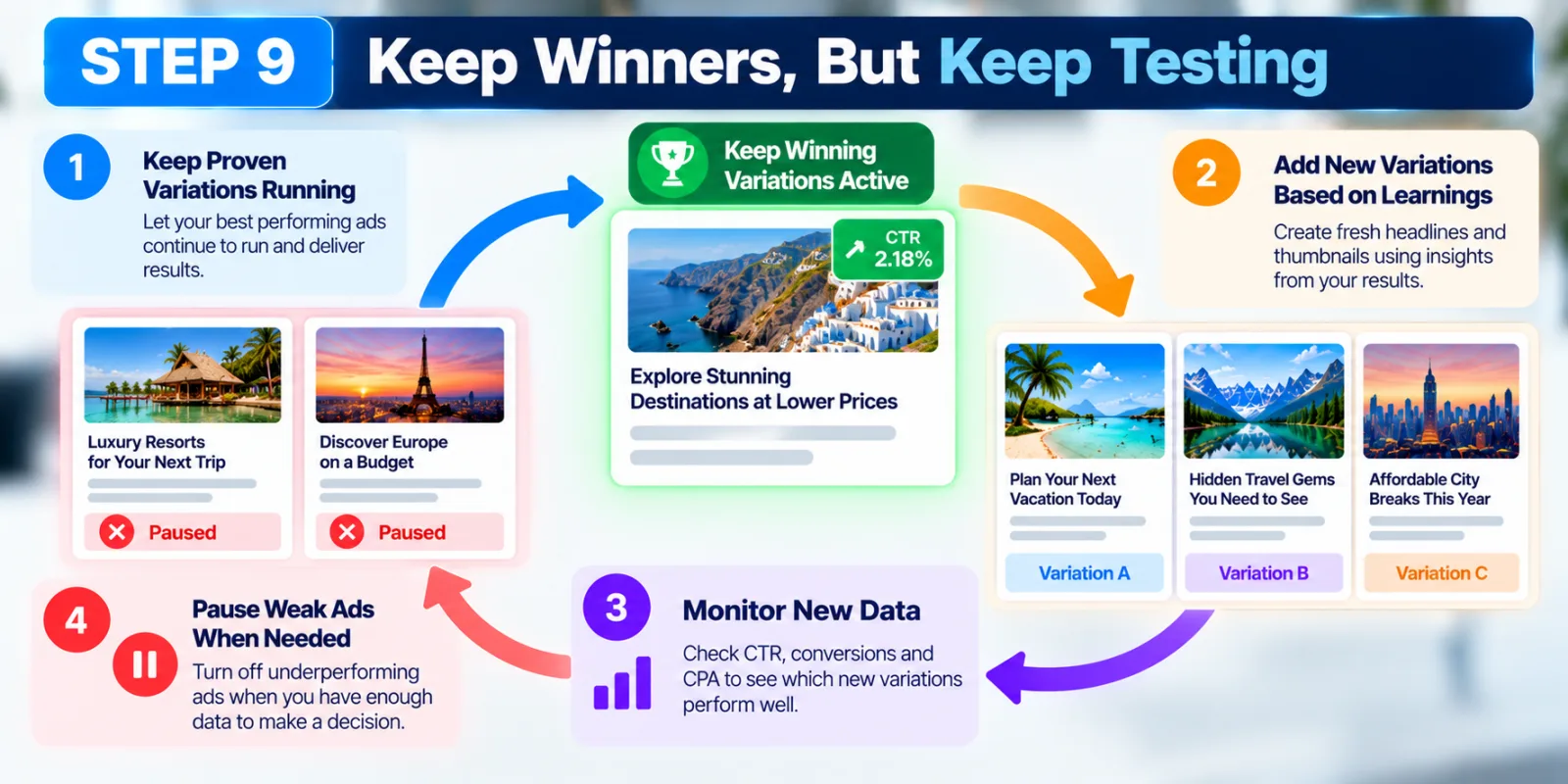
Finding a strong ad does not mean the work is finished.
A winning creative can become less effective as the audience sees it repeatedly. This is why Taboola recommends regularly introducing new creative assets. Its Creative Expedition feature is designed to speed up the learning process for new creative assets on eligible campaigns.
The practical approach is simple: Keep your proven variations active. Add new variations based on what you learned. Watch the new data. Pause weak ads when the evidence is strong enough. Repeat the process. This creates a creative testing cycle instead of a one-time experiment.
Step 10: Use Realize Reporting To Turn Results Into New Ideas
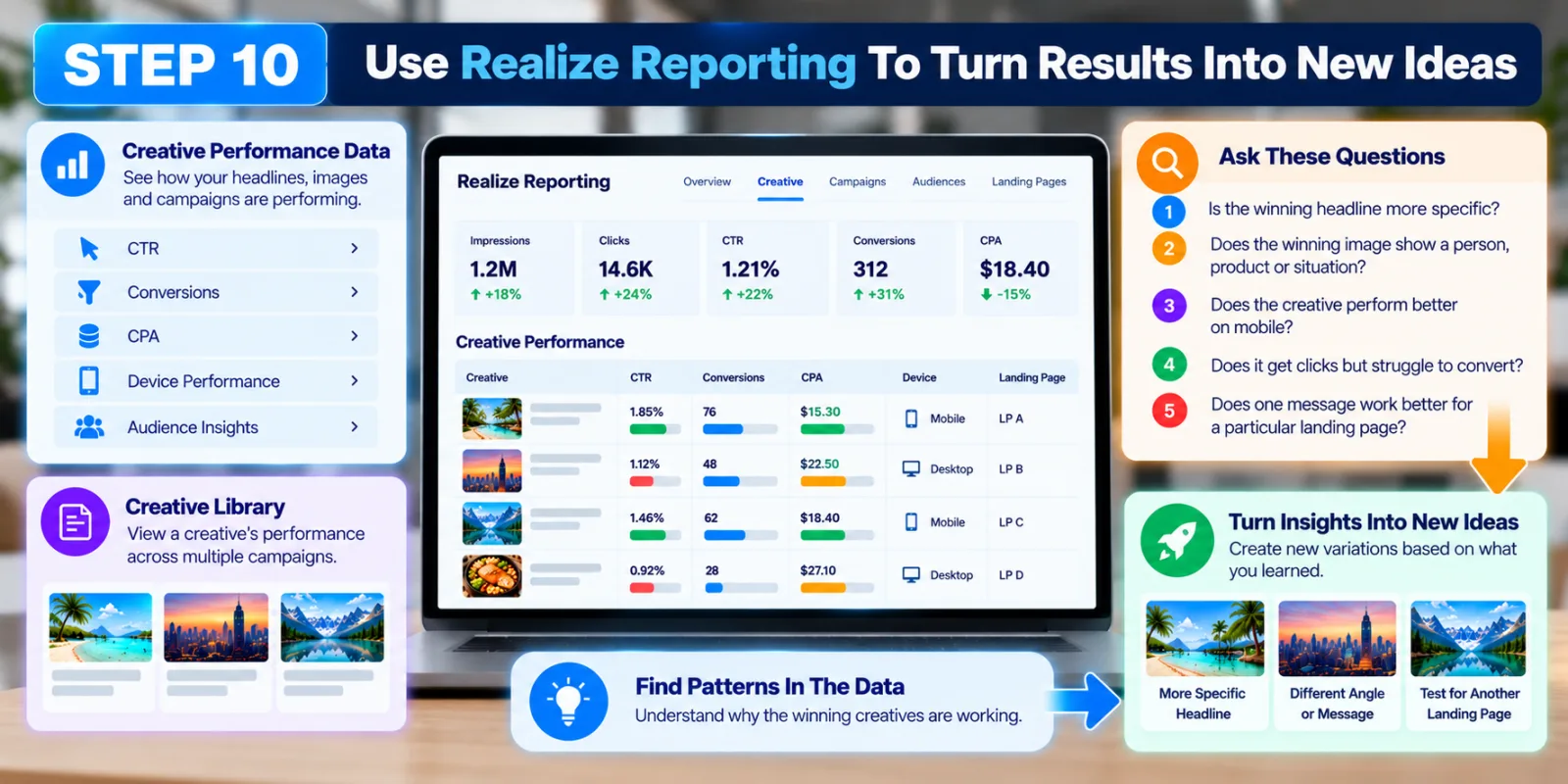
The best use of Taboola Creative Performance Data is not simply finding a winner. It is understanding why the winner is working.
Ask questions such as: Is the winning headline more specific? Does the winning image show a person, product or situation? Is the winning variation better on mobile? Does the creative attract clicks but struggle to convert? Does one message work better for a particular landing page?
Realize also has a Creative Library that lets advertisers see a creative’s performance across multiple campaigns where that creative is being used. This can make it easier to compare creative performance without moving between separate reports.
That is especially useful for advertisers running several campaigns. A creative that looks average in one campaign may perform differently in another because the audience, placement, objective or landing page is different. If you need help with the tracking side, use AdScaleLab’s Taboola conversion tracking guide to make sure the actions after the click are being measured correctly.
How to Read a Creative Performance Example
Let us say you have four variations: Variation A gets high CTR, low conversion rate. Variation B gets medium CTR, strong conversion rate. Variation C gets low CTR, low conversion rate. Variation D gets medium CTR, medium conversion rate. The easy mistake is to choose Variation A because it gets the most clicks.
A better reading is to investigate Variation B first. Its CTR may not be the highest, but the people clicking are taking more useful actions.
Then ask what makes Variation B different. Maybe its headline is more specific. Maybe its image looks more natural. Maybe it sets a clearer expectation about the landing page. That difference becomes your next testing idea. This is how performance data becomes a creative strategy.
What You Should Not Do With Taboola Creative Performance Data
Do not change everything at once.
Do not judge a creative only by CTR.
Do not copy another advertiser’s winning ad.
Do not keep adding variations without enough budget or traffic.
Do not promise something in the headline that the landing page does not deliver.
Do not pause every new creative before it has enough data.
And do not assume that a creative that works today will always work the same way.
Taboola itself recommends ongoing optimization and adding new creative items as you learn what performs.
How This Fits With Your Existing Taboola Campaign Strategy
Creative performance is only one part of a Taboola campaign.
You also need correct conversion tracking, sensible targeting, useful landing pages and enough campaign data. If you are still setting up your account, start with AdScaleLab’s guide to advertising on Taboola. If your main problem is knowing where your traffic is coming from, our guide to Taboola tracking parameters explains how to pass useful source information into your analytics system.
For conversion measurement, use Taboola conversion tracking before making strong conclusions from creative data. Without reliable conversion data, it is easy to choose the ad that gets the most clicks instead of the ad that creates the most business value.
Final Thoughts
Taboola Creative Performance Data becomes much more useful when you treat it as a learning tool instead of a scoreboard.
The best creative is not always the one with the highest CTR. Sometimes the better ad is the one that gets fewer clicks but attracts people who stay longer, convert more often or produce a lower CPA. The process is simple: start with a clear destination, review the right metrics, find the weak part, create focused variations, give them enough time to collect data, and then use the results to build the next test.
That is how a Taboola campaign can improve over time without turning creative optimization into guesswork.
Agency ad accounts, without the wait.
Buy and top up Google, Meta, native, and more from one dashboard.
Get started


No comments yet. Be the first to comment.
Comments are open to registered AdScaleLab clients.
Sign in to comment