





MediaGo SmartBid LoopMax Reports 29% ROAS Growth
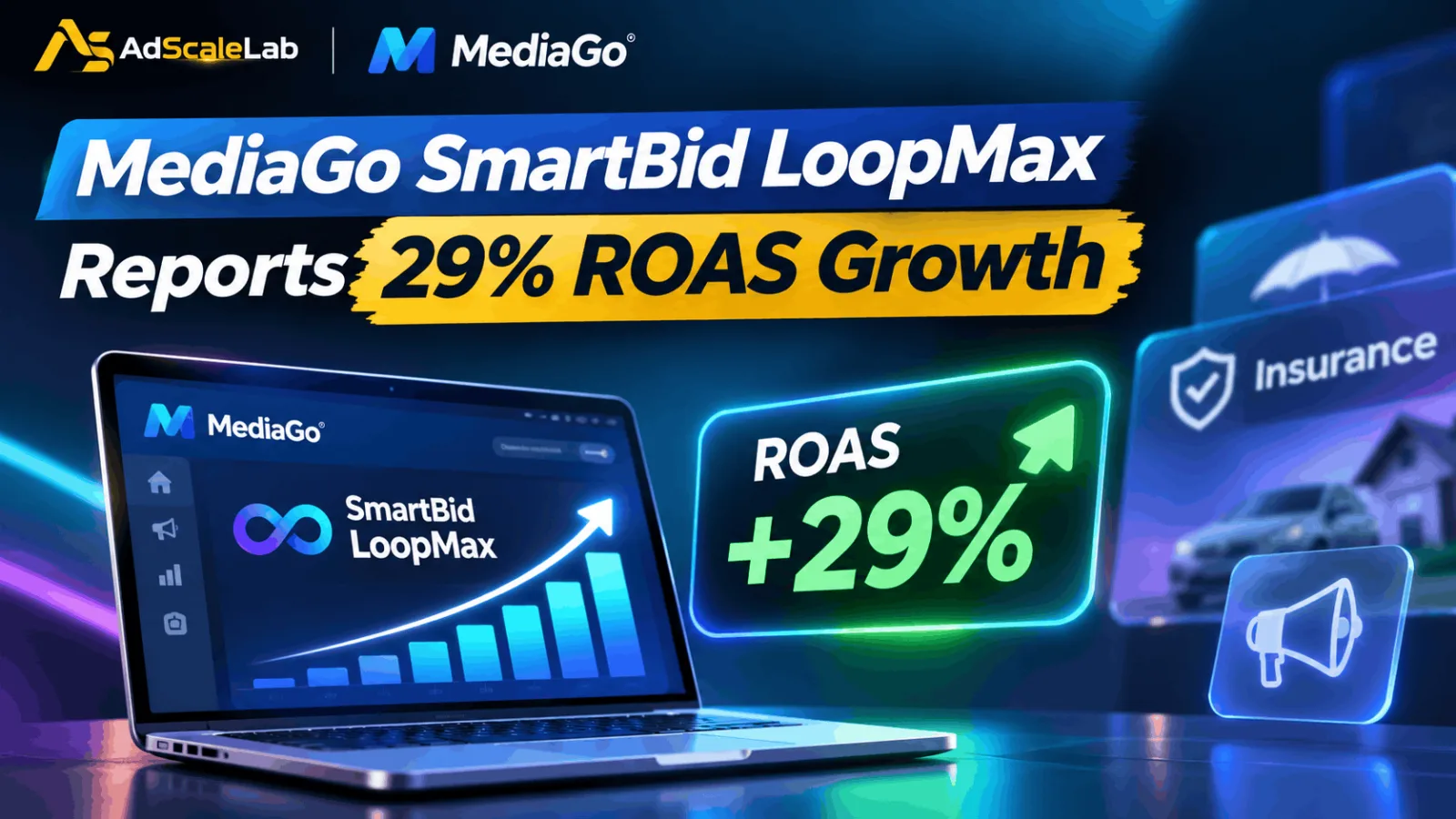
MediaGo SmartBid LoopMax is attracting attention after the advertising platform reported a 29% improvement in return on ad spend (ROAS) during a campaign test with a US insurance advertiser. The result came from a 30-day test in which the advertiser connected deeper conversion data to the platform before increasing campaign spending. The reported performance also included a 20% reduction in cost per deep conversion and a 50% increase in deep conversion rates. The announcement highlights a growing challenge in digital advertising: getting more leads does not always mean getting more customers. For businesses that depend on lead generation, the quality of a lead can matter much more than the number of people who complete a form.
This is particularly important in industries such as insurance, where customers may need time to compare options, speak with an adviser, submit documents and complete several steps before becoming paying customers. MediaGo says its SmartBid LoopMax product is designed to help advertisers look beyond the first conversion and focus on what happens later in the customer journey.
What Is MediaGo SmartBid LoopMax And Why Is It Getting Attention?
MediaGo SmartBid LoopMax is an intelligent bidding product developed for lead generation advertisers. It builds on the company's SmartBid 3.0 technology and is designed to use both initial campaign activity and deeper conversion signals when optimizing advertising delivery. In many lead generation campaigns, advertisers initially measure success through actions such as clicks, landing page visits and completed forms. These events are useful because they show that a person has interacted with an advertisement. However, they do not always reveal whether that person is genuinely interested in the product or likely to become a customer. Get Mediago ads agency account here

For example, an insurance campaign may receive hundreds of form submissions. But after the sales team contacts those leads, only a smaller number may answer calls, qualify for the insurance product or complete an application. If an advertising campaign is optimized only for form submissions, the platform may continue finding people who are willing to fill out forms without necessarily becoming valuable customers.
This is the problem MediaGo is trying to address with SmartBid LoopMax. The product uses additional conversion information from later stages of the sales process to help its bidding system understand which campaign interactions are connected to more valuable outcomes. The announcement says the product is now in Beta and is specifically designed for eligible lead generation advertisers.
How Did The US Insurance Campaign Achieve A 29% ROAS Improvement?
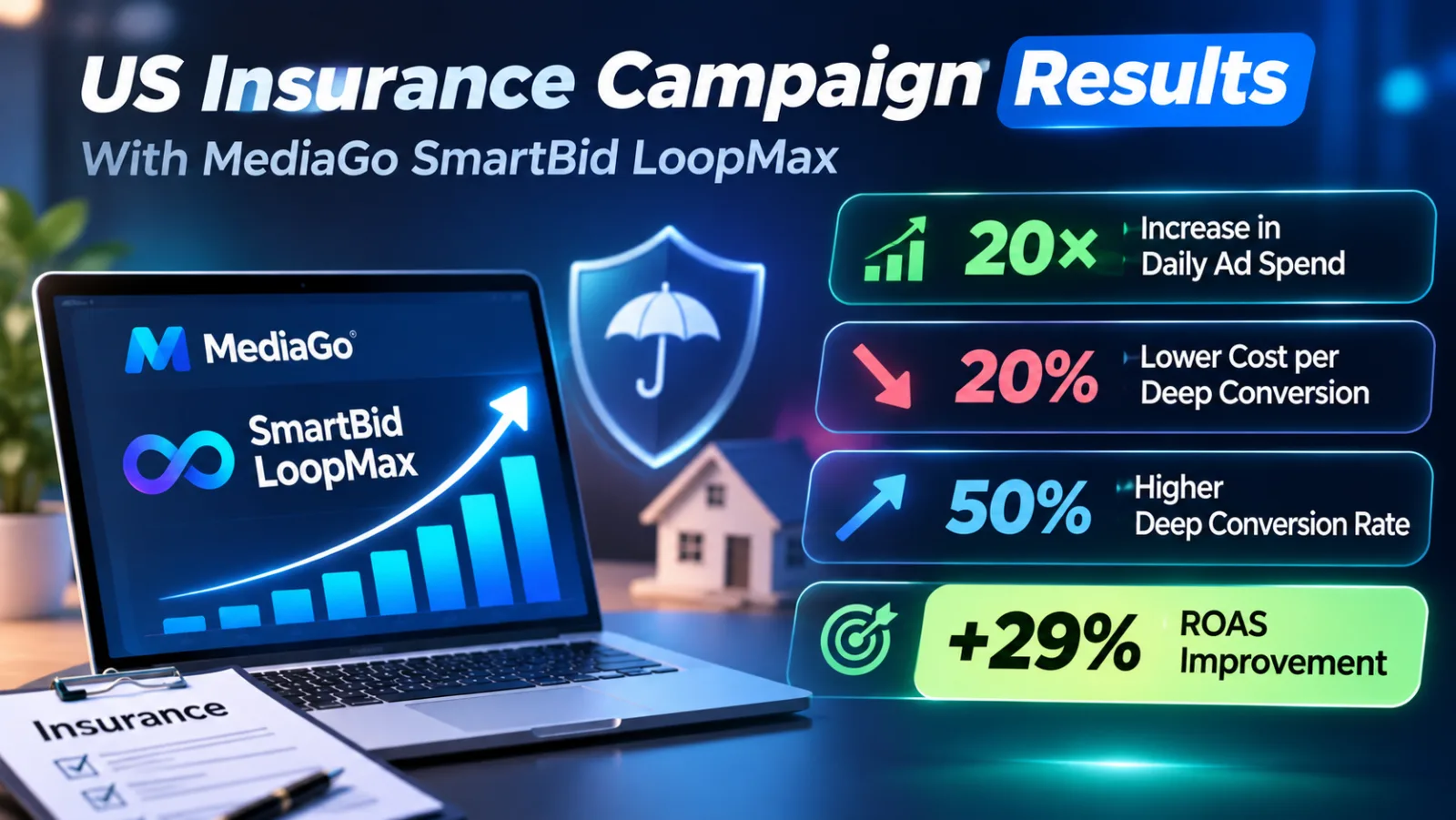
The most notable part of the announcement is the performance reported from a US insurance advertiser's campaign test. According to MediaGo, the advertiser connected real-time server-to-server (S2S) conversion events and 12 months of historical first-party data to SmartBid LoopMax. The advertiser then conducted a 30-day A/B test before expanding the approach across its accounts. MediaGo reported that the results included a 20-fold increase in daily advertising spend, a 20% reduction in cost per deep conversion, a 50% increase in deep conversion rates and a 29% improvement in overall ROAS. These figures are important because they describe more than an increase in traffic or form submissions. They suggest that the advertiser was measuring what happened after the initial lead was generated.
However, the figures should be understood in the right context. MediaGo has shared the results as a company-reported case study. The public announcement does not identify the insurance advertiser, provide the campaign's starting or final budget, disclose the exact ROAS values, or publish a complete independent audit of the test. The reported improvement should therefore be treated as an example of campaign performance, not as a result every advertiser can expect.
Even with those limitations, the case study offers a useful look at why advertisers are becoming more interested in deeper conversion measurement.
Why Are Deep-Funnel Conversion Signals Important For Advertisers?
A customer's journey does not always end after clicking an advertisement or submitting a form. In many industries, several actions take place between the first interaction and the final purchase. Consider an insurance advertiser. A person may first click an advertisement, visit a landing page and submit a request for information. The sales team may then contact that person, check their requirements, arrange an appointment and help them complete an application. Only after these steps may the lead become a confirmed customer.
If the advertiser measures only the first form submission, it may not know which campaigns are generating leads that eventually turn into business. This can make budget decisions difficult, especially when different publishers, audiences and advertisements produce very different lead qualities. Deep-funnel conversion signals help close this information gap. Instead of reporting only the first action, advertisers can send information about later stages of the customer journey back to their advertising platform. The platform can then use those signals as additional information when evaluating campaign performance.
MediaGo says SmartBid LoopMax supports up to seven customized deep-conversion goals. Its examples include a connected call, an application started, an account created, a qualified lead, an appointment booked, an approved application and a completed deal. These stages allow advertisers to describe the outcomes that matter to their business. An insurance company may care more about approved applications, while another lead generation business may focus on qualified appointments or completed deals.
The Role Of Server-To-Server Tracking And Historical Data
Another important part of the reported campaign was the use of real-time S2S events and 12 months of historical first-party data. Server-to-server tracking allows information about important customer actions to be sent between systems through a server connection. This can be useful when a conversion happens outside the original website visit, such as when a sales representative qualifies a lead in a customer relationship management system.
For example, a person may click an advertisement and complete a form today, but only become a qualified lead several days later after speaking with a sales team. If the advertiser has a suitable tracking setup, that later event can be shared with the advertising platform rather than treating the original form submission as the only meaningful result.
Historical first-party data can also provide useful context. It may help an optimization system identify patterns in earlier customer journeys and understand which actions are more closely associated with valuable outcomes. In the reported test, MediaGo says the advertiser used 12 months of historical data alongside real-time conversion events. This approach is not limited to MediaGo. Google, for example, explains that its Enhanced Conversions for Leads feature allows advertisers to connect lead information from their websites with later offline conversion events. The purpose is to improve conversion measurement and help advertisers understand what happens after an initial lead is generated.
The important point is that accurate conversion data is needed before an automated bidding system can make useful decisions. If advertisers send incomplete, delayed or incorrectly matched events, the platform may receive an inaccurate picture of campaign performance.
What Does The 29% ROAS Improvement Mean For Lead Generation Advertisers?
ROAS measures the revenue generated in relation to advertising spend. A higher ROAS generally means that a campaign is generating more revenue for the amount invested in advertising. For lead generation businesses, measuring ROAS can be more complicated than it is for an online store. A form submission may not immediately produce revenue. The advertiser may need to connect advertising data with sales records to understand which leads eventually become customers.
This is why the reported 29% improvement is worth examining. MediaGo's case study suggests that using deeper conversion information may help an advertiser make better decisions about campaign delivery and spending. The 20% reduction in cost per deep conversion is also relevant. It indicates that the advertiser reported paying less to achieve a later-stage conversion, rather than simply reducing the cost of an initial form submission. The reported 50% increase in deep conversion rates adds another part to the picture. It suggests that a greater share of the measured campaign activity reached the deeper conversion stages used in the test.
Still, advertisers should not look at these three figures separately from the campaign setup. The results came from a particular advertiser, industry, data connection and test period. Different businesses may have different sales cycles, conversion volumes, customer values and tracking capabilities.
MediaGo Opens SmartBid LoopMax Beta For Eligible Advertisers
Alongside the campaign results, MediaGo has confirmed that SmartBid LoopMax is open for Beta testing with eligible lead generation partners. According to the announcement, participating advertisers may receive priority access, dedicated support, an algorithmic bidding advantage and CPA subsidies to help offset initial testing costs. These are benefits described by MediaGo as part of its Beta program, and advertisers should confirm the current eligibility requirements and terms directly with the company.
The Beta availability is important because it gives selected advertisers an opportunity to test the product using their own campaign data and business goals. It also gives MediaGo a chance to learn how the system performs across different lead generation campaigns. Advertisers interested in joining should first understand what data they can share, which conversion events they can measure and whether their tracking systems can send those events reliably. They should also confirm how the platform handles data, what support is included and what conditions apply to any incentives.
MediaGo states that data privacy and security are priorities and that the product follows GDPR requirements. Advertisers should still review the relevant data-processing terms and make sure their own data collection and sharing practices meet the legal requirements that apply to their business.
What This Development Could Mean For Native Advertising And Performance Marketing
The SmartBid LoopMax announcement reflects a wider change in performance advertising. Advertisers are increasingly looking beyond clicks and basic conversions because these numbers do not always show the real value of a campaign. This is especially relevant to native advertising, where campaigns can generate traffic from a wide range of publisher websites and content placements. A large volume of clicks may look positive in a dashboard, but advertisers need to understand whether that traffic is producing qualified leads and customers.
Platforms such as MediaGo, Taboola and Outbrain (now part of Teads) give advertisers different ways to reach audiences across the open web. However, choosing an advertising network is only one part of campaign performance. Advertisers also need a clear measurement strategy, useful creative content and reliable conversion tracking. Businesses exploring different networks can read our guide to top native advertising networks to understand the options available. Advertisers who are already working with MediaGo can also read our practical guide on how to use MediaGo SmartBid LoopMax for lead generation campaigns.
The wider lesson is that campaign optimization should connect advertising activity with the outcomes that matter to the business. Better measurement does not automatically guarantee better results, but it can give advertisers and bidding systems more useful information when making decisions.
What Advertisers Should Watch Next
The next important question is how SmartBid LoopMax performs across a wider range of advertisers and industries. One insurance campaign test provides an interesting example, but more public case studies would help show whether similar results can be achieved in other lead generation sectors. Advertisers should watch for additional information about Beta access, supported conversion events, data integration requirements and campaign performance across different business models. More detail about test budgets, measurement methods and the results achieved by other advertisers would also help the market assess the product more clearly.
For now, MediaGo's reported 29% ROAS improvement puts the focus on a key issue in digital advertising: the difference between generating leads and generating valuable customers.
Final Thoughts
MediaGo SmartBid LoopMax is drawing attention because its reported US insurance campaign results focus on deeper business outcomes rather than just clicks or form submissions. The company reported a 29% improvement in ROAS, a 20% reduction in cost per deep conversion and a 50% increase in deep conversion rates during a 30-day test.
The figures are promising, but they represent one company-reported campaign example and should not be treated as a guarantee of future performance. The bigger development is the growing importance of connecting advertising platforms with the later stages of the customer journey.
For lead generation advertisers, especially those working in insurance and other industries with longer sales processes, accurate conversion data can make a meaningful difference to campaign decisions. As SmartBid LoopMax moves through its Beta phase, advertisers will be watching to see whether its approach can deliver similar results across more campaigns.
Agency ad accounts, without the wait.
Buy and top up Google, Meta, native, and more from one dashboard.
Get started
No comments yet. Be the first to comment.
Comments are open to registered AdScaleLab clients.